

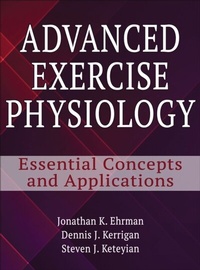
Advanced Exercise Physiology
Essential Concepts and Applications
Published on 29. August 2017
384 pages
978-1-4925-8525-1 (ISBN)
Description

Advanced Exercise Physiology: Essential Concepts and Applications builds upon foundational topics and looks further into key physiological components to help advanced students gain a deeper level of understanding. Authors Jonathan K. Ehrman, Dennis J. Kerrigan, and Steven J. Keteyian address a wide range of complex topics with evidence-based information and a focused, targeted style.
The first five chapters offer a detailed examination of the various body systems. The next two chapters focus on exercise testing and training principles, as well as training adaptations as they relate to aerobic power, anaerobic power, range of motion, and resistance training of healthy individuals and competitive athletes. The remaining chapters focus on a variety of topics, including athletic performance, body composition and weight management, and environmental influences of exercise physiology. The final two chapters bring a unique perspective to the book with a review of the relationship between exercise physiology and public health and a look at recent and emerging topics in the field, including genomics and pharmacology.
Enhancing the content are learning aids, more than 140 images and illustrations, and practical examples from among clinical patients, healthy individuals, and competitive athletes. Key terms and their definitions appear at the end of each chapter; these help students understand key concepts and serve as a useful reference for practitioners. The appendixes contain information related to topics such as efficiency and energy expenditure, metabolic equivalent (MET) values of common activities, and the professionalization of exercise physiology.
For instructors, Advanced Exercise Physiology also includes a test package and an image bank to assist wtih classroom lecture preparations. The ancillaries, in-text learning components, and comprehensive content combine to create an ideal text to be used in advanced courses in exercise physiology.
The first five chapters offer a detailed examination of the various body systems. The next two chapters focus on exercise testing and training principles, as well as training adaptations as they relate to aerobic power, anaerobic power, range of motion, and resistance training of healthy individuals and competitive athletes. The remaining chapters focus on a variety of topics, including athletic performance, body composition and weight management, and environmental influences of exercise physiology. The final two chapters bring a unique perspective to the book with a review of the relationship between exercise physiology and public health and a look at recent and emerging topics in the field, including genomics and pharmacology.
Enhancing the content are learning aids, more than 140 images and illustrations, and practical examples from among clinical patients, healthy individuals, and competitive athletes. Key terms and their definitions appear at the end of each chapter; these help students understand key concepts and serve as a useful reference for practitioners. The appendixes contain information related to topics such as efficiency and energy expenditure, metabolic equivalent (MET) values of common activities, and the professionalization of exercise physiology.
For instructors, Advanced Exercise Physiology also includes a test package and an image bank to assist wtih classroom lecture preparations. The ancillaries, in-text learning components, and comprehensive content combine to create an ideal text to be used in advanced courses in exercise physiology.
More details
Edition
New edition
Language
English
Place of publication
Champaign, IL
United States
Publishing group
Human Kinetics Publishers
Target group
College/higher education
Edition type
New edition
ISBN-13
978-1-4925-8525-1 (9781492585251)
Copyright in bibliographic data and cover images is held by Nielsen Book Services Limited or by the publishers or by their respective licensors: all rights reserved.
Schweitzer Classification
Other editions
Additional editions
Jonathan K. Ehrman | Dennis Kerrigan | Steven J. Keteyian
Advanced Exercise Physiology
Essential concepts and Applications
Book
10/2017
Human Kinetics
€135.41
Shipment within 15-20 days
Persons
Jonathan K. Ehrman, PhD, FACSM, FAACVPR, is the associate program director of preventive cardiology and of the Exercise Physiology Core Laboratory and the director of the clinical weight management program at Henry Ford Hospital in Detroit, Michigan. He specializes in cardiac rehabilitation and preventive cardiology. He is also a clinical assistant professor in the exercise science program at Oakland University. He is a fellow of the American Association of Cardiovascular and Pulmonary Rehabilitation (AACVPR) and the American College of Sports Medicine (ACSM), and he is certified by the ACSM as a clinical exercise physiologist. In addition to the ACSM and AACVPR, he is also an active member of the Clinical Exercise Physiology Association (CEPA), the American Heart Association, and the American College of Cardiology. Dr. Ehrman earned his PhD in clinical exercise physiology from The Ohio State University.
Dr. Ehrman is a coeditor of Clinical Exercise Physiology, Fourth Edition, and served as section editor of the 10th edition of ACSM's Resource Manual for Guidelines for Exercise Testing and Prescription. In addition, he has published more than 100 research manuscripts, abstracts, and book chapters. He is also the current editor of the Journal of Clinical Exercise Physiology, which is the official journal of the CEPA.
Dennis J. Kerrigan, PhD, FACSM, is a senior exercise physiologist in preventive cardiology in the Division of Cardiovascular Medicine and the William Clay Ford Center for Athletic Medicine at Henry Ford Hospital in Detroit, Michigan. His current role is as the director of outpatient exercise programs in preventive cardiology, and he oversees exercise programs for individuals with chronic health conditions. In addition to his clinical duties, Dr. Kerrigan also conducts research in patients with heart disease, cancer, and obesity. He was the lead author in a randomized trial that showed improvements in fitness and quality of life in patients with left ventricular assist devices who participated in cardiac rehabilitation. In 2017, Dr. Kerrigan was elected president of the Clinical Exercise Physiology Association (CEPA). He earned his PhD in clinical exercise physiology from The Ohio State University.
Dr. Kerrigan coauthored a book chapter in Guidelines for Cardiac Rehabilitation and Secondary Prevention Programs, Fifth Edition, and has published scholarly articles in peer-reviewed journals, including the Journal of Cardiopulmonary Rehabilitation and Prevention, American Journal of Cardiology, Journal of Cardiac Failure, and Medicine in Sports and Exercise. In 2012, he received the Midwest ACSM Clinical Exercise Professional of the Year award.
Steven J. Keteyian, PhD, FACSM, is the director of preventive cardiology in the Division of Cardiovascular Medicine and director of the Exercise Physiology Core Laboratory, both at the Henry Ford Hospital in Detroit. He specializes in clinical exercise physiology and preventive cardiology. He also serves as a clinical professor in the exercise science program at Oakland University and as an adjunct professor in the physiology department at Wayne State University, where he earned his PhD. He is an active member of the American Heart Association and the American Association of Cardiovascular and Pulmonary Rehabilitation (AACVPR).
Dr. Keteyian has published more than 200 research manuscripts and book chapters and has coauthored or coedited four textbooks, including Clinical Exercise Physiology, Third Edition. He has also served as an editor-in-chief, associate editor, or editorial board member for several academic journals. Dr. Keteyian received the President's Award from the AACVPR in 2013 and the Established Investigator Award from the AACVPR in 2009.
Dr. Ehrman is a coeditor of Clinical Exercise Physiology, Fourth Edition, and served as section editor of the 10th edition of ACSM's Resource Manual for Guidelines for Exercise Testing and Prescription. In addition, he has published more than 100 research manuscripts, abstracts, and book chapters. He is also the current editor of the Journal of Clinical Exercise Physiology, which is the official journal of the CEPA.
Dennis J. Kerrigan, PhD, FACSM, is a senior exercise physiologist in preventive cardiology in the Division of Cardiovascular Medicine and the William Clay Ford Center for Athletic Medicine at Henry Ford Hospital in Detroit, Michigan. His current role is as the director of outpatient exercise programs in preventive cardiology, and he oversees exercise programs for individuals with chronic health conditions. In addition to his clinical duties, Dr. Kerrigan also conducts research in patients with heart disease, cancer, and obesity. He was the lead author in a randomized trial that showed improvements in fitness and quality of life in patients with left ventricular assist devices who participated in cardiac rehabilitation. In 2017, Dr. Kerrigan was elected president of the Clinical Exercise Physiology Association (CEPA). He earned his PhD in clinical exercise physiology from The Ohio State University.
Dr. Kerrigan coauthored a book chapter in Guidelines for Cardiac Rehabilitation and Secondary Prevention Programs, Fifth Edition, and has published scholarly articles in peer-reviewed journals, including the Journal of Cardiopulmonary Rehabilitation and Prevention, American Journal of Cardiology, Journal of Cardiac Failure, and Medicine in Sports and Exercise. In 2012, he received the Midwest ACSM Clinical Exercise Professional of the Year award.
Steven J. Keteyian, PhD, FACSM, is the director of preventive cardiology in the Division of Cardiovascular Medicine and director of the Exercise Physiology Core Laboratory, both at the Henry Ford Hospital in Detroit. He specializes in clinical exercise physiology and preventive cardiology. He also serves as a clinical professor in the exercise science program at Oakland University and as an adjunct professor in the physiology department at Wayne State University, where he earned his PhD. He is an active member of the American Heart Association and the American Association of Cardiovascular and Pulmonary Rehabilitation (AACVPR).
Dr. Keteyian has published more than 200 research manuscripts and book chapters and has coauthored or coedited four textbooks, including Clinical Exercise Physiology, Third Edition. He has also served as an editor-in-chief, associate editor, or editorial board member for several academic journals. Dr. Keteyian received the President's Award from the AACVPR in 2013 and the Established Investigator Award from the AACVPR in 2009.
Content
Chapter 1. Exercise Metabolism
Chapter 2. Dynamics of Skeletal-Neuromuscular and Gastrointestinal Physiology
Chapter 3. Cardiovascular System: Function and Control
Chapter 4. Pulmonary Exercise Physiology
Chapter 5. Immune and Endocrine System
Chapter 6. Principles for Testing and Training for Aerobic Power
Chapter 7. Principles for Testing and Training Anaerobic Strength, Power, and Range of Motion
Chapter 8. Body Composition and Weight Management
Chapter 9. Performance: Environmental Stressors, Genetics, Nutrition, and Ergogenic Aids
Chapter 10. Physical Activity and Exercise for Health and Fitness
Chapter 11. Emerging Concepts: Exercise Pharmacology and Exercise Genomics
Appendix A. Calculations for Oxygen Consumption and Carbon Dioxide Production
Appendix B. Efficiency and Energy Expenditure
Appendix C. Metabolic Equivalent of Task Values of Common Activities
Appendix D. Professionalization of the Exercise Professional
Appendix E. Common Scientific Abbreviations and Units
Chapter 2. Dynamics of Skeletal-Neuromuscular and Gastrointestinal Physiology
Chapter 3. Cardiovascular System: Function and Control
Chapter 4. Pulmonary Exercise Physiology
Chapter 5. Immune and Endocrine System
Chapter 6. Principles for Testing and Training for Aerobic Power
Chapter 7. Principles for Testing and Training Anaerobic Strength, Power, and Range of Motion
Chapter 8. Body Composition and Weight Management
Chapter 9. Performance: Environmental Stressors, Genetics, Nutrition, and Ergogenic Aids
Chapter 10. Physical Activity and Exercise for Health and Fitness
Chapter 11. Emerging Concepts: Exercise Pharmacology and Exercise Genomics
Appendix A. Calculations for Oxygen Consumption and Carbon Dioxide Production
Appendix B. Efficiency and Energy Expenditure
Appendix C. Metabolic Equivalent of Task Values of Common Activities
Appendix D. Professionalization of the Exercise Professional
Appendix E. Common Scientific Abbreviations and Units
