

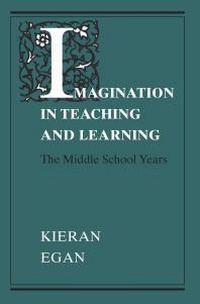
Imagination in Teaching and Learning
The Middle School Years
1st Edition
Published on 21. April 2014
188 pages
978-0-226-24413-6 (ISBN)
Description

It is widely believed that a child's imagination ought to bestimulated and developed in education. Yet, few teachersunderstand what imagination is or how it lends itself topractical methods and techniques that can be used easily inclassroom instruction. In this book, Kieran Egan-winner ofthe prestigious Grawemeyer Award for his work onimagination-takes up where his Teaching as Story Tellingleft off, offering practical help for teachers who want toengage, stimulate, and develop the imaginative and learningprocesses of children between the ages of eight to fifteen.This book is not about unusually imaginative students andteachers. Rather, it is about the typical student'simaginative life and how it can be stimulated in learning,how the average teacher can plan to achieve this aim, and howthe curriculum can be structured to help achieve this aim.Slim and determinedly practical, this book contains a wealthof concrete examples of curriculum design and teachingtechniques structured to appeal specifically to children intheir middle school years.
More details
Other editions
Additional editions
Book
06/1992
University of Chicago Press
€21.67
Shipment within 10-20 days

Book
06/1992
University of Chicago Press
€24.84
Article exhausted; check different version
Content
- Intro
- Contents
- Acknowledgements
- Introduction
- I. A Very Short History of the Imagination
- Introduction
- Myth, Memory, and Emotion
- Ancient and Medieval Imagination
- Imagination in the Enlightenment
- The Romantic Imagination
- Imagination in the Modern Period: Philosophical Work
- Imagination in the Modern Period: Psychological Work
- Conclusion
- II. Why Is Imagination Important to Education?
- Introduction
- Imagination and Conventional Thinking
- Imagination in Learning
- Imagination and Memory
- Social Virtues
- Imagination and Freedom
- Imagination and Objective Knowledge
- Vizualization, Originality, and Creativity
- The Narrative Mind
- Conclusion
- III. Characteristics of Students' Imaginative Lives, Ages 8-15
- Introduction
- The Affective Connection
- Extremes and Limits
- Romance, Wonder, and Awe
- Associating With the Heroic
- Revolt and Idealism
- Matters of Detail
- Humanizing Knowledge
- Conclusion
- IV. Imagination and Teaching
- Introduction
- A Planning Framework For Imaginative Teaching and Learning
- Exploration of the Framework by Means of an Example
- Less Formal Implementations: Fragmenting the Framework
- From Characteristics to Principles of Learning
- Conclusion
- V. Image and Concept
- VI. Some Further Examples
- Introduction
- Mathematics
- Science
- Social Studies
- Language Arts
- Conclusion
- Conclusion
- The Role of the Teacher
- The Imaginative Curriculum
- Eliminating Social Studies and Humanities
- Imagination and Entertainment
- Interests and Abilities: Educational Clichés
- The Moral Dimension
- The Logic of the Heart
- References
- Index
