

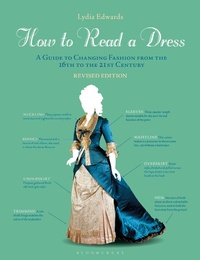
How to Read a Dress
A Guide to Changing Fashion from the 16th to the 21st Century
Published on 7. October 2021
280 pages
978-1-350-17223-4 (ISBN)
Description

Fashion is ever-changing, and while some styles mark a dramatic departure from the past, many exhibit subtle differences from year to year that are not always easily identifiable. With overviews of each key period and detailed illustrations for each new style, How to Read a Dress is an appealing and accessible guide to women's fashion across five centuries. Each entry includes annotated color images of historical garments, outlining important features and highlighting how styles have developed over time, whether in shape, fabric choice, trimming, or undergarments. Readers learn how garments were constructed and where their inspiration stemmed from at key points in history - as well as how dresses have varied in type, cut, detailing and popularity according to the occasion and the class, age and social status of the wearer.
This new edition includes additional styles to illustrate and explain the journey between one style and another; larger images to allow closer investigation of details of dress; examples of lower and working-class, as well as middle-class, clothing; and a completely new chapter covering the 1980s to 2020. The latter demonstrates how the late 20th century and early 21st century firmly left the dress behind as a requirement, but retained it as a perennially popular choice and illustrates how far the traditional boundaries of 'the dress' have been pushed (even including reference to a newly non-binary appreciation of the garment), and the intellectual shifts in the way women's fashion is both inspired and inspires.
With these new additions, How to Read a Dress, revised edition, presents a complete and up-to-date picture of 'the dress' in all its forms, across the centuries, and taking into account different sartorial and social experiences. It is the ideal tool for anyone who has ever wanted to know their cartridge pleats from their Récamier ruffles. Equipping the reader with all the information they need to 'read' a dress, this is the ultimate guide for students, researchers, and anyone interested in historical fashion.
This new edition includes additional styles to illustrate and explain the journey between one style and another; larger images to allow closer investigation of details of dress; examples of lower and working-class, as well as middle-class, clothing; and a completely new chapter covering the 1980s to 2020. The latter demonstrates how the late 20th century and early 21st century firmly left the dress behind as a requirement, but retained it as a perennially popular choice and illustrates how far the traditional boundaries of 'the dress' have been pushed (even including reference to a newly non-binary appreciation of the garment), and the intellectual shifts in the way women's fashion is both inspired and inspires.
With these new additions, How to Read a Dress, revised edition, presents a complete and up-to-date picture of 'the dress' in all its forms, across the centuries, and taking into account different sartorial and social experiences. It is the ideal tool for anyone who has ever wanted to know their cartridge pleats from their Récamier ruffles. Equipping the reader with all the information they need to 'read' a dress, this is the ultimate guide for students, researchers, and anyone interested in historical fashion.
More details
Edition
Revised edition
Language
English
Place of publication
London
United Kingdom
Publishing group
Bloomsbury Publishing PLC
Edition type
Revised edition
Illustrations
225 color illus
ISBN-13
978-1-350-17223-4 (9781350172234)
Copyright in bibliographic data and cover images is held by Nielsen Book Services Limited or by the publishers or by their respective licensors: all rights reserved.
Schweitzer Classification
Person
Lydia Edwards is a lecturer at Edith Cowan University, Perth, Australia and author of the companion book, How to Read a Suit (Bloomsbury 2020).
Content
Acknowledgements
Preface
Introduction
1. 1550 - 1600
2. 1600 - 1699
3. 1710 - 1790
4. 1790 - 1837
5. 1837 - 1869
6. 1870 - 1889
7. 1890 - 1916
8. 1918 - 1929
9. 1930 - 1946
10. 1947 - 1959
11. 1960 - 1979
12. 1980 - 2020
Glossary of Terms
Notes
Bibliography
Photographic Credits
Index
List of Fashion Designers
Preface
Introduction
1. 1550 - 1600
2. 1600 - 1699
3. 1710 - 1790
4. 1790 - 1837
5. 1837 - 1869
6. 1870 - 1889
7. 1890 - 1916
8. 1918 - 1929
9. 1930 - 1946
10. 1947 - 1959
11. 1960 - 1979
12. 1980 - 2020
Glossary of Terms
Notes
Bibliography
Photographic Credits
Index
List of Fashion Designers
