


The First Migrants
How Black Homesteaders' Quest for Land and Freedom Heralded America's Great Migration
Published on 1. August 2023
392 pages
978-1-4962-3649-4 (ISBN)
Description

Winner of the Denver Public Library's 2024 Caroline Bancroft History Prize
Winner of the 2024 Nebraska Book Award
Finalist for the 2024 Spur Award
Finalist for the 2024 ASALH Book Prize
Honorable Mention for the 2024 Jon Gjerde Prize
The First Migrants recounts the largely unknown story of Black people who migrated from the South to the Great Plains between 1877 and 1920 in search of land and freedom. They exercised their rights under the Homestead Act to gain title to 650,000 acres, settling in all of the Great Plains states. Some created Black homesteader communities such as Nicodemus, Kansas, and DeWitty, Nebraska, while others, including George Washington Carver and Oscar Micheaux, homesteaded alone. All sought a place where they could rise by their own talents and toil, unencumbered by Black codes, repression, and violence. In the words of one Nicodemus descendant, they found "a place they could experience real freedom," though in a racist society that freedom could never be complete. Their quest foreshadowed the epic movement of Black people out of the South known as the Great Migration.
In this first account of the full scope of Black homesteading in the Great Plains, Richard Edwards and Jacob K. Friefeld weave together two distinct strands: the narrative histories of the six most important Black homesteader communities and the several themes that characterize homesteaders' shared experiences. Using homestead records, diaries and letters, interviews with homesteaders' descendants, and other sources, Edwards and Friefeld illuminate the homesteaders' fierce determination to find freedom-and their greatest achievements and struggles for full equality.
Winner of the 2024 Nebraska Book Award
Finalist for the 2024 Spur Award
Finalist for the 2024 ASALH Book Prize
Honorable Mention for the 2024 Jon Gjerde Prize
The First Migrants recounts the largely unknown story of Black people who migrated from the South to the Great Plains between 1877 and 1920 in search of land and freedom. They exercised their rights under the Homestead Act to gain title to 650,000 acres, settling in all of the Great Plains states. Some created Black homesteader communities such as Nicodemus, Kansas, and DeWitty, Nebraska, while others, including George Washington Carver and Oscar Micheaux, homesteaded alone. All sought a place where they could rise by their own talents and toil, unencumbered by Black codes, repression, and violence. In the words of one Nicodemus descendant, they found "a place they could experience real freedom," though in a racist society that freedom could never be complete. Their quest foreshadowed the epic movement of Black people out of the South known as the Great Migration.
In this first account of the full scope of Black homesteading in the Great Plains, Richard Edwards and Jacob K. Friefeld weave together two distinct strands: the narrative histories of the six most important Black homesteader communities and the several themes that characterize homesteaders' shared experiences. Using homestead records, diaries and letters, interviews with homesteaders' descendants, and other sources, Edwards and Friefeld illuminate the homesteaders' fierce determination to find freedom-and their greatest achievements and struggles for full equality.
Reviews / Votes
"The First Migrants is an important contribution to black history and the larger history of the American West."-Wall Street Journal "A meticulously researched account of Black homesteading on the Great Plains in the late nineteenth and early twentieth centuries. . . . Utilizing a wealth of primary sources and accounts from descendants, the authors make palpable the homesteaders' relentless drive toward freedom through self-reliance. It's a revealing look at an underrepresented chapter in American history."-Publishers Weekly "The First Migrants is a thoughtful and much needed account of Black homesteading on the Great Plains. . . . The authors cogently remind us that as with the initial act of homesteading, the ongoing fight to prevent this history's erasure is intimately tied to an unyielding desire for equality and belonging."-Ashley Howard, Nebraska History "[An] eye-opening study, grounded in a broad array of source materials. . . . This should be a go-to book for scholars, or anyone looking for an inspiring read."-Brice J. Dinges, Roundup Magazine "By examining these individuals and families on the Great Plains, readers can better understand the lived experiences, goals, and motivations that led Black homesteaders to migrate west. As such, The First Migrants provides more than enough to introduce readers to the history of the Black homesteading experience on the Great Plains."-Dwain Coleman, Journal of Southern History "The First Migrants is a highly readable, lively book that not only contextualizes the homesteading movement of African Americans in the West but does so by highlighting individuals involved, showcasing personal stories within a decades-long movement. This superbly researched book brings to life those living out their dreams and experiencing their nightmares on the Great Plains."-Bryan Jack, Missouri Historical Review "The First Migrants is a solid history of former slaves who struggled against overwhelming obstacles to possess their own land. It's an important part of American history."-Sandra Dallas, Denver Post "Western expansion of the United States is often portrayed as an endeavor undertaken by primarily European pioneers. The contribution of African Americans, especially formerly enslaved people, is little known or discussed. The First Migrants heralds the contributions of people frequently marginalized in American history. This story of the African American homesteaders who helped settle America's Great Plains is informative, comprehensive, and very personal. It shouts, 'We were there.'"-Catherine Meehan Blount, granddaughter of DeWitty homesteaders "This amazingly researched work will make a meaningful and needed contribution to African American history, as well as to our understanding of how non-Indigenous Americans, Black and white, settled the Great Plains. Its revelation of the multiracial aspect of homesteading on the plains, moreover, will make a most important addition to the general body of American post-Civil War history."-Kenneth M. Hamilton, author of Booker T. Washington in American Memory "As a child, I learned only a bit of my family's homesteading story. The First Migrants weaves it together with the stories of other Black families, turning sparse records and anecdotes into a living history."-Elizabeth Burden, Black homesteader descendant and Tucson artistMore details
Language
English
Place of publication
Lincoln
United States
Illustrations
80 photographs, 20 illustrations, 2 maps, 1 appendix, index
File size
15,17 MB
ISBN-13
978-1-4962-3649-4 (9781496236494)
Copyright in bibliographic data and cover images is held by Nielsen Book Services Limited or by the publishers or by their respective licensors: all rights reserved.
Schweitzer Classification
Other editions
Additional editions
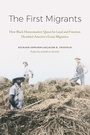
Richard Edwards | Jacob K. Friefeld
The First Migrants
How Black Homesteaders' Quest for Land and Freedom Heralded America's Great Migration
Book
08/2023
University of Nebraska Press
€35.00
Shipment within 15-20 days
Persons
Richard Edwards is director emeritus of the Center for Great Plains Studies at the University of Nebraska-Lincoln. He is the author or coauthor of numerous books, including Homesteading the Plains: Toward a New History (Nebraska, 2017) and Natives of a Dry Place: Stories of Dakota before the Oil Boom. Jacob K. Friefeld is a historian at the Abraham Lincoln Presidential Library and Museum in Springfield, Illinois. He is coauthor of Homesteading the Plains: Toward a New History (Nebraska, 2017). Angela Bates is the executive director of the Nicodemus Historical Society and a descendant of the original homesteaders of Nicodemus, Kansas. She has served on the Kansas Historical Foundation board of directors and is a member of the National Trust for Historic Preservation.
Content
List of Illustrations
Preface by Angela Bates
Acknowledgments
Note on Terminology
1. Land!
2. Push and Pull
3. A New Start at Nicodemus
4. Nicodemus Flourishes
5. Henry and Mary Burden's Flight to Freedom
6. Homesteading Alone
7. DeWitty and the Sandhills
8. The Speese Family Odyssey
9. Opportunity in Sully County
10. Tragedy and Failure at Empire
11. Oscar Micheaux, "The Homesteader"
12. Sand and Success at Dearfield
13. Struggles in the Desert at Blackdom
14. Black Homesteaders and the Great Migration
15. Gen H's Legacy
Epilogue: Where Are the Black Farmers?
Appendix: Black Homesteaders and White Racism
Notes
Bibliography
Index
Preface by Angela Bates
Acknowledgments
Note on Terminology
1. Land!
2. Push and Pull
3. A New Start at Nicodemus
4. Nicodemus Flourishes
5. Henry and Mary Burden's Flight to Freedom
6. Homesteading Alone
7. DeWitty and the Sandhills
8. The Speese Family Odyssey
9. Opportunity in Sully County
10. Tragedy and Failure at Empire
11. Oscar Micheaux, "The Homesteader"
12. Sand and Success at Dearfield
13. Struggles in the Desert at Blackdom
14. Black Homesteaders and the Great Migration
15. Gen H's Legacy
Epilogue: Where Are the Black Farmers?
Appendix: Black Homesteaders and White Racism
Notes
Bibliography
Index
