

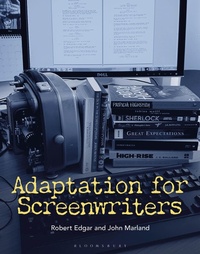
Adaptation for Screenwriters
1st Edition
Published on 14. November 2019
288 pages
978-1-350-03668-0 (ISBN)
Description

Develop the critical and creative skills to 'translate' a story from page to screen with this step-by-step guide to the process of screen adaptation you'll learn to:
- interrogate a novel or short story to release its 'inner film'
- convert fictional prose into visual drama
- overcome the obstacles presented by different media 'languages'
- approach key strategic decisions - both technical and interpretive
- draft and re-draft your plot, characters and dialogue
- professionally format and submit your finished script
In addition to examples taken from 'literary classics', contemporary novels, genre fiction, short stories, and biographical material, Marland and Edgar embrace the wider phenomenon of re-telling and updating existing stories, such as the 'appropriation' of popular figures, inter-film adaptation (sequels and 'reboots'), and development into other visual forms including graphic fiction and video games.
Whether you are producing a faithful adaptation of Tolstoy's War and Peace, or planning to pair up the crime-fighting duo of Sherlock Holmes and Batman, Adaptation for Screenwriters will be your guide.
- interrogate a novel or short story to release its 'inner film'
- convert fictional prose into visual drama
- overcome the obstacles presented by different media 'languages'
- approach key strategic decisions - both technical and interpretive
- draft and re-draft your plot, characters and dialogue
- professionally format and submit your finished script
In addition to examples taken from 'literary classics', contemporary novels, genre fiction, short stories, and biographical material, Marland and Edgar embrace the wider phenomenon of re-telling and updating existing stories, such as the 'appropriation' of popular figures, inter-film adaptation (sequels and 'reboots'), and development into other visual forms including graphic fiction and video games.
Whether you are producing a faithful adaptation of Tolstoy's War and Peace, or planning to pair up the crime-fighting duo of Sherlock Holmes and Batman, Adaptation for Screenwriters will be your guide.
More details
Edition
1. Auflage
Language
English
Place of publication
London
United Kingdom
Publishing group
Bloomsbury Publishing PLC
Target group
College/higher education
Illustrations
45 illus
ISBN-13
978-1-350-03668-0 (9781350036680)
Copyright in bibliographic data and cover images is held by Nielsen Book Services Limited or by the publishers or by their respective licensors: all rights reserved.
Schweitzer Classification
Other editions
Additional editions
Robert Edgar | John Marland
Adaptation for Screenwriters
Book
11/2019
Bloomsbury Academic
€29.00
Shipment within 15-20 days
Persons
Robert Edgar is Professor of Writing and Popular Culture in the York Centre for Writing based in the School of Humanities at York St John University, UK. He has published on Screenwriting (2009), Directing Fiction (2009), The Language of Film (Bloomsbury, 2010 and 2015), The Music Documentary (2013), The Arena Concert (Bloomsbury, 2015), Music, Memory and Memoir (Bloomsbury, 2019), Adaptation for Scriptwriters (Bloomsbury, 2019), and Venue Stories (2023). He is co-editing the forthcoming Bloomsbury publication, Horrifying Children: Hauntology and the Legacy of Children's Fiction.
Content
Introduction
PART 1 - THEORY
1. Different Languages
Approaching Adaptation
Issues of Form
Channels of Communication
Case Study: Enduring Love, High-Rise
Exercises
2. The Challenge of Translation
Being Faithful
Finding the Film in the Book
Dramatizing the Page
Case Study: Kiss of the Spider Woman, Fight Club
Exercises
PART 2 - ADAPTATION
3. Narrative Re/Construction
Story and Structure
Culture and Context
Adapting to Genre
Case Study: The English Patient, No Country for Old Men
Exercises
4. Faithful Invention
Acts of Interpretation
Reframing - Prologues and Codas
Expanding the Short Story
Case Study: Don't Look Now, The Shawshank Redemption
Exercises
5. The Human Subject
Character - Surface and Depth
Screening Psychology
Capturing Conflict
Case Study: The Great Gatsby, The Talented Mr Ripley
Exercises
PART 3 - APPROPRIATION
6. Texts Unbound
Intertextuality
Customizing the Classic Text
Weaving Fact and Fiction
Case Study: Regeneration, The Hours
Exercises
7. Textual Play
Hypotextuality
Twelve Strategies
Fan Film
Case Study: Dr Frankenstein, Sherlock Holmes
Exercises
8. Other Forms
Stage to Screen
The Graphic Novel
Video Game to Film
Case Study: Alan Moore, Alien vs. Predator
Exercises
PART 4 - PRACTICE
9. Process
Assessing the Material
Centre and Circumference
Concept, Treatment and Pitch
Case Study: Original Material
Exercises
10. The Script
First Draft - Dialogue
Redrafting - From Scene to Scene
Final Draft - Self-Reflection
Case Study: Original Material
Exercises
PART 1 - THEORY
1. Different Languages
Approaching Adaptation
Issues of Form
Channels of Communication
Case Study: Enduring Love, High-Rise
Exercises
2. The Challenge of Translation
Being Faithful
Finding the Film in the Book
Dramatizing the Page
Case Study: Kiss of the Spider Woman, Fight Club
Exercises
PART 2 - ADAPTATION
3. Narrative Re/Construction
Story and Structure
Culture and Context
Adapting to Genre
Case Study: The English Patient, No Country for Old Men
Exercises
4. Faithful Invention
Acts of Interpretation
Reframing - Prologues and Codas
Expanding the Short Story
Case Study: Don't Look Now, The Shawshank Redemption
Exercises
5. The Human Subject
Character - Surface and Depth
Screening Psychology
Capturing Conflict
Case Study: The Great Gatsby, The Talented Mr Ripley
Exercises
PART 3 - APPROPRIATION
6. Texts Unbound
Intertextuality
Customizing the Classic Text
Weaving Fact and Fiction
Case Study: Regeneration, The Hours
Exercises
7. Textual Play
Hypotextuality
Twelve Strategies
Fan Film
Case Study: Dr Frankenstein, Sherlock Holmes
Exercises
8. Other Forms
Stage to Screen
The Graphic Novel
Video Game to Film
Case Study: Alan Moore, Alien vs. Predator
Exercises
PART 4 - PRACTICE
9. Process
Assessing the Material
Centre and Circumference
Concept, Treatment and Pitch
Case Study: Original Material
Exercises
10. The Script
First Draft - Dialogue
Redrafting - From Scene to Scene
Final Draft - Self-Reflection
Case Study: Original Material
Exercises
