

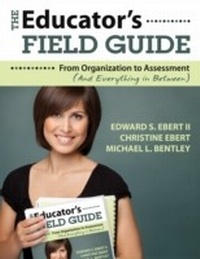
The Educator's Field Guide
An Introduction to Everything from Organization to Assessment
1st Edition
Published on 6. May 2014
240 pages
978-1-62914-109-1 (ISBN)
Description

The Educator's Field Guide helps teachers get off to a running start. The only book that covers all four key cornerstones of effective teaching-organization, classroom management, instruction, and assessment-this handy reference offers a bridge from college to classroom with a hearty dose of practical guidance for teachers who aspire to greatness. At a time when school leaders are pressed to hire and retain high-quality teachers, this guidebook is indispensable for defining and nurturing the qualities the qualities teachers strive for and students deserve. Helpful tools include:
Step-by-step guidance on instructional organization, behavior management, lesson planning, and formative and summative assessment
User-friendly taxonomic guides to help readers quickly locate topics
The latest information on student diversity, special needs, and lesson differentiation
Teacher testimonials and examples
Explanations of education standards and initiatives
Each key concept is addressed in a resource-style format with activities and reproducible that can be customized. Teachers will also find lesson plan templates, graphs, charts, quizzes, and games-all in one easy-to-use source.
Step-by-step guidance on instructional organization, behavior management, lesson planning, and formative and summative assessment
User-friendly taxonomic guides to help readers quickly locate topics
The latest information on student diversity, special needs, and lesson differentiation
Teacher testimonials and examples
Explanations of education standards and initiatives
Each key concept is addressed in a resource-style format with activities and reproducible that can be customized. Teachers will also find lesson plan templates, graphs, charts, quizzes, and games-all in one easy-to-use source.
More details
Other editions
Additional editions
Edward S. Ebert | Christine Ebert | Michael L. Bentley
The Educator's Field Guide
An Introduction to Everything from Organization to Assessment
Book
05/2014
Skyhorse Publishing
€33.61
No shipping information available
Persons
Edward S. Ebert II: is Professor Emeritus of Education at Coker College in Hartsville, South Carolina. He resides in Wellfleet, Massachusetts, with his wife Christine Ebert.
Christine Ebert: is Distinguished Professor Emeritus of Education and former Dean of the Graduate School at the University of South Carolina. She resides in Wellfleet, Massachusetts.
Michael Bentley: has authored twenty-three books and chapters in books about science and science education and has taught at Virginia Tech and the University of Tennessee.
Christine Ebert: is Distinguished Professor Emeritus of Education and former Dean of the Graduate School at the University of South Carolina. She resides in Wellfleet, Massachusetts.
Michael Bentley: has authored twenty-three books and chapters in books about science and science education and has taught at Virginia Tech and the University of Tennessee.
Content
- Intro
- Title Page
- Copyright
- Contents
- List of Figures and Tables
- Preface
- Acknowledgments
- About the Authors
- Unit I Instructional Organization
- Unit I Outline
- Unit I Concept Map
- Unit I Pep Talk
- First: Long-Range Planning
- Why Plan?
- Three Prerequisites
- Safety
- Demographics
- Content Area(s) Standards and Assessment
- Second: Short-Range Planning
- Unit Plans
- Goals and Objectives
- Lesson Plans
- Projects and Group Work
- Now: Classroom Organization
- Student Seating
- Teacher's Seating
- Independent Work Areas
- Resource Storage/Availability
- Communication
- Strategies for Moving From Place to Place
- Scheduling the Day in a Self-Contained Classroom
- Educational Decoration: Avoiding Over Stimulation
- Tomorrow: Instructional Presentation
- Use of the Primary Writing Surface
- Technology (the Old and the New)
- Finally: Communication With "Outsiders"
- School Staff
- Parents
- Museums, Agencies
- Conclusion
- Unit I Appendix
- Unit II Classroom Management
- Unit II Outline
- Unit II Concept Map
- Unit II Pep Talk
- First: Keys to Successful Classroom Management
- Management as the Basis for Effective Teaching
- The Basic Terms
- Some Perspectives on Classroom Management
- Second: Establishing a Management-Based Learning Environment
- Planning
- Communicating Expectations to the Students
- The Management Structure
- Teacher Behaviors
- Noninstructional Tasks
- Now: Compiling Your Plan: A Template for Classroom Management
- Write a Mission Statement
- Write Your Rules
- What Consequences Will You Use?
- Discipline Program
- List Procedures for Your Classroom
- Ancillary Personnel
- Assessment of Your Classroom-Management System
- Reflection
- Tomorrow: Implementing the Plan and Responding to Student Behavior
- A Signal
- Inform
- Practice
- Reinforce
- Finally: Assessing Your Classroom-Management Plan
- Unit II Appendix
- Unit III Instruction
- Unit III Outline
- Unit III Concept Map
- Unit III Pep Talk
- First: The Curriculum
- Defining "Curriculum"
- The Purpose of Curriculum
- You Actually Have Four Curriculums
- Perspectives of Curriculum
- The Cognitive Perspective
- The Affective Perspective
- Second: The Student
- Cultural Influences, Ethnicity, and Personality
- Reading Ability and Learning Styles
- Students With Exceptionalities
- Visual and Auditory Challenges
- Social Influences on Diversity
- Now: Conceptualizing Your Role
- Bringing the World to Your Students
- Instructional Techniques
- Monitoring and Flexibility
- Tomorrow: Putting It All Together
- Modeling
- Questioning
- Listening
- Finally: This Is a People Profession
- Preparation, Preparation, Preparation
- Take Time to Enjoy Your Profession
- Unit IV Assessment
- Unit IV Outline
- Unit IV Concept Map
- Unit IV Pep Talk
- First: The Basics of Assessment
- The Basic Terms
- Standardized and Classroom Assessment
- Second: Making Assessment a Part of Instruction
- The Foundation Ideas
- Questions to Ask of Any Test
- Now: Writing Tests
- The Table of Specifications: The Most Important Lesson
- Guidelines for Writing Test Items
- Summary
- Tomorrow: Analyzing the Results of Your Assessment
- Reviewing the Summary Statistics
- Item Analysis
- Summary
- Finally: Assessment and the High-Stakes Environment
- Teaching, but Not to the Test
- How Classroom Assessment Makes Your Life Easier
- Glossary
- References
- Index
