


Privacy, Data Protection and Data-driven Technologies
1st Edition
Published on 29. August 2024
430 pages
978-1-040-11117-8 (ISBN)
Description

This book brings together contributions from leading scholars in law and technology, analysing the privacy issues raised by new data-driven technologies.
Highlighting the challenges that technology poses to existing European Union (EU) data protection laws, the book assesses whether current legal frameworks are fit for purpose, while maintaining a balance between supporting innovation and the protection of individual's privacy. Data privacy issues range from targeted advertising and facial recognition, systems based on artificial intelligence (AI) and blockchain, and machine-to-machine (M2M) communication, to technologies that enable the detection of emotions and personal care robots.
The book will be of interest to scholars, policymakers and practitioners working in the fields of law and technology, EU law and data protection.
Highlighting the challenges that technology poses to existing European Union (EU) data protection laws, the book assesses whether current legal frameworks are fit for purpose, while maintaining a balance between supporting innovation and the protection of individual's privacy. Data privacy issues range from targeted advertising and facial recognition, systems based on artificial intelligence (AI) and blockchain, and machine-to-machine (M2M) communication, to technologies that enable the detection of emotions and personal care robots.
The book will be of interest to scholars, policymakers and practitioners working in the fields of law and technology, EU law and data protection.
More details
Series
Edition
1. Auflage
Language
English
Place of publication
London
United Kingdom
Publishing group
Taylor & Francis Ltd
Target group
College/higher education
Illustrations
1 Line drawings, black and white; 1 Illustrations, black and white
ISBN-13
978-1-040-11117-8 (9781040111178)
Copyright in bibliographic data and cover images is held by Nielsen Book Services Limited or by the publishers or by their respective licensors: all rights reserved.
Schweitzer Classification
Other editions
Additional editions
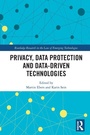
Martin Ebers | Karin Sein
Privacy, Data Protection and Data-driven Technologies
Book
05/2026
1st Edition
Routledge
€57.50
Shipment within 10-20 days

Martin Ebers | Karin Sein
Privacy, Data Protection, and Data-Driven Technologies
Book
09/2024
Taylor & Francis
Unfortunately, price unknown
Available (delivery time upon request)
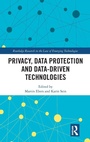
Martin Ebers | Karin Sein
Privacy, Data Protection and Data-driven Technologies
Book
08/2024
1st Edition
Routledge
€297.70
Shipment within 10-20 days
Persons
Martin Ebers is President of the Robotics & AI Law Society (RAILS) and Associate Professor of IT Law at the University of Tartu (Estonia). He taught and presented at more than 100 international conferences, is a member of several national and international research networks and published 16 books and over 120 articles in the field of law and technology, especially artificial intelligence, as well as in commerical, private, European, comparative and international law. His latest books include Algorithms and Law (2020), Algorithmic Governance and Governance of Algorithms (2021), Contracting and Contract Law in the Age of Artificial Intelligence (2022) and the Stichwortkommentar Legal Tech (2023).
Karin Sein is a Professor of Civil Law in the Faculty of Law of the University of Tartu, Estonia. Her main research interests cover domestic and European contract law, consumer law, private international law and international civil procedure and also law and digitalisation. In recent years, she has provided expertise for the Estonian Ministry of Justice on implementing European consumer protection directives into Estonian contract law. During the Estonian EU Presidency in July-December 2017, she was acting as Chair for the Council Working Group for the Proposals of the Directive on Digital Content and of the Directive on Sale of Consumer Goods.
Karin Sein is a Professor of Civil Law in the Faculty of Law of the University of Tartu, Estonia. Her main research interests cover domestic and European contract law, consumer law, private international law and international civil procedure and also law and digitalisation. In recent years, she has provided expertise for the Estonian Ministry of Justice on implementing European consumer protection directives into Estonian contract law. During the Estonian EU Presidency in July-December 2017, she was acting as Chair for the Council Working Group for the Proposals of the Directive on Digital Content and of the Directive on Sale of Consumer Goods.
Content
Preface by Wojciech Wiewiorowski
Part I: Introduction
1. Data-driven Technologies: Challenges for Privacy and Data Protection Law
Part II: Consent, Data Protection and New Technologies
2. Dark Patterns and the Scraping Consumer Consent: Comparative Remarks on More Effective Legal Compliance
3. The Consent Service in Estonia: Enhancement of State-held Data Sharing vs Privacy Risks
4. Consent to Data Processing in Biobanking: Regulatory Challenges of Data Processing in Biobanking on the Estonian Example
Part III: M2M Communication, AI Systems and Data Protection
5. M2M Communications in 5G Networks: Data Protection and Privacy Aspects
6. Training of AI Systems: How to Comply with the GDPR?
7. Training Your Medical/Nursing Robot: From the General Data Protection Regulation to the European Health Data Space
Part IV: Blockchain, Robots, Legal Tech and Data Protection Challenges
8. Data Protection and Blockchain Technologies
9. Personal Care Robots and EU Data Protection Law
10. Legal Tech and Data Protection: Enemies or Friends?
Part V: Behavioral Advertising, Biometrics, Emotions and Data Protection
11. The Mismatch between GDPR and Behavioural Advertising: What Way Forward?
12. Beyond Procedural Fetishism: The Inadequacy of GDPR in Regulating Facial Recognition Technologies and Public Space Surveillance
13. The Privacy of Emotions: From the GDPR to the AI Act - An Overview of Emotional AI Regulation and the Protection of Privacy and Personal Data
Part I: Introduction
1. Data-driven Technologies: Challenges for Privacy and Data Protection Law
Part II: Consent, Data Protection and New Technologies
2. Dark Patterns and the Scraping Consumer Consent: Comparative Remarks on More Effective Legal Compliance
3. The Consent Service in Estonia: Enhancement of State-held Data Sharing vs Privacy Risks
4. Consent to Data Processing in Biobanking: Regulatory Challenges of Data Processing in Biobanking on the Estonian Example
Part III: M2M Communication, AI Systems and Data Protection
5. M2M Communications in 5G Networks: Data Protection and Privacy Aspects
6. Training of AI Systems: How to Comply with the GDPR?
7. Training Your Medical/Nursing Robot: From the General Data Protection Regulation to the European Health Data Space
Part IV: Blockchain, Robots, Legal Tech and Data Protection Challenges
8. Data Protection and Blockchain Technologies
9. Personal Care Robots and EU Data Protection Law
10. Legal Tech and Data Protection: Enemies or Friends?
Part V: Behavioral Advertising, Biometrics, Emotions and Data Protection
11. The Mismatch between GDPR and Behavioural Advertising: What Way Forward?
12. Beyond Procedural Fetishism: The Inadequacy of GDPR in Regulating Facial Recognition Technologies and Public Space Surveillance
13. The Privacy of Emotions: From the GDPR to the AI Act - An Overview of Emotional AI Regulation and the Protection of Privacy and Personal Data
