

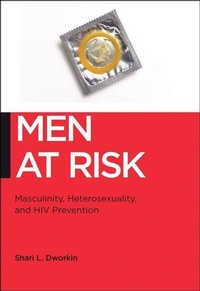
Men at Risk
Masculinity, Heterosexuality and HIV Prevention
1st Edition
Published on 4. December 2015
277 pages
978-1-4798-1968-3 (ISBN)
Description

Presents a unique approach to HIV prevention at the intersection of sociological and public health research
Although the first AIDS cases were attributed to men having sex with men, over 70% of HIV infections worldwide are now estimated to occur through sex between women and men. In Men at Risk, Shari L. Dworkin argues that the centrality of heterosexual relationship dynamics to the transmission of HIV means that both women and men need to be taken into account in gender-specific HIV/AIDS prevention interventions. She looks at the "costs of masculinity" that shape men's HIV risks, such as their initiation of sex and their increased status from sex with multiple partners.
Engaging with the common paradigm in HIV research that portrays only women-and not heterosexually active men-as being "vulnerable" to HIV, Dworkin examines the gaps in public health knowledge that result in substandard treatment for HIV transmission and infection among heterosexual men both domestically and globally. She examines a vast array of structural factors that shape men's HIV transmission risks and also focuses on a relatively new category of global health programs with men known as "gender-transformative" that seeks to move men in the direction of gender equality in the name of improved health. Dworkin makes suggestions for the next generation of gender-transformative health interventions by calling for masculinities-based and structurally driven HIV prevention programming. Thoroughly researched and theoretically grounded, Men at Risk presents a unique approach to HIV prevention at the intersection of sociological and public health research.
Although the first AIDS cases were attributed to men having sex with men, over 70% of HIV infections worldwide are now estimated to occur through sex between women and men. In Men at Risk, Shari L. Dworkin argues that the centrality of heterosexual relationship dynamics to the transmission of HIV means that both women and men need to be taken into account in gender-specific HIV/AIDS prevention interventions. She looks at the "costs of masculinity" that shape men's HIV risks, such as their initiation of sex and their increased status from sex with multiple partners.
Engaging with the common paradigm in HIV research that portrays only women-and not heterosexually active men-as being "vulnerable" to HIV, Dworkin examines the gaps in public health knowledge that result in substandard treatment for HIV transmission and infection among heterosexual men both domestically and globally. She examines a vast array of structural factors that shape men's HIV transmission risks and also focuses on a relatively new category of global health programs with men known as "gender-transformative" that seeks to move men in the direction of gender equality in the name of improved health. Dworkin makes suggestions for the next generation of gender-transformative health interventions by calling for masculinities-based and structurally driven HIV prevention programming. Thoroughly researched and theoretically grounded, Men at Risk presents a unique approach to HIV prevention at the intersection of sociological and public health research.
Reviews / Votes
Men at Risk offers an incisive critique of several decades of HIV prevention programming that has largely rendered heterosexually-active men invisible to public health knowledge and practice.It wrestles candidly with the many conceptual, methodological, and political dilemmas of feminist work on masculinities.But, it also points to important successes and opportunities in gender-transformative and intersectional work with men and boys. Dworkins account of this terrain is thoroughgoing and expert, but also forceful and politically clear-eyed. - Christopher J. Colvin,Senior Researcher in HIV/AIDS at the University of Cape Town, South Africa A timely and evocative contribution to the growing literature globally on masculinity and HIV prevention. With a focus firmly on heterosexual mens practices and experiences, Men at Risk fills a major gap.A & must read for scholars of gender and sexuality in relation to HIV, and a valuable resource to inspire policy makers and program developers. - Peter Aggleton,author of Education, Vulnerability, and HIV/AIDSMore details
Series
Language
English
Place of publication
New York
United States
Target group
Professional and scholarly
File size
1,44 MB
ISBN-13
978-1-4798-1968-3 (9781479819683)
Copyright in bibliographic data and cover images is held by Nielsen Book Services Limited or by the publishers or by their respective licensors: all rights reserved.
Schweitzer Classification
Other editions
Additional editions
Book
12/2015
New York University Press
€127.76
Shipment within 10-20 days

Book
12/2015
New York University Press
€36.50
Shipment within 15-20 days
Person
Shari L. Dworkin is Professor in the Department of Social and Behavioral Sciences and Associate Dean for Academic Affairs at the University of California, San Francisco School of Nursing. She is the author or editor of several books, most recently Body Panic: Gender, Health, and the Selling of Fitness and Men at Risk, both with NYU Press.
Content
- Cover
- Contents
- Acknowledgments
- 1. Masculinity and HIV/AIDS Prevention: Heterosexually Active Men as the "Forgotten Group"?
- 2. Vulnerable Women, Invulnerable Men? The Need for Intersectionality in HIV/AIDS Prevention
- 3. Women's Empowerment and Work with Men in HIV and Antiviolence Programs
- 4. "One Man Can": A Women's Rights and Masculinities-Focused Gender-Transformative HIV and Antiviolence Program in South Africa
- 5. "Being a Better Man": Masculinities and Gender Transformation in HIV- and Violence-Prevention Programs
- References
- Index
- A
- B
- C
- D
- E
- F
- G
- H
- I
- J
- K
- L
- M
- N
- O
- P
- Q
- R
- S
- T
- U
- V
- W
- Y
- Z
- About the Author
