

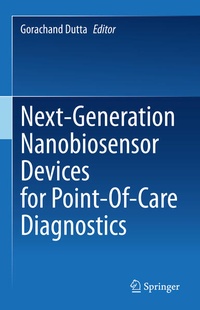
Next-Generation Nanobiosensor Devices for Point-Of-Care Diagnostics
Description

This book reviews the potential of next-generation point-of-care diagnosis in healthcare. It also discusses the printed chip-based assay (Lab-on-a-Chip, Lab-on-a-PCB) for rapid, inexpensive biomarkers detection. The book presents the development of sensory systems based on the use of nanomaterials. It examines different biosensors for medical diagnosis using surface modification strategies of transducers. It presents electrochemical concepts based on different nanobiomaterials and nanocomposites for cancer theranostics. Notably, the book examines the recent advances in wearable, cost-effective hemodynamic sensors to detect diseases at an early stage. It further explores the combination of redox cycling and electrochemical detection to develop ultrasensitive and reproducible biosensors for point-of-care testing. Finally, the book summarizes the significant challenges in the point of care diagnostics and its future opportunities in healthcare.
More details
Other editions
Additional editions
Person
Dr. Gorachand Dutta , PhD is an Assistant Professor with the School of Medical Science and Technology, Indian Institute of Technology Kharagpur. His research interests include the design and characterization of portable biosensors, biodevices, and sensor interfaces for miniaturized systems and biomedical applications for point-of-care testing. He received his Ph.D. in Biosensor and Electrochemistry from Pusan National University, South Korea, where he developed different classes of electrochemical sensors. He completed his Post-doctoral fellowships in the Department of Mechanical Engineering, Michigan State University, USA, and the Department of Electronic and Electrical Engineering at the University of Bath, UK. He has expertise on label-free multichannel electrochemical biosensors, electronically addressable biosensor arrays, aptamer- and DNA-based sensors and surface bio-functionalization.
He is recipient of many prestigious awards and fellowships, such as the prestigious Pusan National University Research Fellowship, BK-21 Fellowship South Korea.
