

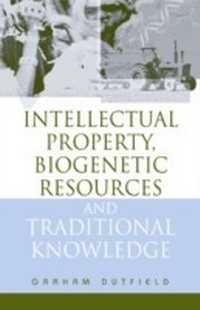
Intellectual Property, Biogenetic Resources and Traditional Knowledge
1st Edition
Published on 23. September 2010
272 pages
978-1-136-53628-1 (ISBN)
Description

Biogenetic resources - the critical biological and chemical materials that underpin so much of medicine, both modern and traditional, agriculture, and wider economic activity in so many fields - are at the centre of heated debate regarding their use, development, and ownership, and the issues of ethics and equity that impinge on all of these factors.
This book is a comprehensive examination of the key issues, institutions and ideologies in this area, presenting definitions and explanations of the fundamentals of intellectual property rights (IPRs), biogenetic resources and traditional knowledge. It uses the insights from this to build a picture of how these factors interact in practice, bringing to the surface issues such as: the conservation and sustainable use of biodiversity, benefit sharing from the commercial use of biodiversity, biotechnological innovation and the transfer of technology, agriculture, food security, rural development, health and international justice.
Part 1 describes the relevant international IPR laws, highlights the extent to which modern commerce depends on such resources, and traces the way in which modern IPR law has evolved to accommodate this dependence. Part 2 shows how stronger IPR protection in the area of life science innovation has given rise to controversies such as 'biopiracy', 'terminator' genes and genetic uniformity. Part 3 focuses on traditional knowledge, its nature, its importance, and the applicability of IPR-style protection. Part 4 covers the international negotiation and policy-making of the WTO, WIPO and CBD and the legislative initiatives of national governments of Asia, Africa and Latin America. Finally, Part 5 focuses on two developing country case studies - of India and Kenya - assessing whether they will be able to gain economic benefit from development of their natural resources within the current regulatory system and whether this will encourage the conservation and sustainable use of the resource base.
With its multidisciplinary approach and breadth of coverage, this book will appeal both to those new to the subject and to those with professional and specialist interest, including students, academics, legal practitioners, government policy-makers and the private sector.
This book is a comprehensive examination of the key issues, institutions and ideologies in this area, presenting definitions and explanations of the fundamentals of intellectual property rights (IPRs), biogenetic resources and traditional knowledge. It uses the insights from this to build a picture of how these factors interact in practice, bringing to the surface issues such as: the conservation and sustainable use of biodiversity, benefit sharing from the commercial use of biodiversity, biotechnological innovation and the transfer of technology, agriculture, food security, rural development, health and international justice.
Part 1 describes the relevant international IPR laws, highlights the extent to which modern commerce depends on such resources, and traces the way in which modern IPR law has evolved to accommodate this dependence. Part 2 shows how stronger IPR protection in the area of life science innovation has given rise to controversies such as 'biopiracy', 'terminator' genes and genetic uniformity. Part 3 focuses on traditional knowledge, its nature, its importance, and the applicability of IPR-style protection. Part 4 covers the international negotiation and policy-making of the WTO, WIPO and CBD and the legislative initiatives of national governments of Asia, Africa and Latin America. Finally, Part 5 focuses on two developing country case studies - of India and Kenya - assessing whether they will be able to gain economic benefit from development of their natural resources within the current regulatory system and whether this will encourage the conservation and sustainable use of the resource base.
With its multidisciplinary approach and breadth of coverage, this book will appeal both to those new to the subject and to those with professional and specialist interest, including students, academics, legal practitioners, government policy-makers and the private sector.
More details
Language
English
Place of publication
London
United Kingdom
Publishing group
Taylor & Francis Ltd
Target group
College/higher education
File size
1,52 MB
ISBN-13
978-1-136-53628-1 (9781136536281)
Copyright in bibliographic data and cover images is held by Nielsen Book Services Limited or by the publishers or by their respective licensors: all rights reserved.
Schweitzer Classification
Other editions
Additional editions
Graham Dutfield
INTELLIGENT PROPERTY, BIOGENETIC RESOURCES AND TRA
Book
09/2004
1st Edition
Earthscan Ltd
€85.80
Shipment within 3-4 weeks
Book
09/2004
1st Edition
Earthscan Ltd
€272.40
Shipment within 3-4 weeks
Person
Graham Dutfield is senior research fellow at Queen Mary, University of London, UK. He is co-editor of Trading in Knowledge (Earthscan, 2003) and author of Intellectual Property Rights, Trade and Biodiversity (Earthscan, 2000).
Content
Part 1: Knowledge, Property and Trade Sovereignty, Common Heritage and Property Rights Biotechnology and the Expanding Boundaries of Intellectual Property Protection The International Law of Biogenetic Resources and Intellectual Property Part 2: Conflicts and Controversies National Sovereignty, Benefit Sharing and the Patenting of Life Biopiracy Environmental Impacts Agriculture, Food Security and Nutrition Beyond Intellectual property: Technological Protection Systems Life Science Innovation, Biotechnology Transfer and Developing Countries Part 3: Protecting Traditional Knowledge Traditional Knowledge and the Intellectual Property System Alternative Approaches to Traditional Knowledge Protection Part 4: Forums, Processes and Initiatives International Forums and Processes Government and Regional Initiatives Part 5: National Case Studies: India Kenya Lessons of the Case Studies
