

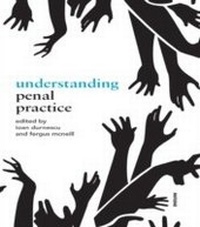
Understanding Penal Practice
1st Edition
Published on 30. October 2013
368 pages
978-1-136-20116-5 (ISBN)
Description

Criminological and penological scholarship has in recent years explored how and why institutions and systems of punishment change - and how and why these changes differ in different contexts. Important though these analyses are, this book focuses not so much on the changing nature of institutions and systems, but rather the changing nature of penal practice and practitioners
Bringing together leading researchers from around the world, this collection unites studies that aim to describe and critically analyse penal practice with studies that investigate its effectiveness and prescribe its future development. Reversing penology's usual preoccupation with the prison, the book focuses mainly on penal practice in the community (i.e. on probation, parole, offender supervision and 'community corrections').
The first part of the book focuses on understanding practice and practitioners, exploring how changing social, cultural, political, and organisational contexts influence practice, and how training, development, professional socialisation and other factors influence practitioners. The second part is concerned with how practitioners can be best supported to develop the skills and approaches that seem most likely to generate positive impacts. It contains accounts of new practice models and approaches, as well as reports of research projects seeking both to discover and to encourage effective practices.
This book explores internationally significant and cutting-edge theoretical and empirical work on the cultures, practices, roles and impacts of frontline practitioners in delivering penal sanctions. As such, it will be of interest to researchers in criminology, social work and social policy as well as correctional policy makers and those involved in community supervision.
Bringing together leading researchers from around the world, this collection unites studies that aim to describe and critically analyse penal practice with studies that investigate its effectiveness and prescribe its future development. Reversing penology's usual preoccupation with the prison, the book focuses mainly on penal practice in the community (i.e. on probation, parole, offender supervision and 'community corrections').
The first part of the book focuses on understanding practice and practitioners, exploring how changing social, cultural, political, and organisational contexts influence practice, and how training, development, professional socialisation and other factors influence practitioners. The second part is concerned with how practitioners can be best supported to develop the skills and approaches that seem most likely to generate positive impacts. It contains accounts of new practice models and approaches, as well as reports of research projects seeking both to discover and to encourage effective practices.
This book explores internationally significant and cutting-edge theoretical and empirical work on the cultures, practices, roles and impacts of frontline practitioners in delivering penal sanctions. As such, it will be of interest to researchers in criminology, social work and social policy as well as correctional policy makers and those involved in community supervision.
Reviews / Votes
"A book aiming to increase our understanding of penal practice without concentrating primarily upon prisons is to be welcomed. Focusing on community supervision this volume scores a hit from that perspective alone... This is a volume of many strengths: it is well-structured and keeps its focus on practitioners to enable in depth consideration... From the outset the editors were clear about their aims. The project is well-conceived and well executed and has resulted in an important collection that should be read by policymakers and community justice practitioners, in addition to a broad range of academics." - Scottish Justice Matters"In our quest for finding "what works" in penal practice, we too often forget to ask questions of "how it works" - the dynamics, relationships, and social interactions involved in the important process of helping people change their lives. With contributions from an outstanding, international team of penal researchers, Durnescu and McNeill's volume is a much needed response to this gap in the literature." - Shadd Maruna, Director of the Institute of Criminology & Criminal Justice, Queen's University Belfast, UK
"Focusing on practice (rather than policy) and on work with offenders in the community (more than in prison), this excellent book fills a gap in the literature. Scholars from different countries present research and conceptual discussions that illuminate how practitioners approach and understand their work and the professional skills and personal qualities needed to support (ex-)offenders in the process of change." - Professor Rob Canton, De Montfort University, UK
"This book deals more with practices in community settings and thus differs from the majority of books that focus on prison settings. This is a welcomed approach for practitioners in probation and parole... (The Editors) have brought together in this book a number of interesting and informative studies on how correctional workers practice their profession. This work contributes enormously towards bridging the gap between what works and how it works.... I would recommend this collection to both probation administrators and officers as a useful tool to assist them in developing their policy and practices that improve the outcomes of their efforts." - Donald G Evans, Past President of the American Probation and Parole Association, Perspectives, American Probation and Parole Association
More details
Series
Language
English
Place of publication
London
United Kingdom
Publishing group
Taylor & Francis Ltd
Target group
College/higher education
Illustrations
7 s/w Abbildungen, 21 s/w Tabellen, 7 s/w Zeichnungen
21 Tables, black and white; 7 Line drawings, black and white; 7 Illustrations, black and white
File size
2,84 MB
ISBN-13
978-1-136-20116-5 (9781136201165)
Copyright in bibliographic data and cover images is held by Nielsen Book Services Limited or by the publishers or by their respective licensors: all rights reserved.
Schweitzer Classification
Other editions
Additional editions
Ioan Durnescu | Fergus McNeill
Understanding Penal Practice
Book
06/2015
1st Edition
Routledge
€72.30
Shipment within 10-20 days
Ioan Durnescu | Fergus McNeill
Understanding Penal Practice
Book
10/2013
1st Edition
Routledge
€234.00
Shipment within 15-20 days
Persons
Ioan Durnescu is a Senior Lecturer at the University of Bucharest, Faculty of Sociology and Social Work. Ioan is also the founder and editor of the European Journal of Probation (www.ejprob.eu) and author or a number of books and articles published in Romania and abroad. Together with Professor Anton van Kalmthout he co-edited Probation in Europe. Before becoming an academic he worked for the Prison Department and Probation Department in Romania.
Fergus McNeill is Professor of Criminology and Social Work at the University of Glasgow where he works in the Scottish Centre for Crime and Justice Research. Prior to becoming an academic in 1998, he worked in residential drug rehabilitation and as a criminal justice social worker.
Fergus McNeill is Professor of Criminology and Social Work at the University of Glasgow where he works in the Scottish Centre for Crime and Justice Research. Prior to becoming an academic in 1998, he worked in residential drug rehabilitation and as a criminal justice social worker.
Content
Introduction Part 1: Understanding practice, understanding practitioners, 1. Professional ideologies in the United States' probation and parole 2. Correctional officer training in Canada, 3. Who works in the probation service in Romania, 4. Explaining French probation: social work in a prison administration, 5. Probation practices and UEbergangsmanagement in Germany: state of play and challenges, 6.Volunteers in the probaiton service: a comparison between Germany and Japan, 7. Redefining professionalism by seeking legitimacy in probation? A comparison between Belgium and England and Wales, 8. Understanding 'the relationship' in English probation supervision, 9. What quality means to probation staff in England in relation to one-to-one supervision, 10. Staff-prisoner relationships, moral performance and privitization, 11. Changing lives, changing work: social work and criminal justice, Part 2: Supporting practitioners, improving practice 12. Staff skills and characteristics in probation history: a literature review, 13. Co-producing desistance: who works to support desistance? 14.Practicing the Good Lives Models (GLM), 15. Effective supervision in youth justice: a comparison of data sources, Chris Trotter 16. Supporting probation officers' evidence-based professional development in the strategic thinking initiative in community supervision (STICS): Ongoing clinical support activities and the individuals who lead the charge, 17. Supervision skills and practices: the Jersey study, 18. Supporting practitioners to engage offenders, 19. Sources of professional effectiveness, Anneke Menger and Andrea Donker 20. Wraparound care as a booster of the crime reducing effects of probation, 21. Aligning the purposes of probation with professional and learning competencies: basic conditions for a new professionalism, Conclusion: changing penal practice.
