

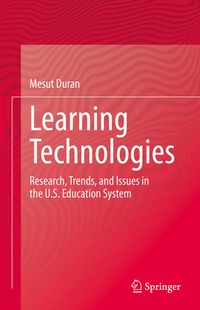
Learning Technologies
Description

With a historical context covering the past 20 years, this book provides in-depth discussions of research, trends, and issues related to learning technologies in K-12 schools, higher education settings, and educational administration in the U.S. Given the remote learning challenges and opportunities that the COVID-19 pandemic has recently brought to our attention, world-wide interest in educational technology-related issues is at its peak. Therefore, this book is specifically directed at the entire educational technology field, educators, educational leaders, researchers, and policymakers alike who are interested in learning technologies in the U.S. educational system.
Three main resources guide the discussions in the book. First, an extensive literature review related to the book's central focus-learning technologies in the U.S. education system, including relevant studies published over the last two decades-is presented. Second, reflections on the author's twenty years of professional teaching, research, and scholarship focused on educational technology at a major U.S. research university are provided. And third, the viewpoints of students in the graduate-level educational technology courses taught by the author, presenting the vital perspective of practicing teachers and educational leaders regarding how learning technologies affect their schools and their work within them, are considered. All of these perspectives and data combine to provide a comprehensive overview on the topic of learning technologies in the U.S. education system. Together, they create a book that is indispensable for anyone interested in learning technologies in education.More details
Other editions
Additional editions
Person
Dr. Mesut Duran is a Professor of Technology at the College of Education, Health, and Human Services, University of Michigan-Dearborn. He completed his B.A. at Hacettepe University in Ankara, Turkey. He received his M.Ed. in Microcomputer Applications in Education and Ph.D. in Curriculum and Instruction from Ohio University.
Dr. Duran's teaching and research interests focus on technology and teacher education. He specializes in and writes about technology integration in teacher preparation programs. He has published numerous articles and book chapters on this topic. Dr. Duran's scholarly interest also includes researching STEM learning trends and educational technology issues. His editorial book, STEM Learning: IT Integration and Collaborative Strategies, was published by Springer International Publishing in 2016.Dr. Duran received the "Outstanding Paper Award" for his paper presented at the 10th International SITE Conference in 2008. He has over 80 publications and presentations in top journals and conferences, including the Journal of Science Education and Technology, Journal of Research on Technology in Education, Journal of Technology and Teacher Education, Computers in the Schools, and Computers in Human Behavior. The U.S. Department of Education and the National Science Foundation funded Dr. Duran's research.
