

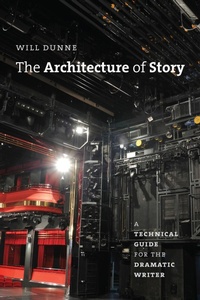
The Architecture of Story
A Technical Guide for the Dramatic Writer
Published on 22. December 2022
228 pages
978-0-226-18207-0 (ISBN)
Description

"Together with
The Dramatic Writer's Companion, Dunne's
The Architecture of Story is part of the most thorough course in playwriting available in print." -Art Borreca, head of Dramaturgy Program and co-head of Playwrights Workshop, the University of Iowa
While successful plays tend to share certain storytelling elements, there is no single blueprint for how a play should be constructed. Instead, seasoned playwrights know how to select the right elements for their needs and organize them in a structure that best supports their particular story.
Through his workshops and book The Dramatic Writer's Companion, Will Dunne has helped thousands of writers develop successful scripts. Now, in The Architecture of Story, he helps writers master the building blocks of dramatic storytelling by analyzing a trio of award-winning contemporary American plays: Doubt: A Parable by John Patrick Shanley, Topdog/Underdog by Suzan-Lori Parks, and The Clean House by Sarah Ruhl. Dismantling the stories and examining key components from a technical perspective enables writers to approach their own work with an informed understanding of dramatic architecture.
Each self-contained chapter focuses on one storytelling component, ranging from "Title" and "Main Event" to "Emotional Environment" and "Crisis Decision." Dunne explores each component in detail, demonstrating how it has been successfully handled in each play and comparing and contrasting techniques. The chapters conclude with questions to help writers evaluate and improve their own scripts. The result is a nonlinear reference guide that lets writers work at their own pace and choose the topics that interest them as they develop new scripts. This flexible, interactive structure is designed to meet the needs of writers at all stages of writing and at all levels of experience.
While successful plays tend to share certain storytelling elements, there is no single blueprint for how a play should be constructed. Instead, seasoned playwrights know how to select the right elements for their needs and organize them in a structure that best supports their particular story.
Through his workshops and book The Dramatic Writer's Companion, Will Dunne has helped thousands of writers develop successful scripts. Now, in The Architecture of Story, he helps writers master the building blocks of dramatic storytelling by analyzing a trio of award-winning contemporary American plays: Doubt: A Parable by John Patrick Shanley, Topdog/Underdog by Suzan-Lori Parks, and The Clean House by Sarah Ruhl. Dismantling the stories and examining key components from a technical perspective enables writers to approach their own work with an informed understanding of dramatic architecture.
Each self-contained chapter focuses on one storytelling component, ranging from "Title" and "Main Event" to "Emotional Environment" and "Crisis Decision." Dunne explores each component in detail, demonstrating how it has been successfully handled in each play and comparing and contrasting techniques. The chapters conclude with questions to help writers evaluate and improve their own scripts. The result is a nonlinear reference guide that lets writers work at their own pace and choose the topics that interest them as they develop new scripts. This flexible, interactive structure is designed to meet the needs of writers at all stages of writing and at all levels of experience.
More details
Other editions
Additional editions
Book
04/2016
University of Chicago Press
€99.20
Article exhausted; check different version
Person
Will Dunne is currently a resident playwright at Chicago Dramatists, where he develops plays and teaches workshops. He also has led over fifteen hundred workshops through his San Francisco program, served as a dramaturg at the O'Neill, and twice attended the Australian National Playwrights Conference as guest instructor. His plays, which include
How I Became an Interesting Person and
Hotel Desperado, have been presented in Russia, Australia, and Croatia as well as in the US.
Content
- Intro
- Contents
- About This Guide
- The Plays and Playwrights
- Technical Considerations
- Genre: Type of Story
- Style: How Characters and Events Are Depicted
- Dramatic Focus: Main Character and Point of View
- Rules of the Game: How Things Work in This Particular Story
- Framework: Act and Scene Divisions, Including French Scenes
- Stage Directions: Instructions for Staging the Play
- Other Script Elements: What's in the Script besides the Play
- The Big Picture
- Title: Meaning and Function of Title
- Characters: Who Causes the Story to Happen
- Offstage Population: Who Influences the Story from Offstage
- Plot: Synopsis and Chain of Events
- Character Arcs: Character Entrances, Exits, and Transitions
- Story Arc and Main Event: Most Important Thing that Happens
- Subject and Theme: What the Story Is About
- Dialogue: Language Characteristics and Indigenous Terms
- Visual Imagery: How Images Reveal Story
- World of the Characters
- Physical Realm: The Setting and What's in It
- Emotional Environment: General Mood or Atmosphere
- Social Context: Key Circumstances, Values, and Beliefs
- Laws and Customs: Social Rules that Affect Behavior
- Economics: How Characters Are Influenced by Money or Lack of It
- Power Structure: Who Is in Charge and Who Isn't
- Spiritual Realm: Presence or Absence of the Supernatural
- Backstory: The Past that Affects the Present
- Steps of the Journey
- Point of Attack: How the Play Begins
- Inciting Event and Quest: What Triggers the Protagonist's Dramatic Journey
- Central Conflict: Key Obstacles to the Protagonist's Success
- What's at Stake: The Protagonist's Reason to Act
- Strategies and Tactics: How the Protagonist Tries to Complete the Quest
- Pointers and Plants: Preparation Tools to Engage the Audience
- Reversals: Turning Points in the Story
- Crisis Decision: The Protagonist's Most Difficult Decision
- Climax and Resolution: Showdown and Final Destination
- Acknowledgments
