

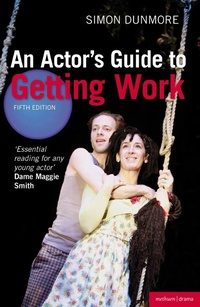
An Actor's Guide to Getting Work
5th Edition
Published on 2. February 2012
256 pages
978-1-4081-5173-0 (ISBN)
Description

'Essential reading for any young actor' Dame Maggie Smith
Competition for acting work is fierce and talent is not necessarily enough. Actors need all the help they can get with all aspects of the profession. Now in its fifth edition, completely revised and updated, this practical, comprehensive guide contains invaluable information and advice to enable actors to succeed in the business. Written with honesty, humour and thoroughness, An Actor's Guide to Getting Work draws on the author's rich experience in the field to offer advice to both the novice and the seasoned performer. New material in this fifth edition includes what drama schools are looking for, approaching Shakespeare for audition, professional email etiquette, using the internet as a self-marketing tool, and many more useful checklists and updated insights into the profession.
Competition for acting work is fierce and talent is not necessarily enough. Actors need all the help they can get with all aspects of the profession. Now in its fifth edition, completely revised and updated, this practical, comprehensive guide contains invaluable information and advice to enable actors to succeed in the business. Written with honesty, humour and thoroughness, An Actor's Guide to Getting Work draws on the author's rich experience in the field to offer advice to both the novice and the seasoned performer. New material in this fifth edition includes what drama schools are looking for, approaching Shakespeare for audition, professional email etiquette, using the internet as a self-marketing tool, and many more useful checklists and updated insights into the profession.
More details
Edition
5th edition
Language
English
Place of publication
London
United Kingdom
Publishing group
Bloomsbury Publishing PLC
Target group
College/higher education
Professional and scholarly
ISBN-13
978-1-4081-5173-0 (9781408151730)
Copyright in bibliographic data and cover images is held by Nielsen Book Services Limited or by the publishers or by their respective licensors: all rights reserved.
Schweitzer Classification
Other editions
Additional editions
Simon Dunmore
An Actor's Guide to Getting Work
Book
02/2012
5th Edition
Methuen Drama
€36.10
Shipment within 10-20 days
Person
Simon Dunmore, Consultant Editor for Actors' Yearbook, is a director with over forty years' experience of employing actors and teaching them. He has drawn on his own knowledge, his long experience of teaching acting students, and also the experience of numerous other professionals, to produce a book that has become - over the last twenty years - the standard work of reference for actors of all ages.
Content
- Cover
- Contents
- Acknowledgements
- Introduction
- 1: If you really want to be a professional actor
- Those of school age
- School-leavers
- The mature entrant to the profession
- Preliminary training
- Full-time training
- Choices
- Some fundamental considerations
- Early preparations
- A drama school applicant's toolkit
- 'What are audition panels looking for?'
- 2: Applying for training - the details
- The paperwork
- Audition speeches
- Rehearsing your speeches
- Some practical considerations
- Performing your speeches
- Audition songs
- Selecting and preparing your songs
- Performing your songs
- Dance auditions
- Movement, improvisations and self-devised audition pieces
- Sight-readings in drama school auditions
- Interviews
- Audition days
- After your auditions
- If you get a place
- Reserve/waiting lists
- Funding your training
- If you don't get a place
- Summary
- 3: The training
- Being at drama school
- Your first public appearances
- Your first professional steps . . .
- Early work (and the lack of it)
- An actor's toolkit
- Slog
- 4: Equity and Spotlight
- Equity
- Spotlight
- 5: Directors, producers, agents and casting directors
- Who's who in casting
- Directors
- Producers
- Casting directors
- The mechanics of casting
- Other issues
- Agents
- Finding an agent
- Working with an agent
- Co-operative agencies
- Final thought
- 6: Your promotional material
- Letters, CVs and photographs
- Some pitfalls to watch out for in your letters
- Writing good letters
- Some pitfalls to watch out for in your CV
- Creating a good CV
- Some pitfalls to watch out for in your photographs
- Getting good photographs
- Other things to think about before sealing the envelope/pressing the send button
- Targeting your submissions
- The following correspondence or lack of it
- Other promotional material
- Business cards and postcards
- Showreels
- Voicereels
- Recording your voicereel
- Personal websites
- Additional internet promotional opportunities
- Final note
- 7: The casting point: inter viewing and auditioning
- Interviews
- Preparations for an interview
- Some things to consider on the day
- Pre-interview checklist
- A few final notes . . .
- Sight-readings
- In advance
- Textual details
- On the day
- In the room
- Additional considerations for television, commercials and films
- Television interviews
- Commercial castings
- Films
- Digital acting opportunities
- 8: Low-pay/no-pay 'work'
- Fringe theatre
- Setting up your own production
- Setting up your own company
- The Edinburgh Festival Fringe
- Showcases
- Low budget films
- Summary
- 9: Other forms of acting income
- Role-playing
- Presenting at trade shows and business conferences
- Enhancing the business-person's presentation and communication skills
- Getting work in these fields
- Role-play companies
- 10: Professionalism: the business of being an actor
- Organisation of interviews/auditions/castings
- Casting information
- You!
- Professional public relations
- Public relations while working
- Essential professionalism
- Some additional thoughts
- Two theories
- Some other thoughts
- Bibliography
- Index
- A
- B
- C
- D
- E
- F
- G
- H
- I
- J
- K
- L
- M
- N
- O
- P
- Q
- R
- S
- T
- U
- V
- W
- Y
