

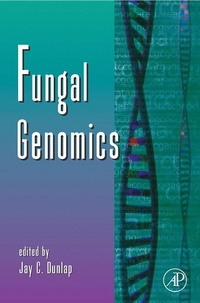
Fungal Genomics
Advances in Genetics
Published on 29. July 2011
320 pages
978-0-08-047495-3 (ISBN)
Description

The sequencing of several fungi genomes has spurred major advances in the field. Fungal genomics has been having a pivotal impact on applied research in agriculture, food sciences, natural resource management, pharmaceuticals, and biotechnology, as well as to basic studies in the life sciences. Fungal Genomics covers exciting new developments in this growth field, from genomic analysis to human fungal pathogen genomics, comparative genomics of fungi, and the genomics of fungal development.
- Includes information on aspergillus genomes
- Discusses sex and its role in virulence of human fungal pathogens
- Covers the genomic analysis of neurospora
More details
Other editions
Additional editions
Book
04/2007
Academic Press
€142.37
Shipment within 15-20 days
Content
- Intro
- Fungal Genomics
- Copyright Page
- Contents
- Contributors
- Preface
- Chapter 1: Genetics of Morphogenesis and Pathogenic Development of Ustilago maydis
- I. Introduction
- II. Mating
- A. The mating loci
- B. The a locus: Self/nonself-recognition
- C. The b locus: Self/nonself-recognition
- D. Targets of bE/bW regulation
- E. The response to mating: Activation of cAMP and MAPK pathways
- F. Interplay between the cAMP and MAPK pathways
- III. Dimorphism
- A. Low nitrogen
- B. pH
- C. Additional stimuli: Air and polyamines
- D. Lipids as signals
- E. Chitin synthases
- IV. Cell Cycle and Cytoskeletal Regulation
- A. Cell cycle
- B. Microtubules and actin
- C. Molecular motors and transport
- D. Differences with other fungi
- E. Connecting the signaling nodes
- V. Pathogenesis
- A. Penetration and colonization
- B. Gall formation and in planta teliospore production
- VI. Genome-Wide Approaches for the Study of U. maydis
- A. Genome structure
- B. An expanding toolbox for the study of U. maydis
- C. Differential screens
- D. Adapted for pathogenicity
- VII. The Plant Side of the Disease Equation
- VIII. Conclusion
- References
- Chapter 2: Enabling a Community to Dissect an Organism: Overview of the Neurospora Functional Genomics Project
- I. Introduction
- A. Why study fungi?
- B. Why Neurospora?
- C. Overview of the functional genomics effort
- II. Project 1: Systematic Gene Knockouts
- A. Creation of gene knockouts in Neurospora
- B. Basic phenotypic characterization of mutants
- C. Deposition of the strains in the Fungal Genetics Stock Center (FGSC) and their distribution to the scientific community at large
- D. Summary of gene knockouts
- III. Project 2: Genome Informatics and Functional Annotation Studies
- A. Introduction
- B. Improving automated genome annotation
- C. Community annotation
- D. Annotation of allele-specific phenotypes
- IV. Project 3: Profiling Transcription in Neurospora
- A. Oligonucleotide design and synthesis
- B. Experimental design for microarray experiments
- C. Technical aspects to transcriptional profiling: RNA extraction, cDNA labeling, image acquisition, and normalization procedures
- D. Neurospora functional genomics microarray database
- E. Proof-of-principle: Transcriptional profiling of conidial germination
- F. Future prospects
- V. Project 4: cDNA Libraries and the Generation of a High-Density SNP Map
- A. Introduction and rationale for the design of the project
- B. Construction of the map
- C. Validation of the SNP map
- D. Implementation of the SNP map
- VI. Conclusions
- Acknowledgments
- References
- Chapter 3: Genomics of the Plant Pathogenic Oomycete Phytophthora: Insights into Biology and Evolution
- I. Introduction
- II. Advances in Structural Genomics
- A. Current datasets
- B. Expressed sequence tags
- C. Genome sequencing
- III. Organization of Phytophthora Genomes
- A. Genetic maps
- B. Gene distribution and structure
- C. Overview of gene content
- D. Noncoding and repetitive DNA
- E. Transposable elements
- IV. Other Genetic Elements
- V. Tools for Functional Genomics
- A. Transformation systems for Phytophthora
- B. Heterologous systems for functional genomics
- VI. Selected Areas of Phytophthora Research
- A. Plant-Phytophthora interactions
- B. Developmental biology
- C. Transcription mechanisms
- D. Evolution
- VII. Conclusions and Prospects
- Acknowledgments
- References
- Chapter 4: Sex and Virulence of Human Pathogenic Fungi
- I. The Predominant Human Pathogenic Fungi
- II. Sex in Fungal Pathogens: Cost Versus Benefit
- III. Mating-Type Loci Are the Sex-Determining Regions in Fungi
- IV. Sex in Cryptococcus
- V. The Unusual Cryptococcus Mating-Type Locus
- VI. Genome Sequencing Identified Mating-Type Locus in the "Asexual" C. albicans and Led to the Discovery of Mating
- VII. Mating-Type Locus in A. fumigatus
- VIII. Mating-Type Loci in Other Human Pathogenic Fungi
- IX. Population Genetic Studies in "Asexual" Fungi Reveal Evidence of Sex
- X. The Role of Sex in Pathogenesis
- XI. Concluding Remarks
- References
- Chapter 5: From Genes to Genomes: A New Paradigm for Studying Fungal Pathogenesis in Magnaporthe oryzae
- I. Introduction
- II. Attachment and Appressorium Morphogenesis
- A. Attachment and germination
- B. Surface recognition and cAMP signaling
- C. Appressorium formation and maturation
- D. The Pmk1 MAP kinase pathway
- E. Genes expressed during appressorium formation
- III. Mechanisms of Penetration
- A. Penetration peg formation and penetration forces
- B. Appressorium turgor generation
- C. Appressorial penetration involves many coordinated processes
- IV. Invasive Growth and Host-Pathogen Interactions
- A. Infectious hyphal growth
- B. Genes involved in race-specific interactions
- C. Physiological activities of infectious hyphae
- D. Genes involved in infectious growth
- V. Genes and Genome Features
- A. Genome sequence and annotation
- B. Gene families and secreted proteins
- C. Chromosome organization
- D. Colinearity
- E. Repetitive sequences
- F. Receptors
- G. Secondary metabolism and phytotoxic compounds
- H. Repeat-induced mutation and silencing
- VI. Functional Genomics
- A. Large-scale mutagenesis
- B. Genome-wide transcriptional profiling
- VII. Concluding Remarks
- Acknowledgments
- References
- Chapter 6: Genetic and Genomic Dissection of the Cochliobolus heterostrophus Tox1 Locus Controlling Biosynthesis of the Polyketide Virulence factor T-toxin
- I. Introduction
- A. C. heterostrophus biology
- B. Cochliobolus and disease
- II. Tools for Genetic Analysis
- A. Classical genetics
- B. Molecular genetics
- C. Electrophoretic karyotype analysis
- D. Restriction fragment length polymorphism mapping
- III. C. heterostrophus and SCLB
- A. T-toxin
- B. T-cytoplasm corn and URF13 protein
- C. Microbial bioassay for T-toxin production
- IV. The Genetics of T-Toxin Production
- A. The Tox1 locus
- B. Identification of genes at Tox1
- V. Genomic Analysis of the Tox1 Locus
- A. cDNA profiling
- B. Tox1-associated genome scaffolds
- VI. The PM-Toxin Gene Cluster
- VII. Are Additional Tox Loci Involved in T-Toxin Production?
- VIII. Model for Biosynthesis of T-Toxin
- IX. The Evolution of Polyketide-Mediated Fungal Specificity for T-Cytoplasm Corn
- X. Conclusions
- Acknowledgments
- References
- Chapter 7: Fungal Genomics: A Tool to Explore Central Metabolism of Aspergillus fumigatus and Its Role in Virulence
- I. Introduction
- II. Nutritional Auxotrophy and Fungal Genetics
- III. Regulation of Amino Acid Biosynthesis
- IV. Regulation of Ambient pH Response
- V. Regulation of Nitrogen Response Pathways
- VI. Regulation of Carbon Response Pathways
- VII. Concluding Remarks
- References
- Index
