

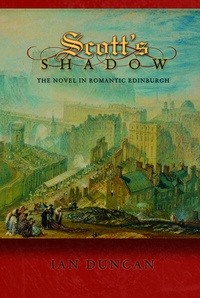
Scott's Shadow
The Novel in Romantic Edinburgh
1st Edition
Published on 2. August 2016
416 pages
978-1-4008-8430-8 (ISBN)
Description

Scott's Shadow is the first comprehensive account of the flowering of Scottish fiction between 1802 and 1832, when post-Enlightenment Edinburgh rivaled London as a center for literary and cultural innovation. Ian Duncan shows how Walter Scott became the central figure in these developments, and how he helped redefine the novel as the principal modern genre for the representation of national historical life.
Duncan traces the rise of a cultural nationalist ideology and the ascendancy of Scott's Waverley novels in the years after Waterloo. He argues that the key to Scott's achievement and its unprecedented impact was the actualization of a realist aesthetic of fiction, one that offered a socializing model of the imagination as first theorized by Scottish philosopher and historian David Hume. This aesthetic, Duncan contends, provides a powerful novelistic alternative to the Kantian-Coleridgean account of the imagination that has been taken as normative for British Romanticism since the early twentieth century. Duncan goes on to examine in detail how other Scottish writers inspired by Scott's innovations--James Hogg and John Galt in particular--produced in their own novels and tales rival accounts of regional, national, and imperial history.
Scott's Shadow illuminates a major but neglected episode of British Romanticism as well as a pivotal moment in the history and development of the novel.
Duncan traces the rise of a cultural nationalist ideology and the ascendancy of Scott's Waverley novels in the years after Waterloo. He argues that the key to Scott's achievement and its unprecedented impact was the actualization of a realist aesthetic of fiction, one that offered a socializing model of the imagination as first theorized by Scottish philosopher and historian David Hume. This aesthetic, Duncan contends, provides a powerful novelistic alternative to the Kantian-Coleridgean account of the imagination that has been taken as normative for British Romanticism since the early twentieth century. Duncan goes on to examine in detail how other Scottish writers inspired by Scott's innovations--James Hogg and John Galt in particular--produced in their own novels and tales rival accounts of regional, national, and imperial history.
Scott's Shadow illuminates a major but neglected episode of British Romanticism as well as a pivotal moment in the history and development of the novel.
More details
Other editions
Additional editions
Book
08/2016
Princeton University Press
€30.30
Article not available at the moment
Book
12/2007
Princeton University Press
€64.38
Article exhausted; check different version
Person
Ian Duncan is professor of English at the University of California, Berkeley. He is the author of Modern Romance and Transformations of the Novel and the coeditor of Scotland and the Borders of Romanticism.
Content
List of Illustrations ix
Preface xi
PART I 1
Chapter 1: Edinburgh, Capital of the Nineteenth Century 3
A King and No King 3
The Modern Athens 8
A Post-Enlightenment 20
Scotch Novel Writing 31
Chapter 2: The Invention of National Culture 46
A Scottish Romanticism 46
From Political Economy to National Culture 50
"A fast middle-point, and grappling-place" 58
"Patriarch of the National Poetry of Scotland" 65
Chapter 3: Economies of National Character 70
Dirt 70
Purity 78
Beauty 82
Enjoyment 88
Traffic 91
Chapter 4: Modernity's Other Worlds 96
Scott's Highlands 96
Topologies of Modernization 101
Inside and Outside the Wealth of Nations 105
Modernity's Other Worlds 108
Chapter 5: The Rise of Fiction 116
Seeing Nothing 116
The Sphere of Common Life 119
The Rise of the Novel and the Rise of Fiction 123
Fiction and Belief 127
Historical Fiction 135
After History 138
PART II 145
Chapter 6: Hogg's Body 147
Ettrick Shepherd 147
Hogg's Scrapes 150
Men of Letters 155
Border Minstrels 159
The Suicide's Grave 166
Organic Form 173
Chapter 7: The Upright Corpse 183
The Mountain and Fairy School 183
Leagues and Covenants 187
Magical Realism 194
The Upright Corpse 207
Resurrection Men 212
Chapter 8: Theoretical Histories of Society 215
Local Theoretical History 215
Exemplarity: Annals of the Parish 223
Ideology: The Provost 230
Plot: The Entail 235
Chapter 9: Authenticity Effects 246
Post-Enlightenment Postmodernism 246
Revolutionary History 253
Philosophical Melancholy and Delirium 258
Technologies of Self and Other 264
Authenticity Effects 272
Chapter 10: A New Spirit of the Age 287
A Paper Economy 287
The Spirit of the Time 297
Recessional 306
Notes 311
Bibliography 349
Early Nineteenth-Century Periodicals 349
Sources Published before 1900 349
Sources Published after 1900 356
Index 375
Preface xi
PART I 1
Chapter 1: Edinburgh, Capital of the Nineteenth Century 3
A King and No King 3
The Modern Athens 8
A Post-Enlightenment 20
Scotch Novel Writing 31
Chapter 2: The Invention of National Culture 46
A Scottish Romanticism 46
From Political Economy to National Culture 50
"A fast middle-point, and grappling-place" 58
"Patriarch of the National Poetry of Scotland" 65
Chapter 3: Economies of National Character 70
Dirt 70
Purity 78
Beauty 82
Enjoyment 88
Traffic 91
Chapter 4: Modernity's Other Worlds 96
Scott's Highlands 96
Topologies of Modernization 101
Inside and Outside the Wealth of Nations 105
Modernity's Other Worlds 108
Chapter 5: The Rise of Fiction 116
Seeing Nothing 116
The Sphere of Common Life 119
The Rise of the Novel and the Rise of Fiction 123
Fiction and Belief 127
Historical Fiction 135
After History 138
PART II 145
Chapter 6: Hogg's Body 147
Ettrick Shepherd 147
Hogg's Scrapes 150
Men of Letters 155
Border Minstrels 159
The Suicide's Grave 166
Organic Form 173
Chapter 7: The Upright Corpse 183
The Mountain and Fairy School 183
Leagues and Covenants 187
Magical Realism 194
The Upright Corpse 207
Resurrection Men 212
Chapter 8: Theoretical Histories of Society 215
Local Theoretical History 215
Exemplarity: Annals of the Parish 223
Ideology: The Provost 230
Plot: The Entail 235
Chapter 9: Authenticity Effects 246
Post-Enlightenment Postmodernism 246
Revolutionary History 253
Philosophical Melancholy and Delirium 258
Technologies of Self and Other 264
Authenticity Effects 272
Chapter 10: A New Spirit of the Age 287
A Paper Economy 287
The Spirit of the Time 297
Recessional 306
Notes 311
Bibliography 349
Early Nineteenth-Century Periodicals 349
Sources Published before 1900 349
Sources Published after 1900 356
Index 375
