

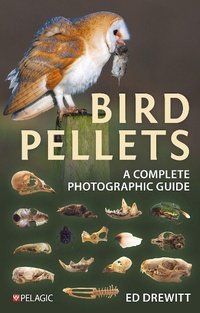
Bird Pellets
A Complete Photographic Guide
Published on 20. June 2024
258 pages
978-1-78427-472-6 (ISBN)
Description

This book is the first comprehensive guide to bird pellets, the undigested remains of food that form together into a ball or sausage-like shape and are regurgitated. It showcases the range of pellets that different bird species produce, including owls, hawks, falcons, corvids such as ravens and magpies, as well as waders - and even garden birds! The common items found in them, such as small mammal skulls and bones, are analysed in detail, with the discussion accompanied by numerous colour illustrations.
The book progresses methodically from an introduction to pellets, covering what they are and how they are formed, to instructions on dissection and analysis and how this can be used in research, followed by a closer look at the pellets of each bird species in turn - from the golden eagle to the dipper. We learn how to identify the remains of small mammals including bats, as well as reptiles, amphibians, fish, invertebrates and of course other birds.
Dissecting bird pellets and identifying what is inside can be an important tool for discovering what birds are feeding on as part of more detailed diet studies. It is also an activity often delivered at family-friendly events or in schools by wildlife organisations. Extracting information from pellets also has sound scientific value: while it does not capture everything a bird has been eating, it still goes a long way in revealing the diet of birds and how this may change over time, in different habitats and different parts of the world.
The book progresses methodically from an introduction to pellets, covering what they are and how they are formed, to instructions on dissection and analysis and how this can be used in research, followed by a closer look at the pellets of each bird species in turn - from the golden eagle to the dipper. We learn how to identify the remains of small mammals including bats, as well as reptiles, amphibians, fish, invertebrates and of course other birds.
Dissecting bird pellets and identifying what is inside can be an important tool for discovering what birds are feeding on as part of more detailed diet studies. It is also an activity often delivered at family-friendly events or in schools by wildlife organisations. Extracting information from pellets also has sound scientific value: while it does not capture everything a bird has been eating, it still goes a long way in revealing the diet of birds and how this may change over time, in different habitats and different parts of the world.
Reviews / Votes
Ed Drewitt has created a great guide here, and to date, apart from a few leaflets and magazine articles, there has not been enough available information on bird pellets to allow you to see what a bird has eaten... Not many adults (other than professionals) examine pellets but many school children do and this book is laid out in an easy style that allows anyone to work out what they are looking at. -- Keith Betton * Hampshire Ornithological Society Newsletter * ...most will be unfamiliar with the range of species which produce pellets and how to go about finding them. Ed Drewitt's Bird Pellets aims to fill this gap and goes about doing so in a thorough and digestible manner on a (literally) indigestible subject... a useful reference guide for any field naturalists. -- Rob Jaques * BTO News * highly recommended... one of the best that has been published on the subject. -- Jorgen Terp Laursen * The Scientific Journal of The Danish Ornithological Society * While there have been other excellent animal tracks and signs guides, this is the most comprehensive and up-to-date yet on British bird pellets and is highly recommended for the ecologist, the birding hobbyist or even just the naturally curious. -- David Callahan * birdguides.com * ...a valuable resource. Its compact format and straightforward language make it a practical field guide for a range of readers... By combining education with a sense of adventure, the book invites readers to connect with nature in a hands-on way, making it a worthy addition to any bird lover's collection. -- Gabriela Peniche * IBIS * A truly fascinating read... If you have never delved into the wondrous world of pellets, I thoroughly recommend this book for reference and giving it a go! -- Chris Wernham * Scottish Birds * Bird Pellets deserves space on the bookshelves of all naturalists, especially those with a curiosity to know more about the feeding ecology of birds ranging from owls and diurnal raptors to waterbirds, seabirds, and common garden or countryside birds. -- Patrick Smiddy * Irish Naturalists' Journal * Bird Pellets provides deep insight into the topic. -- Stefan Bachmann * Ornis * Drewitt's book goes much further than previous guides... this is a beautiful and comprehensive photographic guide to bird pellets and their prey... A must-have in the library of anyone studying bird diets. -- Bruno Massa * Avocetta *More details
Series
Language
English
Place of publication
Exeter
United Kingdom
Target group
Professional and scholarly
Illustrations
685 Illustrations, color
ISBN-13
978-1-78427-472-6 (9781784274726)
Copyright in bibliographic data and cover images is held by Nielsen Book Services Limited or by the publishers or by their respective licensors: all rights reserved.
Schweitzer Classification
Other editions
Additional editions
Book
06/2024
Pelagic Publishing
€37.50
Available immediately
Person
Ed Drewitt is a freelance naturalist and learning advisor. He specialises in showing people wildlife and helping them to learn birdsong. Ed has been collecting bird pellets, skulls and feathers since he was seven years old. Since 1998 he has been studying the diet of urban-dwelling peregrines and is author of both Urban Peregrines and Raptor Prey Remains.
Content
1. Introduction
2. What is a pellet?
3. Dissecting your own pellets - where to begin
4. Owl pellets
5. Falcon, hawk, kite, harrier and eagle pellets
6. Corvid (crow family) pellets
7. Gull, tern and skua pellets
8. Other seabird and waterbird pellets
9. Garden bird pellets
10. Other species' pellets
11. Identifying small mammal bones
12. Identifying other small animal parts
13. What else might you find in a pellet?
14. A final reflection
References
Latin names of species
Index
2. What is a pellet?
3. Dissecting your own pellets - where to begin
4. Owl pellets
5. Falcon, hawk, kite, harrier and eagle pellets
6. Corvid (crow family) pellets
7. Gull, tern and skua pellets
8. Other seabird and waterbird pellets
9. Garden bird pellets
10. Other species' pellets
11. Identifying small mammal bones
12. Identifying other small animal parts
13. What else might you find in a pellet?
14. A final reflection
References
Latin names of species
Index
