

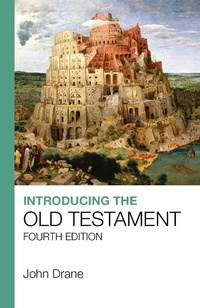
Introducing the Old Testament
Fourth Edition
4th Edition
Published on 23. August 2019
518 pages
978-1-912552-14-6 (ISBN)
Description

Continuously in print for over 30 years, and available in many different languages, John Drane's Introducing the Old Testament has long been recognized as an authoritative and accessible survey of the subject.
This new edition has been fully revised and updated with fresh material on a range of topics, especially the political and cultural context that influenced the compilation of its books and the development of the faith of ancient Israel and Judah. Specific issues that will be of particular interest to students are highlighted in special boxed feature sections, along with an extensive glossary of technical terms and key maps and diagrams.
This book is the ideal starting point for readers who wish to explore the Old Testament and its world in the light of recent scholarship, and its relevance to life in the twenty-first century.
This new edition has been fully revised and updated with fresh material on a range of topics, especially the political and cultural context that influenced the compilation of its books and the development of the faith of ancient Israel and Judah. Specific issues that will be of particular interest to students are highlighted in special boxed feature sections, along with an extensive glossary of technical terms and key maps and diagrams.
This book is the ideal starting point for readers who wish to explore the Old Testament and its world in the light of recent scholarship, and its relevance to life in the twenty-first century.
More details
Edition
4th New edition
Language
English
Place of publication
La Vergne
United Kingdom
Publishing group
SPCK Publishing
Target group
College/higher education
Edition type
New edition
Product notice
Reflowable
ISBN-13
978-1-912552-14-6 (9781912552146)
Copyright in bibliographic data and cover images is held by Nielsen Book Services Limited or by the publishers or by their respective licensors: all rights reserved.
Schweitzer Classification
Other editions
Additional editions
Book
08/2019
4th Edition
Lion Scholar
€37.10
Shipment within 3-4 weeks
John Drane
INTRODUCING THE OLD TESTAMENT
Book
05/2011
Lion Books
€50.95
Article not available at the moment
Person
JOHN DRANE has taught in the Universities of Stirling and Aberdeen, Scotland, and is currently affiliate professor of New Testament and Practical Theology at Fuller Seminary, California, and a visiting fellow of St John's College in the University of Durham. He has written scores of books for both children and adults, all of them on spiritual and Christian themes, and these have been translated into over 60 languages. He is widely known for his best-selling books on the Bible: 'Introducing the Old Testament and 'Introducing the New Testament (both now in their 3rd edition), and 'The World of the Bible.'
Content
- Intro
- Title Page
- Copyright
- Contents
- Introduction
- The story
- Escape from Egypt
- National decline
- Understanding the story
- The story and the faith
- How many books?
- Literary style
- History
- Law
- Poetry
- Stories
- Visions
- Liturgies
- Philosophy and ethics
- Faith stories
- Organization and structure
- The Law
- The Prophets
- The Writings
- Stories and dates
- Part 1: Nations and Peoples
- 1. Ancient Mesopotamia
- Digging up the past
- From hunter-gatherers to city-dwellers
- Interpreting the evidence
- New ways of organizing
- Collaborating and trading
- Origins and meanings in Sumerian culture
- Primeval times
- Biblical connections
- Religion, politics, and law
- Priests and kings
- Power struggles and social evolution
- Nomads and urbanites
- Kings and lawmakers
- 2. Egypt
- Politics and society in ancient Egypt
- The early pharaohs
- Wisdom and art
- Uncertain times
- Biblical connections?
- Slaves and nomads
- Moses and the exodus
- Culture, religion, and lifestyles
- Later Egyptian history
- 3. Canaanites, Israelites, and Everyday Life
- Tribal identities
- Origins and ethnicity
- The religion of Canaan
- Faiths in conflict
- Everyday life in Israel and Judah
- Village life
- City living
- The individual and the community
- Culture
- 4. Assyrians, Babylonians, Persians, and Greeks
- Assyria
- Israel under siege
- Assyria and Judah
- Babylon
- Nebuchadnezzar in Jerusalem
- Glory and decline
- Persia
- New ways of thinking
- Threats from the West
- Greece
- After Alexander
- Part 2: The Books and the Stories
- 5. The Founding of a Nation
- National identity
- The founders
- Fact, fiction, or.?
- Early expressions of faith
- The birth of the nation
- The exodus
- Times and places: exodus and 'conquest'
- The covenant
- The form of the covenant
- The ark of the covenant
- To the promised land
- 6. New People in an Old Land
- Canaan and the emergence of Israel
- Armed struggle
- Peaceful infiltration
- Social revolution
- Canaanites and Israelites
- The Judges
- Laws and customs
- Religions in conflict
- Making history
- 7. 'A King Like Other Nations'
- Samuel and the ark
- Saul
- Saul as prophet
- Saul as judge
- A tragic end
- David
- David's rise to power
- A new king and new ways
- Old ways and new ideas
- The need for new structures
- Solomon
- The empire and its allies
- The temple
- Arts and science
- Economic realities
- Culture, faith, and literature
- The Psalms
- The nature of wisdom
- The family, the village, the royal court
- Court apologetics
- The wisdom literature
- 8. Two kingdoms
- A kingdom divided
- Back to the old ways
- Political changes
- Religious diversity
- New alliances
- Prosperity again
- Decay and collapse
- Elijah
- Insecurity and upheaval
- New prosperity and false security
- National revival
- Amos: prophet of doom
- Judgment and hope
- Hosea: prophet of grace
- God and Israel
- 9. Judah and Jerusalem
- Danger and uncertainty
- Politics
- Religion
- False confidence
- New thinking in Jerusalem
- The Assyrian backlash
- Reform, renewal, and challenge
- A lost book
- Three prophets
- Jeremiah and the fall of Jerusalem
- False confidence
- The end is coming
- Dark days in Jerusalem
- Baruch and the Letter of Jeremiah
- Jeremiah and the Lachish Letters
- Understanding prophets and prophecy
- A history of religions approach
- A psychological approach
- A literary approach
- A theological approach
- A canonical approach
- 10. Reflecting on the Past, Imagining a Better Future
- Dealing with disaster
- The book of Lamentations
- Divided opinions
- By the rivers of Babylon
- Creating community
- Ezekiel
- Revisiting the past
- Compiling the Pentateuch
- Making connections
- 11. New Possibilities and Old Temptations
- A new beginning
- Isaiah of Babylon
- Back to Jerusalem
- More prophets: Haggai and Zechariah
- Confusion and despair: Obadiah, Joel, and Malachi
- Renewing the covenant
- Building the walls
- Handing on the Law
- Signs of dissension: Ruth and Jonah
- Reimagining the past: the work of the Chronicler
- The wider dispersion
- The temple in Egypt
- Translating the Bible
- 12. The Challenge of a New Age
- Jews and Greeks
- Emerging tensions
- National pride and religious zeal
- Telling the story: the books of the Maccabees
- Keeping the faith
- Esther
- Judith
- Tobit
- Facing hard questions: the book of Daniel
- Daniel and his friends
- Visions of the future
- The book and its message
- The book in its context
- The end of the story
- Part 3: The Faith Behind the Story
- 13. The Living God
- Who is God?
- God is invisible
- God and the forces of nature
- God and the philosophers
- What is God like?
- An active God
- Finding God in the realities of life
- Giving God a name
- Other names for God
- When God is absent
- Personal alienation
- National despair
- Wrestling with a hidden God
- How might God be known?
- God's grace
- God's word
- 14. God and the World
- Discovering God in nature and history
- The stories of Genesis
- The stories as literature
- A 'Babylonian Genesis'?
- The meaning of human life
- In relation to the earth
- In relation to God
- In relation to other people
- Broken relationships and new beginnings
- The root of the problem
- Searching for answers
- Looking to the future
- 15. Living as the People of God
- Belief and behaviour
- The Wisdom literature
- Understanding 'wisdom'
- Putting it into practice
- Wisdom and faith
- Is wisdom secular?
- Wisdom and natural law
- Wisdom and social ethics
- Wisdom and covenant
- The Law
- The Ten Commandments (Exodus 20:1-17)
- The Book of the Covenant (Exodus 20:22 - 23:33)
- Deuteronomy
- Laws about worship
- From theory to practice
- Criminal law
- Civil law
- Family law
- Social law
- Structures and systems
- Explaining God's will
- A theological ethic
- Elders, Judges, Kings, Priests
- A dynamic ethic
- A social ethic
- A personal ethic
- 16. Worship
- Worshipping a holy God
- God is infinite
- God is good
- God is love
- Places of worship
- The tabernacle, or 'tent of Yahweh's presence'
- Local sanctuaries
- The temple
- The synagogue
- The character of worship
- The psalms
- Singing and music
- Prayer
- Dance and drama
- Offering sacrifices
- Understanding sacrifice
- Times for worship
- Sabbath
- Passover
- Harvest
- Leading worship
- Kings
- Priests
- Prophets
- 17. From Hebrew Bible to Old Testament
- Questions of belief
- Searching for solutions
- Making connections
- Living as God's people
- Questions of behaviour
- Revisiting history
- Moral tensions
- Texts and their readers
- Glimpses of a different future
- New covenant
- Messiah
- New world
- Other resources on the Old Testament
- Glossary
- Index
