

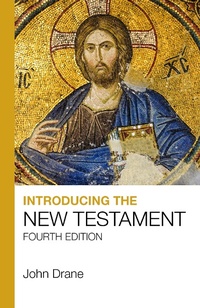
Introducing the New Testament
Fourth edition
Published on 4. October 2019
660 pages
978-1-912552-12-2 (ISBN)
Description

Continuously in print for over 30 years, and available in many different languages, John Drane's Introducing the New Testament has long been recognized as an authoritative and accessible survey of the subject.
This new edition has been fully revised and updated with fresh material on the many political contexts in which the early church flourished, along with new insights into the writing and reception of written texts in what was essentially an oral culture. Specific issues that will be of particular interest to students are highlighted in special boxed feature sections, along with an extensive glossary of technical terms and key maps and diagrams.
This book is the ideal starting point for readers who wish to explore the New Testament and its world in the light of recent scholarship, and its relevance to life in the twenty-first century.
Continuously in print for over 30 years, and available in many different languages, John Drane's Introducing the New Testament has long been recognized as an authoritative and accessible survey of the subject.
This new edition has been fully revised and updated with fresh material on the many political contexts in which the early church flourished, along with new insights into the writing and reception of written texts in what was essentially an oral culture. Specific issues that will be of particular interest to students are highlighted in special boxed feature sections, along with an extensive glossary of technical terms and key maps and diagrams.
This book is the ideal starting point for readers who wish to explore the New Testament and its world in the light of recent scholarship, and its relevance to life in the twenty-first century.
This new edition has been fully revised and updated with fresh material on the many political contexts in which the early church flourished, along with new insights into the writing and reception of written texts in what was essentially an oral culture. Specific issues that will be of particular interest to students are highlighted in special boxed feature sections, along with an extensive glossary of technical terms and key maps and diagrams.
This book is the ideal starting point for readers who wish to explore the New Testament and its world in the light of recent scholarship, and its relevance to life in the twenty-first century.
Continuously in print for over 30 years, and available in many different languages, John Drane's Introducing the New Testament has long been recognized as an authoritative and accessible survey of the subject.
This new edition has been fully revised and updated with fresh material on the many political contexts in which the early church flourished, along with new insights into the writing and reception of written texts in what was essentially an oral culture. Specific issues that will be of particular interest to students are highlighted in special boxed feature sections, along with an extensive glossary of technical terms and key maps and diagrams.
This book is the ideal starting point for readers who wish to explore the New Testament and its world in the light of recent scholarship, and its relevance to life in the twenty-first century.
Reviews / Votes
"This book has arguably been the most useful and user-friendly non-technical introduction to the New Testament available." -- David Wenham, Tutor in New Testament, Wycliffe Hall, Oxford"This book has arguably been the most useful and user-friendly non-technical introduction to the New Testament available." -- David Wenham, Tutor in New Testament, Wycliffe Hall, Oxford
More details
Edition
New edition
Language
English
Place of publication
La Vergne
United Kingdom
Publishing group
SPCK Publishing
Edition type
New edition
Product notice
Reflowable
ISBN-13
978-1-912552-12-2 (9781912552122)
Copyright in bibliographic data and cover images is held by Nielsen Book Services Limited or by the publishers or by their respective licensors: all rights reserved.
Schweitzer Classification
Other editions
Additional editions
Book
10/2019
Lion Scholar
€43.40
Article not available at the moment
J. Drane
Introducing the New Testament
Book
10/1999
Lion Books
€44.76
No shipping information available
Person
JOHN DRANE has taught in the Universities of Stirling and Aberdeen, Scotland, and is currently affiliate professor of New Testament and Practical Theology at Fuller Seminary, California, and a visiting fellow of St John's College in the University of Durham. He has written scores of books for both children and adults, all of them on spiritual and Christian themes, and these have been translated into over 60 languages. He is widely known for his best-selling books on the Bible: 'Introducing the Old Testament and 'Introducing the New Testament (both now in their 3rd edition), and 'The World of the Bible.'
JOHN DRANE has taught in the Universities of Stirling and Aberdeen, Scotland, and is currently affiliate professor of New Testament and Practical Theology at Fuller Seminary, California, and a visiting fellow of St John's College in the University of Durham. He has written scores of books for both children and adults, all of them on spiritual and Christian themes, and these have been translated into over 60 languages. He is widely known for his best-selling books on the Bible: 'Introducing the Old Testament and 'Introducing the New Testament (both now in their 3rd edition), and 'The World of the Bible.'
JOHN DRANE has taught in the Universities of Stirling and Aberdeen, Scotland, and is currently affiliate professor of New Testament and Practical Theology at Fuller Seminary, California, and a visiting fellow of St John's College in the University of Durham. He has written scores of books for both children and adults, all of them on spiritual and Christian themes, and these have been translated into over 60 languages. He is widely known for his best-selling books on the Bible: 'Introducing the Old Testament and 'Introducing the New Testament (both now in their 3rd edition), and 'The World of the Bible.'
Content
- Intro
- Title Page
- Copyright
- Contents
- Introduction
- The beginning of the story
- Jesus
- Early Christianity
- Radical lifestyle
- New faith
- Opposition
- Changing the world
- Part 1: Context and Culture
- 1. Greeks and Romans
- Hellenism
- Civic society
- Decision-makers and bureaucrats
- Slavery
- Adoption
- Citizenship
- Religion
- The gods
- Civic religion
- Domestic religion
- Religion and the emperor
- Philosophy
- The Stoics
- The Epicureans
- Alternative spiritualities
- Questioning the mainstream
- Mystery religions
- Gnosticism
- Judaism
- Christianity
- 2. Palestine and its People
- Hellenism and Judaism
- Jews and Romans
- Herod the Great
- Three Herods
- Two more Herods
- Religious loyalties
- Traditionalists: the Sadducees
- Progressives: the Pharisees
- Monastics: the Essenes
- Militants: the Zealots
- Dreamers: the Apocalyptists
- Rejects: the Samaritans
- Keeping the faith
- The synagogue
- The festivals
- Home and family life
- Men and women
- Children and schooling
- Work and home
- Rites of passage
- Part 2: Jesus
- 3. Birth and Early Years
- The birth of Jesus
- The date
- The stories
- Jesus grows up
- Nazareth
- Jesus and his family
- John the Baptist
- Jesus is baptized
- John and Qumrân
- Temptations and priorities
- Money
- Fame
- Power
- 4. The Message
- The kingdom of God
- A new way of being
- An eschatological kingdom
- 'Kingdom of God' or 'Kingdom of heaven'?
- Who did Jesus think he was?
- The Son of Man
- The Messiah
- The Son of God
- The Servant
- Jesus beyond the Gospels
- 5. Stories and Signs
- Jesus the teacher
- Parables and their meaning
- Parable or allegory?
- The point of the parables
- Parables and their hearers
- The message
- Kingdom and church
- Why parables?
- Signs of the kingdom
- Miracles and their message
- Miracle stories in context
- Hellenistic miracle stories
- 6. How to Live Like Jesus
- Questioning the tradition
- Status and money
- People and priorities
- Abolition or fulfilment?
- Creative engagement
- Jesus as a teacher of wisdom
- God at the centre
- Human goodness and divine generosity
- Goodness and community
- Believing and behaving
- Creative transformation
- 7. Crucifixion
- Opposition and conflict
- The Last Supper
- Passover or informal meal?
- A new covenant
- Jesus on trial
- Jews and Romans
- Accusations and process
- Crucifixion
- Reflecting on the death of Jesus
- Battle
- Example
- Sacrifice
- Ransom
- For others
- Grace and forgiveness
- 8. Resurrection
- Evidence from the New Testament
- The early church
- Paul
- The Gospels
- The disciples
- Facts and faith
- A subjective experience?
- A theological construct?
- A later belief?
- The meaning of it all
- Identifying Jesus
- New life
- Future hope
- The ascension
- Part 3: The Gospels
- 9. Understanding the Gospels
- What is a gospel?
- Biography?
- Good news?
- Gathering materials
- The Hebrew scriptures
- Words of Jesus
- Constructing the narratives
- Wording
- Order
- Contents
- Style
- Theology
- How many sources?
- New approaches to old problems
- Did Q really exist?
- Looking behind the text
- Challenging the consensus
- Insights from the past
- Who were the gospels for?
- 10. Four Portraits of Jesus
- Mark
- The Peter connection
- Author
- Readers
- Date
- Purpose
- Style
- Ending
- Luke
- Date
- Purpose
- Matthew
- Structure
- Purpose
- Author
- Date
- John
- Structure
- Character
- Origins
- Purpose
- Author and date
- Redaction criticism and gospel origins
- 11. Can We Trust the Gospels?
- Orality and literacy
- Presuppositions
- Intellectual imperialism
- History and culture
- Inscriptions and artefacts
- Language
- Distinctiveness
- Searching for the real Jesus
- The Quest begins
- The Quest is suspended
- The Quest resumes
- The Third Quest
- Identifying the words of Jesus
- Dissimilarity (distinctiveness)
- Multiple attestation
- A basic flaw?
- Prophets in the early church
- Part 4: Good News Goes Global
- 12. The Acts of the Apostles
- Back to Jesus
- Law and gospel
- Religion and race
- The church is born
- A promise fulfilled
- Pentecost
- The church grows
- Tensions and conflicts
- Leaving Jerusalem
- Judea and Samaria
- Widening horizons
- Galilee
- Other apostles and their travels
- Telling the stories: Luke's second volume
- Author
- Date
- Character
- Purpose
- 13. Paul: From Persecutor to Apostle
- Early life
- Tarsus
- Jerusalem
- Influences
- Judaism
- Philosophy
- Mystery religions
- Theatre
- Emperor
- Blasphemy and persecution
- The Damascus road
- What Paul did next
- Dealing with Jerusalem
- Dates and places
- Paul and the earliest church
- The Hebrew scriptures
- Jews and Gentiles
- Authority
- Jesus
- 14. Paul: Travels and Letters
- From one Antioch to another
- Gentile churches
- Judaizers
- Paul the letter-writer
- The Galatian churches
- The letter to the Galatians
- The Apostolic Council
- Back to Galatia
- Philippi
- Converts
- Imprisonment
- Athens
- Corinth
- A letter to the church in Thessalonica
- Paul and his strategy
- How should Christians behave?
- What about the future?
- Living the Christian life
- Another letter
- The author
- The Message
- 15. Paul and the Churches
- Ephesus
- The impact of the gospel
- Prison again?
- Advising the churches
- Paul and the church at Corinth
- Disappointing news from Corinth
- Paul sends Corinthians
- Paul visits Corinth
- Another letter
- Good news from Corinth
- Paul sends Corinthians
- 1 Corinthians
- Life in Christ (1 Corinthians 1:10-4:21)
- Confusion at Corinth
- The answer in Christ
- Life in the world (1 Corinthians 5:1-11:1)
- Life in the church (1 Corinthians 11:2-15:58)
- More arguments and letters
- 2 Corinthians
- Facing up to problems (2 Corinthians 1:3-2:13)
- What is an apostle? (2 Corinthians 2:14-7:4)
- Looking to the future (2 Corinthians 7:5-9:15)
- Authority and charisma (2 Corinthians 10:1-13:10)
- Romans
- Purpose
- Contents
- Paul and his Jewish roots
- 16. Paul: The End of the Journey
- Generosity and its unexpected consequences
- A collection for Jerusalem
- Arrest and trials
- Destination Rome
- When did Paul die?
- Letters from prison
- The church at Colossae
- City life in the Roman empire
- Colossians
- Philemon
- The church at Ephesus
- Ephesians
- The church at Philippi
- Philippians
- Timothy and Titus
- The Pastorals
- 17. Paul and His Message
- From letters to theology
- Back to the Damascus road
- Who is Jesus?
- What is the gospel?
- A social gospel
- What about the Law?
- Living the Christian life
- Explaining the faith
- The Hebrew scriptures
- The world of experience
- Paul on death
- What is the church?
- The body of Christ
- Life in the body
- Leadership in the body
- Paul and inclusivity
- Racism
- Women and men
- Slavery
- Women's lives in the Roman empire
- Part 5: Refining the Faith
- 18. Ethics and Ritual: James and Hebrews
- James on Christian morality
- A Christian book?
- James and Jesus
- The Letter of James
- Author
- Date
- Origin
- 'Faith' and 'works' in Paul and James
- Hebrews and Jewish ritual
- The centrality of the temple
- The message of the book
- Reimagining the Old Testament
- Hebrews in context
- Author
- Readers
- Date
- 19. Covenant and Confidence: 1 Peter and Revelation
- Christians and the covenant
- Themes in 1 Peter
- The believer's status (1:1-12)
- Christian maturity (1:13-2:10)
- Christian behaviour (2:11-4:19)
- Serving Christ (5:1-14)
- A hidden liturgy?
- 1 Peter in context
- Author
- Date and origin
- Peter and the church in Rome
- Revelation: confidence in the face of adversity
- The book and its message
- Making sense of the message
- Author and date
- 20. Heresy, Orthodoxy, and Organization
- Letters to seven churches
- 1 John
- 'False prophets'
- Docetism
- The letter
- John and his epistles
- Jude and 2 Peter
- Context
- Authors and dates
- The Spirit and the letter
- From spontaneity to authority
- Institutional influences
- Church growth
- Heresy and Orthodoxy
- Frustrated hope
- Putting the New Testament together
- 21. Reading and Understanding the New Testament
- Beginning where we are
- Starting points
- Influences
- The text's own context
- The sociological context
- Worldview
- Personal perceptions
- Discovering the message
- The historical-critical method
- Versions and translations
- Ancient documents
- New Testament texts
- Scribes and copyists
- Classifying texts
- Glossary
- Other resources on the New Testament
- Index
