

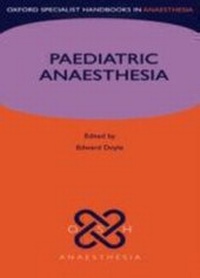
Paediatric Anaesthesia
1st Edition
Published on 27. September 2007
653 pages
978-0-19-157501-3 (ISBN)
Description

This handbook covers all aspects of modern paediatric anaesthesia, from common ENT and general surgical day case procedures through to specialist neonatal, neurosurgical, spinal and cardiac procedures restricted to paediatric centres. Paediatric Anaesthesia deals with individual surgical procedures on a case by case basis covering the whole care of a patient from preoperative assessment, through the provision of anaesthesia and pain relief, to postoperative care. There are also chapters on resuscitation, complications during anaesthesia, congenital syndromes and medical conditions which affect anaesthesia and sedation of children. A concise source of knowledge and advice, this handbook provides rapid access to relevant material with sufficient detail and explanation to make it invaluable to a trainee new to the sub-specialty or any specialist practitioner working on paediatric anaesthesia.
More details
Other editions
Additional editions
Edward Doyle
Paediatric Anaesthesia
Book
09/2007
Oxford University Press
€55.70
Article exhausted; check for reprint
Content
- Intro
- Contents
- Contributors
- Symbols and abbreviations
- Section 1 Physiology, pharmacology, and psychology
- 1 Anatomy, physiology, and psychology
- Introduction
- Paediatric anatomy
- Upper airway
- Lower airway
- Central nervous system
- Paediatric physiology
- Respiratory physiology
- Cardiovascular physiology
- Hepatic physiology
- Renal physiology
- Central nervous system physiology
- Thermal control
- Psychology
- Psychology, anxiety, and preoperative preparation
- Developmental stages
- Preoperative preparation and parents in the anaesthetic room
- 2 Paediatric pharmacology and fluid administration
- Paediatric pharmacology
- Pharmacokinetics
- Intravenous anaesthetic agents
- Inhalational anaesthetic agents
- Neuromuscular blockers
- Opioids
- Non-steroidal anti-inflammatory drugs (NSAIDs)
- Paracetamol
- Local anaesthetics
- Fluid balance and fluid administration
- Preoperative fluids and fluid resuscitation
- Intraoperative fluid administration
- Maintenance fluid regimens
- Section 2 Paediatric anaesthesia
- 3 Principles of paediatric anaesthesia
- Range of patients
- Preoperative assessment
- Preoperative fasting
- Parental presence at induction
- Play specialists and distraction
- Premedication
- Venous access
- Inhalational induction of anaesthesia
- Preoperative issues
- The child with a 'cold'
- Heart murmurs
- Asthma
- Attention deficit hyperactivity disorder (ADHD)
- Infectious diseases
- Immunizations
- 4 Paediatric anaesthetic equipment
- Airway equipment
- Paediatric face masks
- Oropharyngeal airways
- Laryngeal mask airway
- Laryngoscopes
- Endotracheal tubes
- Breathing systems
- Ventilators
- Monitoring equipment
- Pulse oximetry
- Blood pressure measurement
- Temperature monitoring
- Warming devices
- Peripheral venous cannulae
- 5 Practical procedures and postoperative care
- Practical procedures
- Basic airway management
- Advanced airway management
- Endotracheal intubation
- Difficult airway management
- Fibreoptic endotracheal intubation
- Peripheral venous cannulation
- External jugular vein cannulation
- Internal jugular vein cannulation
- Femoral vein cannulation
- Intraosseous cannulation
- Radial artery cannulation
- Femoral artery cannulation
- Postoperative care
- Recovery area (post anaesthetic care unit)
- High Dependency Unit (HDU)
- Intensive Care Unit (ICU)
- Section 3 Intraoperative and post-operative analgesia
- 6 Acute pain and postoperative analgesia
- Principles of analgesia in children
- Pain assessment
- Neonates
- Infants
- Pre-school children
- School children
- Adolescents
- Drugs
- Paracetamol
- Non-steroidal anti-inflammatory drugs
- Opioids
- Local anaesthetics
- Antiemetics
- Acute severe pain
- Protocols and monitoring
- Intravenous morphine infusion
- Patient controlled analgesia
- Nurse controlled analgesia
- Epidural infusion analgesia
- 7 Regional anaesthetic techniques: peripheral blocks
- Overview and safety
- Infiltration and field block
- Ilioinguinal/iliohypogastric nerve block
- Rectus sheath block
- Penile nerve block
- Ring block and digital nerve block
- Axillary brachial plexus block
- Supraclavicular brachial plexus block
- Femoral nerve block
- Fascia iliaca compartment block
- Ankle block
- Sciatic nerve block
- Popliteal nerve block
- 8 Regional anaesthetic techniques: central blocks
- Overview and safety
- Pharmacology
- Caudal epidural blockade
- Epidural blockade
- Caudal catheter technique
- Subarachnoid (spinal) blockade
- Psoas (lumbar) plexus blockade
- Paravertebral blockade
- Section 4 Elective surgery
- 9 Day case, general, ENT, orthopaedic, neurosurgery, and maxillofacial surgery
- Day case surgery and anaesthesia
- Selection and exclusion criteria
- Facilities and procedures
- Analgesia and discharge
- General paediatric surgery
- Circumcision
- Preputioplasty
- Hypospadias repair
- Inguinal hernia repair and hydrocele
- Orchidopexy
- Pyeloplasty and nephrectomy
- Laparoscopy
- Fundoplication
- Ear, nose, and throat surgery
- Myringotomy and grommets
- Tonsillectomy
- Middle ear surgery
- Bronchoscopy
- Microlaryngeal surgery
- Orthopaedic surgery
- Developmental (congenital) dysplasia of the hip (DDH)
- Congenital talipes equinovarus (clubfoot)
- Femoral osteotomy
- Pelvic osteotomy
- Scoliosis
- Neurosurgery
- Ventriculo-peritoneal (V-P) shunt insertion
- Baclofen pump insertion
- Craniotomy
- Arterio-venous malformation embolization
- Maxillofacial and craniofacial surgery
- Mandibular surgery
- Craniofacial surgery
- 10 Ophthalmology, plastics, oncology, radiology, thoracic, and dental surgery
- Ophthalmology
- Ophthalmic surgery
- Examination under anaesthesia and intraocular pressure measurement
- Strabismus
- Cataract extraction
- Glaucoma
- Plastic surgery
- Lumps and bumps
- Otoplasty
- Cleft lip and palate
- Syndactyly
- Free flap surgery
- Oncology
- Oncology
- Lumbar puncture, intrathecal drugs, bone marrow aspiration, and trephines
- Insertion of Portacath or Hickman line
- Bone marrow harvest
- Wilms' tumour (nephroblastoma)
- Neuroblastoma
- Phaeochromocytoma
- Radiotherapy
- Radiology
- Radiology
- Computed tomography (CT)
- Magnetic resonance imaging (MRI)
- Thoracic surgery
- Thoracotomy and thoracoscopy
- Dental surgery
- Dental and oral surgery
- 11 Congenital heart disease
- Overview and classification of congenital heart disease
- Fetal circulation
- Assessment of patients with CHD
- Conduct of anaesthesia in CHD
- Cardiac catheterization
- Closed cardiac procedures
- Systemic arterial-pulmonary arterial shunt
- Coarctation of the aorta
- Patent ductus arteriosus
- Epicardial pacemaker insertion
- Pulmonary artery banding
- Cardiopulmonary bypass
- Deep hypothermic circulatory arrest (DHCA)
- Open cardiac procedures-notes on specific lesions
- Atrial septal defect
- Ventricular septal defect
- Atrio-ventricular septal defect
- Tetralogy of Fallot
- Transposition of the great arteries
- Section 5 Neonatal and emergency procedures
- 12 Emergency surgery: neonatal, general, and airway
- Rapid sequence induction
- Neonatal surgery
- Principles of neonatal anaesthesia
- Pyloromyotomy
- Oesophageal atresia (tracheo-oesophageal fistula) repair
- Necrotizing enterocolitis
- Abdominal wall defects: gastroschisis and exomphalos
- Imperforate anus
- Congenital diaphragmatic hernia
- Myelomeningocele
- General surgery
- Appendicectomy
- Intussusception
- Acute scrotum
- ENT
- Bleeding tonsil or adenoids
- Foreign body removal
- Stridor
- Tracheostomy
- Choanal atresia
- 13 Emergency anaesthesia: orthopaedics, plastics, neurosurgery, ophthalmology, maxillofacial
- Orthopaedic surgery
- Orthopaedics
- Forearm fractures
- Supracondylar fracture
- Femoral shaft fractures
- Septic arthritis
- Plastics
- Plastic surgery
- Lacerations
- Nerve and tendon repairs
- Burns and scalds
- Anaesthesia for patients with burns and scalds
- Analgesia for patients with burns and scalds
- Neurosurgery
- Neurosurgery
- Blocked ventriculo-peritoneal shunt
- Head injury: initial resuscitation and management
- Evacuation of intracranial haematoma
- Ophthalmic surgery
- Ophthalmology
- Perforating eye injury
- Retinal detachment
- Maxillofacial surgery
- Dental abscess
- Facial trauma
- Section 6 Problems during anaesthesia, resuscitation, syndromes, and sedation
- 14 Problems during anaesthesia, resuscitation, and patient transfer
- Anaesthesia
- Problems during anaesthesia
- Hypoxia
- Airway obstruction
- Laryngospasm
- Bronchospasm
- Hypotension
- Dysrhythmias
- Anaphylaxis
- Hyperthermia
- Malignant hyperthermia (MH)
- Hypothermia
- Failed intubation
- Can't intubate, can't ventilate (CICV)
- Resuscitation
- Basic life support
- Choking
- Advanced life support
- Asystole or PEA (pulseless electrical activity)
- Ventricular fibrillation or pulseless ventricular tachycardia
- Dysrhythmias
- Hypothermia
- Newborn life support
- Emergency drugs: dilutions and doses
- Patient transfer
- Principles of stabilizing a critically ill child in a general hospital
- Interhospital transfer to a paediatric intensive care unit
- 15 Syndromes and conditions with implications for anaesthesia
- Arthrogryposis multiplex congenita
- Branchial (pharyngeal) arch syndromes
- Cerebral palsy
- Diabetes mellitus
- Down's syndrome
- Epidermolysis bullosa
- Epilepsy
- Haemophilia and von Willebrand's disease
- HIV/AIDS
- Juvenile chronic arthritis
- Liver failure
- Klippel-Feil syndrome
- Marfan's syndrome
- Muscular dystrophies
- Myasthenia gravis
- Myopathies
- Myotonic syndromes
- Mucopolysaccharidoses
- Osteogenesis imperfecta
- Prematurity
- Renal failure
- Sickle cell disease
- 16 Sedation for diagnostic and therapeutic procedures
- Overview
- Management of sedation
- Drugs used for sedation
- 17 Key references and further reading
- Index
- A
- B
- C
- D
- E
- F
- G
- H
- I
- J
- K
- L
- M
- N
- O
- P
- Q
- R
- S
- T
- U
- V
- W
- X
- Z
