

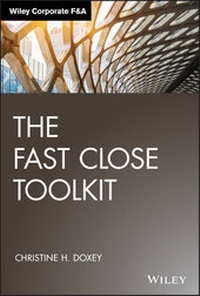
The Fast Close Toolkit
Description

The Record to Report (R2R) or Fiscal Closing Process is at the core of the controllership function. The process includes transaction processing, internal and external reporting, and the internal controls--the people, processes, and technology--that constitute the corporate organizational hierarchy. CFOs, controllers, and corporate finance departments require timely, accurate, and consistent data to make appropriate operational and strategic decisions and fulfill statutory, regulatory, and compliance requirements with accurate and timely data. The Fast Close Toolkit offers both strategic and tactical suggestions that can significantly improve the fiscal closing process and provides guidance on new legislation requirements, systems and best practice processes. Checklists, templates, process narratives, and sample policies are provided for every component of the fiscal close.
Investors and shareholders expect fast and easy access to the data created by current business activities in the information-driven digital age. The Fast Close Toolkit provides the necessary tools and expert advice to improve the fiscal closing process. Authoritative and up to date, this book:
* Identifies the bottlenecks that can impact the and improvethe fiscal close process and provides best practices to help alleviate these challenges
* Defines the Record to Report (R2R) and recommends the roles and responsibilities for fiscal close processes flow
* Offers the internal controls to use for the end-to-end fiscal close process
* Describes approaches for risk management, R2R, and fiscal close benchmarking
* Identifies KPIs for all aspects of the R2R process
* Provides the mechanism for developing a financial close scorecard
* Recommends leading practices for both external and internal reporting
* Provides guidance on how strategic planning, the budget and forecast processes can be streamlined to enhance the fiscal close and internal reporting results
Written by a respected expert on internal controls and the fiscal closing process, The Fast Close Toolkit is a valuable source of information for professionals involved in controllership and have responsibility for the fiscal close.
More details
Other editions
Additional editions
Person
CHRISTINE H. DOXEY, CAPP, CCSA, CICA, CPC, is president of Doxey, Inc., a consultancy that has brought vast improvements to the finance departments of leading organizations worldwide. Doxey is on the Advisory Boards of The Exchange Summit and The Institute for Internal Controls. Previously, Christine was a financial executive at Hewlett Packard and Verizon Business. She has authored several books and speaks on a range of financial processes and internal controls best practices at global conferences.
Content
Preface xiii
How This Toolkit is Organized xiv
Guide to Toolkit Organization xv
Table of Best Practices xvii
Table of Policies xviii
Table of Checklists xviii
Table of Process Narratives xviii
Table of Standards of Internal Control xix
Introduction 1
Improving the Fiscal Close 3
Best Practice 1: Consider the Use of a Single ERP System 4
Best Practice 2: Employ Cloud-Based Computing 5
Chapter 1: Why the Continued Focus on the Fiscal Closing Process? 7
An Overview of the Fiscal Close 9
Cycle Time to Monthly Close 10
Chapter 2: Key Pain Points and Bottlenecks 13
Chapter 3: The Components of the Fiscal Close 15
Cutoff Dates 16
Best Practice 3: Implement Cutoff Dates 16
Chapter 4: Governing the Fiscal Close Process 19
Best Practice 4: Implement a Fiscal Close Governance Process 20
Composition of GAAP 21
GAAP Hierarchy 22
Other Disclosure Standards 22
Chapter 5: The Transaction Accumulation, Reconciliation, and Sub-Ledger Close 27
Best Practice 5: Complete General Ledger Reconciliations 30
Accounting Bodies 31
Other Regulatory Requirements 31
Chapter 6: Introduction to the Standards of Internal Control 33
Best Practice 6: Implement an Internal Controls Program 34
Ensuring Success 36
Chapter 7: Roles and Responsibilities During the Fiscal Close 39
Tactical Responsibilities 40
Executive Responsibilities 43
Chapter 8: The General Ledger and Trial Balance 45
Chapter 9: The Common Chart of Accounts 47
Best Practice 7: Implement a Common Chart of Accounts 47
Sample Chart of Accounts 49
Chapter 10: Cost Centers 53
Best Practice 8: Define Business Rules for Establishing Cost Centers 54
Best Practice 9: Define Allocation Risks 55
Common Allocation Challenges 57
Best Practice 10: Implement an Indirect Cost Allocation Methodology 59
Chapter 11: The Journal Entry Process 63
Best Practice 11: Streamline Recurring Journal Entries 64
Chapter 12: Spreadsheet Controls 65
Best Practice 12: Address Spreadsheet Risks and Implement Controls 65
Balancing Risks with Controls 67
Chapter 13: Checklists for the Transaction Accumulation, Reconciliation, and Sub-Ledger Close 69
Checklist 1: Transaction Accumulation and Fiscal Close Checklist 69
Checklist 2: Fiscal Year-End Close Sample Schedule 72
Checklist 3: Accounts Payable Roles and Responsibilities Year-End Checklist 73
Checklist 4: Reconciliation Template 74
Chapter 14: Sample Policies for the Transaction Accumulation, Reconciliation, and Sub-Ledger Close 75
Policy 1: Account Reconciliation Policy 75
Policy 2: Accounts Payable Accruals 78
Policy 3: Spreadsheet Controls 81
Controls Standards 83
Best Practice Guidelines 84
Chapter 15: Process Narratives for the Transaction Accumulation, Reconciliation, and Sub-Ledger Close Process 87
Process Narrative 1: Journal Entry (JE) Process 87
Process Narrative 2: Management Approval of Journal Entries 88
Process Narrative 3: Other Current and Long-Term Assets 89
Process Narrative 4: Other Current and Long-Term Liabilities 92
Chapter 16: Standards of Internal Control for the Transaction, Accumulation, Reconciliation, and Sub-Ledger Close Process 97
Standards of Internal Control 1: Journal Entry (JE) Process 97
Standards of Internal Control 2: Management Approval of Journal Entries 99
Standards of Internal Control 3: Other Current and Long-Term Assets 101
Standards of Internal Control 4: Other Current and Long-Term Liabilities 109
Chapter 17: Corporate Close and Consolidation 117
Differences Between IFRS and U.S. GAAP That Impact the R2R Process 118
How Often are New IFRS Pronouncements Issued? 119
Is IFRS, as Issued by the IASB, the Same for All Companies and Industries, in All Countries? 119
What is The Principal Standard Governing Conversion to IFRS? 120
Does IFRS Use the Same Financial Statements as Those Required under U.S. GAAP? 121
How Will IFRS Impact Internal Control Reporting and Certification under the Sarbanes Oxley Act of 2002? 122
Chapter 18: The Number of Consolidation Points 123
Best Practice 13: Automate the Consolidation Process 124
Best Practice 14: Include the People Who Impact the Close 124
Best Practice 15: Create Consistent Closing Schedules 124
Best Practice 16: Consider Fiscal Close Process Improvements 125
Chapter 19: The Number of Closing Cycles 127
Best Practice 17: Reduce the Number of Closing Cycles 127
Chapter 20: Post-Closing Entries 129
Financial Closing Strategies 129
Best Practice 18: Develop Business Rules for Post-Closing Entries 130
Chapter 21: Communication and Accountability 131
Fiscal Close Postmortem Meetings 132
Chapter 22: Financial Statement Assertions 133
Financial Statement Assertion Requirements and Application 134
Chapter 23: Checklists for the Corporate Close and Consolidation Process 137
Checklist 5: Corporate Close and Consolidation 137
Checklist 6: Executive-Level Closing Checklist 139
Checklist 7: Twenty Critical Areas to Review at Year-End 142
Checklist 8: The Year-End Financial Statement Checklist 143
Checklist 9: The Year-End Transaction Checklist 144
Checklist 10: The Year-End Payroll Process Checklist 146
Chapter 24: Sample Policies for the Corporate Close and Consolidation Process 149
Policy 4: Fiscal Close and Consolidation Process 149
The Timely Communication of Delays 152
Adjustments Requested by Field and Corporate Personnel 152
Adjustments Between Preliminary and Final Results 153
"Late" Adjustments 153
Chapter 25: Process Narratives for the Corporate Close and Consolidation Process 155
Process Narrative 5: Balance Sheet Consolidation 155
Process Narrative 6: Assets Held for Sale Due to Discontinued Operations 157
Chapter 26: Standards of Internal Control for the Corporate Close and Consolidation Process 161
Standards of Internal Control 5: Balance Sheet Consolidation 161
Standards of Internal Control 6: Assets Held for Sale Due to Discontinued Operations 164
Chapter 27: Analysis and Reporting (The Final Mile) 169
Chapter 28: Internal and External Reporting 171
Internal Reporting 171
Best Practice 19: Ask Key Questions to Define Your Internal Financial Reporting Process 172
External Reporting 175
Chapter 29: Budgeting and Forecasting 181
About the Budget Process 182
Types of Budget Processes 182
Best Practice 20: Consider Five Steps for a Successful Budget Process 184
Ten Considerations for a Successful Budget Process 188
Variance Analysis 191
Other Factors to Consider 192
Corporate Performance Management (CPM) 194
A Moving Target 194
Chapter 30: Reduce Fiscal Close Cycle Times by Moving Your Finance Function to "Dynamic" Budgeting and Planning 197
Dynamic Budgeting and Planning 197
Chapter 31: Fixed Assets and the Capital Budget 199
Best Practice 21: Establish a Capital Budget Process 199
Developing the Capital Budget 200
Best Practice 22: Implement the Capital Review and Approval Board (CARB) Process 201
Construction in Process Accounting 207
Fixed Asset Management 207
Depreciation Methods 208
Intangible Assets 211
Asset Appreciation and Asset Impairment 212
Disposal of Fixed Assets 214
The Capital Budget and Fixed Assets Business Process Risks and Challenges 217
Chapter 32: The Forecast Process 221
About the Forecast Process 222
Types of Forecasting Models 222
The Forecasting Process for Small Businesses 224
Chapter 33: The Fiscal Close and Strategic Planning 227
Expected Outcomes of the Strategic Plan 227
Best Practice 23: Include Finance and Accounting in the Strategic Planning Process 228
Best Practice 24: Use a Strategic Planning Readiness Checklist 229
Best Practice 25: Follow These Seven Steps for Your Strategic Planning Process 230
Best Practice 26: Implement Six Key Elements for Your Strategic Plan 230
Best Practice 27: Use a Standardized Table of Contents for Your Strategic Plan 231
Strategic Planning Methodologies 232
Best Practice 28: Establish Performance Metrics to Determine the Effectiveness of Your Strategic Plan 236
Chapter 34: Analytics to Detect Financial Statement Fraud 237
Best Practice 29: Use Red Flags to Detect Financial Statement Fraud 238
The National Commission on Fraudulent Financial Reporting (The Treadway Commission) 240
Use Detection Methods for General Financial Statement Fraud 243
Chapter 35: Checklists for the Analysis and Reporting Process 247
Checklist 11: Quarter-End Fiscal Close (10Q) 247
Checklist 12: Year-End Fiscal Close (10K) 251
Checklist 13: Performing Financial Statement Analysis 257
Checklist 14: Trend Analysis 264
Chapter 36: Sample Policies for the Analysis and Reporting Process 271
Policy 5: Basic Policies on Financial Reporting 271
Chapter 37: Process Narratives for the Analysis and Reporting Process 273
Process Narrative 7: Disclosure Checklist 273
Process Narrative 8: Fluctuation Analysis 274
Process Narrative 9: Cash Flow Statement Reconciliation 276
Process Narrative 10: Reporting Debt 277
Chapter 38: Standards of Internal Control for the Analysis and Reporting Process 283
Standards of Internal Control 7: Disclosure Checklist 283
Standards of Internal Control 8: Fluctuation Analysis 284
Standards of Internal Control 9: Cash Flow Statement Reconciliation 287
Standards of Internal Control 10: Reporting Debt 290
Chapter 39: The Virtual Close: Myth or Reality? 299
What is the Virtual Close? 299
How is the Virtual Close Different from the Soft Close? 300
Case Study: The Virtual Close at Cisco 300
Implementing a Virtual Close 303
Chapter 40: Roadmap: Benefits of the Fast Close 305
Different Types of Fast Fiscal Closing Processes 306
Soft Close 306
Virtual Close 307
Legal Issues Impacting the Fast Financial Close 307
Steps to Achieve a Faster Financial Close 307
Conclusion 310
Chapter 41: Accelerating the Close with Automation 311
Key Requirements for Automating the Fiscal Close 311
Key Questions to Ask During Implementation 312
System Ease of Use 312
Quality of Financial Information 313
Accounts Payable and Purchasing 314
Project Accounting 314
Addendum: Fast Close Tools and Additional Best Practices 315
Contingency Planning 315
Best Practice 30: Establish Escalation Procedures 322
Roadmap: 25 Steps to Shorten the Fiscal Close 323
The Monthly Financial Close Process Checklist 327
Foreign Corrupt Practices Act (FCPA) 336
Accelerate Your Financial Close: A 35-Step Roadmap 337
The Fast Close Compliance Toolkit 340
The M&A Due Diligence Checklist 362
Finance and Accounting Key Business Partnerships Matrix 372
Fiscal Close Risks and Challenges 374
Fiscal Close Standards of Internal Control 376
The Fiscal Close Dashboard 379
The Controller's Dashboard 380
The Detailed Fiscal Close Scorecard 380
The Project Management Toolkit 382
Glossary 387
Index 403
Preface
REGARDLESS OF COMPANY SIZE or complexity, all successful fiscal close processes require continuous communication, comprehensive documentation, and a flexible, responsive organization that is focused on people, processes, transactions, reconciliation, and reporting. The degree to which each building block is implemented will vary based on company size, type of industry, availability of resources, and management commitment.
However, omitting one or two of these building blocks may result in some type of failure during a month-end close. The building blocks for the fiscal close are explored in Chapter 3, "The Components of the Fiscal Close." When executing these building blocks, executing the fiscal close correctly helps achieve the following benefits.
- A reduced cycle time for the fiscal closing process
- A more transparent, better documented process with better insight into the close process
- Finance and accounting executives being more confident in the close
- Well-managed and less-stressed employees
- More time for analytics and the calculation of metrics
The fiscal close process is one of the most fundamental indicators of the efficiency of your fiscal infrastructure, and is the critical foundation that must be in place before your finance and accounting team can even begin to optimize its role as a true consultative business partner and trusted advisor, assisting in achieving strategic goals and creating shareholder value.
Over the last decade, the financial reporting landscape has seen significant change. Finance executives face mounting pressure to increase the accuracy of financial reporting while decreasing turnaround time. Costs are being highly scrutinized as the longest recession in U.S. history continues. Regulatory agencies have introduced a host of new standards and accounting rules changing materiality thresholds and requiring detailed schedules and new disclosures for public filings. To complicate matters, many finance organizations are being asked to do more with less as headcounts are reduced in response to economic pressures.
The current legislation has strict requirements for the timing of preparation and the quality of financial statements. It is especially important for chief financial officers (CFOs) of large companies who receive fiscal information from multiple entities, from different systems, and in incompatible data formats.
Since the adoption of the IFRS throughout the EU and the demand for greater transparency as far as external reporting is concerned following the collapse of corporate giants such as Enron and WorldCom, there is a great need for reliable fiscal information on a real-time basis.
Today's finance organizations face multiple priorities that include the oversight of fiscal transactions, management of enterprise performance, attestation of financial reporting, and timely close and consolidation of fiscal data. As they grapple with these issues, CFOs are always seeking ways to increase the efficiency and timeliness of their fiscal close and compliance processes. However, merely improving the speed of the fiscal close process is not enough.
There is a competing demand for improved fiscal governance and increased transparency and reliability of data. The pace of regulatory change also continues to increase as a result of the current economic challenges as well as ongoing regulatory initiatives such as the mandate of eXtensible Business Reporting Language (XBRL) as the reporting standard format and the likely move to International Financial Reporting Standards (IFRS).
Finance organizations need to proactively manage the challenges of data quality and prepare for new regulatory requirements to avoid creating a "perfect storm" for their fiscal close and consolidation processes. As regulations and requirements become tighter around responsibility accounting, more and more companies are continually reevaluating their closing processes to meet up with their statutory requirements, but also to integrate multiple financial reporting systems requiring a "Fast Close Toolkit."
HOW THIS TOOLKIT IS ORGANIZED
This toolkit provides the guidance, best practices, tools, templates, and policies to enable a faster fiscal close. The Guide to Toolkit Organization table provides the applicable chapter number for each section.
For easy reference, each best practice, policy, checklist, process narrative, and standard of internal control is numbered throughout this toolkit. Tables for these important references are provided in the following tables:
- Table of Best Practices
- Table of Policies
- Tables of Checklists
- Tables of Process Narratives
- Table of Standards of Internal Control
GUIDE TO TOOLKIT ORGANIZATION
Chapter Number Chapter Title Introduction Executive Summary 1 Why the Continued Focus on the Fiscal Closing Process? 2 Key Pain Points and Bottlenecks 3 The Components of the Fiscal Close 4 Governing the Fiscal Close Process 5 The Transaction Accumulation, Reconciliation, and Sub-Ledger Close 6 Introduction to the Standards of Internal Control 7 Roles and Responsibilities During the Fiscal Close 8 The General Ledger and Trial Balance 9 The Common Chart of Accounts 10 Cost Centers 11 The Journal Entry Process 12 Spreadsheet Controls 13 Checklists for Transaction Accumulation, Reconciliation, and Sub-Ledger Close 14 Sample Policies for Transaction Accumulation, Reconciliation, and Sub-Ledger Close 15 Process Narratives for the Transaction Accumulation, Reconciliation, and Sub-Ledger Close 16 Standards of Internal Control for the Transaction Accumulation, Reconciliation, and Sub-Ledger Close Process 17 Corporate Close and Consolidation 18 The Number of Consolidation Points 19 The Number of Closing Cycles 20 Post-Closing Entries 21 Communication and Accountability 22 Financial Statement Assertions 23 Checklists for the Corporate Close and Consolidation Process 24 Sample Policies for the Corporate Close and Consolidation Process 25 Process Narratives for the Corporate Close and Consolidation Process 26 Standards of Internal Control for the Corporate Close and Consolidation Process 27 Analysis and Reporting (The Final Mile) 28 Internal and External Reporting 29 Budgeting and Forecasting 30 Reduce Fiscal Close Cycle Times by Moving Your Finance Function to "Dynamic" Budgeting and Planning 31 Fixed Assets and the Capital Budget 32 The Forecast Process 33 The Fiscal Close and Strategic Planning 34 Analytics to Detect Financial Statement Fraud 35 Checklists for the Analysis and Reporting Process 36 Sample Policies for the Analysis and Reporting Process 37 Process Narratives for the Analysis and Reporting Process 38 Standards of Internal Control for the Analysis and...
