

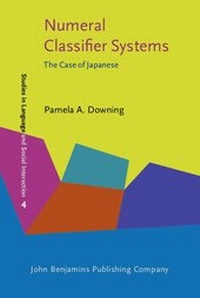
Numeral Classifier Systems
The Case of Japanese
1st Edition
Published on 20. September 1996
XX, 336 pages
978-90-272-7611-7 (ISBN)
Description

Numeral Classifier Systems considers the functional significance of the Japanese numeral system, its conclusions based on a corpus of 500 uses of classifier constructions drawn from oral and written Japanese texts.
Interestingly, although the Japanese system appears to conform at least superficially to universalistic predictions about its semantic structure, this study reports that in actual usage, the semantic role of classifiers is slight - only very rarely do they carry any lexical information unavailable from the context or the noun with which the classifier occurs. It does appear, however, that the system has an important role to play in providing pronoun-like anaphoric elements and in marking pragmatic distinctions such as the individuatedness of referents and the newness of numerical information. For these reasons, the classifier system is deeply involved in a number of subsystems of Japanese grammar, and the demise of the system (sometimes rumored to be impending) would have substantial implications for the structure of the language as a whole.
Interestingly, although the Japanese system appears to conform at least superficially to universalistic predictions about its semantic structure, this study reports that in actual usage, the semantic role of classifiers is slight - only very rarely do they carry any lexical information unavailable from the context or the noun with which the classifier occurs. It does appear, however, that the system has an important role to play in providing pronoun-like anaphoric elements and in marking pragmatic distinctions such as the individuatedness of referents and the newness of numerical information. For these reasons, the classifier system is deeply involved in a number of subsystems of Japanese grammar, and the demise of the system (sometimes rumored to be impending) would have substantial implications for the structure of the language as a whole.
More details
Other editions
Additional editions
Book
09/1996
John Benjamins Publishing Co
€127.20
Shipment within 10-15 days
Person
Content
- NUMERAL CLASSIFIER SYSTEMS THE CASE OF JAPANESE
- Editorial page
- Title page
- Copyright page
- Dedication
- Preface
- Transcription Conventions
- Table of Contents
- Key to Charts, Figures, and Tables
- Chapter 1. Introduction
- Types of Classifier Systems
- Numeral Classifier Systems
- Generic Classifier Systems
- Genitive (or Possessive) Classifier Systems
- Noun Class (or Gender or Concordial) Systems
- Classificatory Verb Stem (or Predicate Classifier) Systems
- Problems in Defining Numeral Classifiers
- Definition of the Numeral Classifier in Japanese
- Classifier Corpus Considered in This Study
- Classifier Usage Sample
- Questionnaire
- Core Inventory
- Extended Inventory
- Classifier Issues of General Interest
- The Universality of the Semantic Parameters Underlying Classifier Systems
- The Semantic Role of Classifiers
- The Structure of the Semantic Field
- Interaction with Plurality Markers
- Use of Numeral Classifiers as Anaphoric Devices
- Numeral Classifiers as Markers of Pragmatic Distinction
- Conclusions
- Chapter 2. The Japanese System - History and Morphology
- The Numeral System of the Eighth Century
- The Classifier System of the Eighth Century
- Impediments to Evaluating the System
- Chinese Influence on the System
- Conformity to General Expectations Regarding the Structure of Classifier Systems
- Morphology and Syntax of the Present-Day System
- Numeral Stock - Classifier Stock Correspondences
- Numeral-Classifier Assimilation Patterns
- A. Numeral Assimilation Processes
- B. Classifier Assimilation Processes
- Syntactic Positions
- Chapter 3. Semantic Properties of System Members
- Distributional Differences
- 1. Frequency of Use
- 2. Breadth of Use
- 3. Ability to Appear with No Accompanying Noun or Nominal Antecedent
- 4. Order of Acquisition
- 5. Alternation with Other Classifiers
- Semantic Properties Influencing Distribution
- 1. Nature of the Referents Associated with the Classifier
- 2. Referential Range of the Classifier
- 3. Type of Semantic Cohesion Within Referent Class
- 4. Internal Structure of the Referent Class
- Summary of Semantic Properties of the System
- Chapter 4. Structure of the Lexical Field
- Previous Analyses
- Problems with the Taxonomie Approach
- Conclusions
- Chapter 5. Instantiation of Universal Semantic Trends in the Japanese Classifier System
- Hypothesis 1: Classifiers represent categories of a distinctive semantic type
- Hypothesis 2: Because of their distinctive semantic properties, classifiers serve to systematically supplement the information carried by nouns
- Evaluation in the Light of the Evidence from Japanese: Hypothesis 1
- Evaluation in the Light of the Evidence from Japanese: Hypothesis 2
- Lexical Interrelation of the Classifier and Noun Systems
- Importance of Classifiers Representing Deductive Categories
- Conclusions
- Chapter 6. The Anaphoric Use of Classifier Phrases
- Uses of Numeral-Classifier Pairs Unaccompanied by Nouns
- 1. Introducing Referents
- 2. Introducing Additional Members of Categories Already Introduced
- 3. Singling Out Subsets of Groupings of Referents Already Introduced
- 4. Referring to Exophorically or Anaphorically Anchored Individuals
- The Anaphoric System of Japanese
- The Role of Classifier Phrases within the Anaphoric System
- Conclusions
- Chapter 7. The Use of Classifier Phrases and Plural Markers as Individuators
- Markers of Number in Japanese
- Universalist Claims Regarding the Co-occurrence of Numeral Classifiers and Plural Marking
- Transnumeral Concepts and Their Individuation by Means of Classifier Phrases in Japanese
- Plural Marking in Japanese
- Plurality Splits in Other Languages
- Universalist Claims Reconsidered
- Summary
- Chapter 8. The Syntactic Position of the Numeral-Classifier Phrase
- Position of the Classifier Phrase Relative to the Nominal
- Construction Type 1: Pre-Nominal: #-C1-ATT N'-Case Particle
- Special Uses with the Number 'One'
- Construction Type 2: Appositive: N' #-CL-Case Particle
- Construction Type 3: Summative Appositive: N'-ATT #-CL-Case Particle
- Construction Type 4: Q-Float: N'-Case Particle (...) #-Cl
- Syntactic Constraints on the Quantified Arguments
- Newness of Quantitative Information
- Relative salience of category vs.individual category members
- Text mode
- Summary
- Interrelationship among Q-Float Constraints
- Conclusions
- Chapter 9. Diachronic Prognosis
- Notes
- Chapter 1: Introduction
- Chapter 2: The Japanese System: History and Morphology
- Chapter 3: Semantic Properties of System Members
- Chapter 4: Structure of the Lexical Field
- Chapter 5: Instantiation of Universal Semantic Trends in the Japanese Classifier System
- Chapter 6: The Anaphoric Use of Classifier Phrases in Japanese
- Chapter 7: The Use of Classifier Phrases and Plural Markers as Individuators
- Chapter 8: The Syntactic Position of the Numeral-Classifier Phrase
- Appendix 1: Questionnaire Instructions
- Appendix 2: Forms Listed on Questionnaire
- References
- Index
