

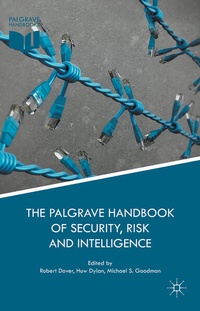
The Palgrave Handbook of Security, Risk and Intelligence
Description

This handbook provides a detailed analysis of threats and risk in the international system and of how governments and their intelligence services must adapt and function in order to manage the evolving security environment. This environment, now and for the foreseeable future, is characterised by complexity. The development of disruptive digital technologies; the vulnerability of critical national infrastructure; asymmetric threats such as terrorism; the privatisation of national intelligence capabilities: all have far reaching implications for security and risk management. The leading academics and practitioners who have contributed to this handbook have all done so with the objective of cutting through the complexity, and providing insight on the most pressing security, intelligence, and risk factors today. They explore the changing nature of conflict and crises; interaction of the global with the local; the impact of technological; the proliferation of hostile ideologies and the challenge this poses to traditional models of intelligence; and the impact of all these factors on governance and ethical frameworks. The handbook is an invaluable resource for students and professionals concerned with contemporary security and how national intelligence must adapt to remain effective.
More details
Other editions
Additional editions
Persons
Huw Dylan is a Lecturer in Intelligence and International Security at the Department of War Studies, King's College London. His research is focused on British intelligence in the Cold War, and his book Defence Intelligence and the Cold War was published in Autumn 2014 with Oxford University Press.
Michael S. Goodman is Professor of Intelligence and International Affairs in the Department of War Studies, King's College London. He is also Visiting Professor at the Norwegian Defence Intelligence School. His most recent work is the 2-volume Official History of the Joint Intelligence Committee.
Robert Dover is Senior Lecturer in Intelligence and International Relations in the Department of Politics and International Relations at the University of Leicester. His research and publications are focused on governmental uses of intelligence, the defence industrial base, and trade as a facet of power.
