

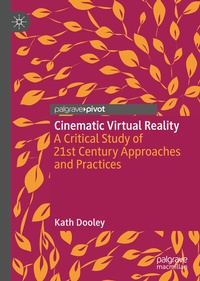
Cinematic Virtual Reality
Description

With reference to traditional film theory and frameworks drawn from fields such as screenwriting studies and anthropology, this book explores the challenges and opportunities for both practitioners and viewers offered by the 360-degree storytelling form. It focuses on cinematic virtual reality (CVR), a format that involves immersive, high quality, live action or computer-generated imagery (CGI) that can be viewed through head mounted display (HMD) goggles or via online platforms such as YouTube. This format has surged in popularity in recent years due to the release of affordable high quality omnidirectional (360-degree) cameras and consumer grade HMDs. The book interrogates four key concepts for this emerging medium: immersion, presence, embodiment and proximity through an analysis of innovative case studies and with reference to practitioner interviews. In doing so, it highlights the specificity of the format and provides a critical account of practitioner approaches to the concept development, writing and realisation of short narrative CVR works. The book concludes with an account of the author's practice-led research into the form, providing a valuable example of creative practice in the field of immersive media.
Reviews / Votes
"What happens when viewers become the centre of virtual worlds that they can interact with in real time? Kath Dooley raises essential questions about the uniqueness of virtual reality as a storytelling medium, masterfully exploring the triggers that suspend our disbelief and opening the door to swan dive inside stories."
- Fred Volhuer , Co-Founder and CEO, Atlas V, France
"Dooley provides a much-needed overview of the growing media form of cinematic virtual reality, rigorously examining its unique narrative experiences and the complex production practices that shape them. This book is essential reading for scholars and practitioners looking to gain valuable insight into this emergent storytelling medium."- Anthony Smith , Lecturer in Television Theory, University of Salford
More details
Other editions
Additional editions
Person
Kath Dooley is a filmmaker and academic in the Discipline of Theatre, Screen and Immersive Media at Curtin University, Western Australia. She co-edited The Palgrave Handbook of Screen Production published by Palgrave Macmillan in 2019.
