

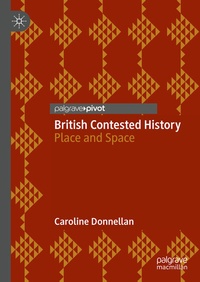
British Contested History
Description

This book examines the issues arising from British contested history by looking at how it came to be constructed, how it developed, and how attitudes over time have begun to change towards it. It considers how this narrative was first created through the writing of British history. It explores the private spaces of the court, the political places of the state, and the public places of the street. Beyond British shores this history has also been enacted through international heritage sites when objects were removed and taken back to Britain. Conclusively, it explores how the historic spaces of a maritime city, has further entrenched an already complex history of the nation. How this research brings new insights into this field is by looking at it through the lens of place, space, and the spatial turn. The underlining research questions are: What role does place and space play in historical constructions of the past? How do place and space contribute to contested history? How can these places and spaces be re-appropriated and reused, and endowed with new meanings?
More details
Other editions
Additional editions
Person
Caroline Donnellan is Lecturer in Architectural and Art History at Boston University Global Programmes, London, UK.
Content
Chapter 1: Introduction: British Contested History: Place and Space.- Chapter 2: The Spaces of Writing the Past: Historicising the Nation.- Chapter 3: Whitehall: Places of History and State Spaces.- Chapter 4: Greece and Mesopotamia in Britain: Changing Places.- Chapter 5: Liverpool: The Spaces of Remembering and The Places of Forgetting Again.
