

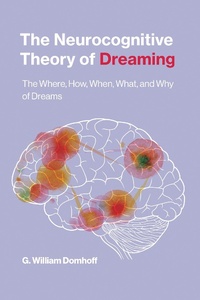
The Neurocognitive Theory of Dreaming
The Where, How, When, What, and Why of Dreams
Published on 4. October 2022
386 pages
978-0-262-37087-5 (ISBN)
Description

A comprehensive neurocognitive theory of dreaming based on the theories, methodologies, and findings of cognitive neuroscience and the psychological sciences.
G. William Domhoff's neurocognitive theory of dreaming is the only theory of dreaming that makes full use of the new neuroimaging findings on all forms of spontaneous thought and shows how well they explain the results of rigorous quantitative studies of dream content. Domhoff identifies five separate issues-neural substrates, cognitive processes, the psychological meaning of dream content, evolutionarily adaptive functions, and historically invented cultural uses-and then explores how they are intertwined. He also discusses the degree to which there is symbolism in dreams, the development of dreaming in children, and the relative frequency of emotions in the dreams of children and adults.
During dreaming, the neural substrates that support waking sensory input, task-oriented thinking, and movement are relatively deactivated. Domhoff presents the conditions that have to be fulfilled before dreaming can occur spontaneously. He describes the specific cognitive processes supported by the neural substrate of dreaming and then looks at dream reports of research participants. The "why" of dreaming, he says, may be the most counterintuitive outcome of empirical dream research. Though the question is usually framed in terms of adaptation, there is no positive evidence for an adaptive theory of dreaming. Research by anthropologists, historians, and comparative religion scholars, however, suggests that dreaming has psychological and cultural uses, with the most important of these found in religious ceremonies and healing practices. Finally, he offers suggestions for how future dream studies might take advantage of new technologies, including smart phones.
G. William Domhoff's neurocognitive theory of dreaming is the only theory of dreaming that makes full use of the new neuroimaging findings on all forms of spontaneous thought and shows how well they explain the results of rigorous quantitative studies of dream content. Domhoff identifies five separate issues-neural substrates, cognitive processes, the psychological meaning of dream content, evolutionarily adaptive functions, and historically invented cultural uses-and then explores how they are intertwined. He also discusses the degree to which there is symbolism in dreams, the development of dreaming in children, and the relative frequency of emotions in the dreams of children and adults.
During dreaming, the neural substrates that support waking sensory input, task-oriented thinking, and movement are relatively deactivated. Domhoff presents the conditions that have to be fulfilled before dreaming can occur spontaneously. He describes the specific cognitive processes supported by the neural substrate of dreaming and then looks at dream reports of research participants. The "why" of dreaming, he says, may be the most counterintuitive outcome of empirical dream research. Though the question is usually framed in terms of adaptation, there is no positive evidence for an adaptive theory of dreaming. Research by anthropologists, historians, and comparative religion scholars, however, suggests that dreaming has psychological and cultural uses, with the most important of these found in religious ceremonies and healing practices. Finally, he offers suggestions for how future dream studies might take advantage of new technologies, including smart phones.
More details
Other editions
Additional editions
G. William Domhoff
The Neurocognitive Theory of Dreaming
The Where, How, When, What, and Why of Dreams
Book
10/2022
MIT Press
€59.50
Shipment within 10-20 days
Person
G. William Domhoff is Distinguished Professor Emeritus and Research Professor at the University of California, Santa Cruz.
Content
Introduction: Establishing a Context, Providing an Overview 1
1 Definitions, Distinctions, and Limitations 5
2 Neural Substrates, Embodied Simulation, and Cognitive Insufficiencies 13
3 Dream Content as Revealed by Quantitative Content Analysis 59
4 Findings on Dream Content in Individual Dream Series 97
5 The Search for Symbolism in Dreams 139
6 The Development of Dreaming in Children 163
7 The Dream Reports of Preadolescents and Adolescents 181
8 The Occurence of Emotions in Dreams 207
9 An Assessment of Two Comprehensive Traditional Dream Theories 241
10 Dreaming, Adaptive Functions, and Cultural Uses 263
11 The Neurocognitive Theory Compared to Other Dream Theories 291
Acknowledgments 301
References 303
Index 353
1 Definitions, Distinctions, and Limitations 5
2 Neural Substrates, Embodied Simulation, and Cognitive Insufficiencies 13
3 Dream Content as Revealed by Quantitative Content Analysis 59
4 Findings on Dream Content in Individual Dream Series 97
5 The Search for Symbolism in Dreams 139
6 The Development of Dreaming in Children 163
7 The Dream Reports of Preadolescents and Adolescents 181
8 The Occurence of Emotions in Dreams 207
9 An Assessment of Two Comprehensive Traditional Dream Theories 241
10 Dreaming, Adaptive Functions, and Cultural Uses 263
11 The Neurocognitive Theory Compared to Other Dream Theories 291
Acknowledgments 301
References 303
Index 353
