

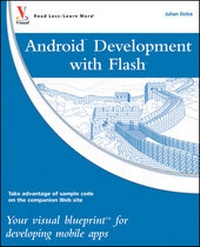
Android Development with Flash
Your visual blueprint for developing mobile apps
Published on 4. October 2010
352 pages
978-0-470-94572-8 (ISBN)
Description

The visual guide to developing for one of the world'shottest new mobile platforms, the Android OS
The Android operating system works on phones that combine acamera, Web browser, e-mail, GPS, and mapping tool into a singleaccessible pocket-sized unit, and can function on computers, aswell. Aimed at visual learners and packed with hundreds of screenshots, this guide brings Flash developers up to speed on thenecessary factors to take into account when developing for thistouch-based, mobile platform. Experienced Flash developer JulianDolce escorts you through the process of creating applications forthe Android OS using the Flash CS5 development platform and informsyou of best practices to try as well as common pitfalls toavoid.
* Guides you step by step through the process of creatingapplications for the Android OS using Flash CS5
* Explores the capabilities and limitations of developing appsfor the Android OS
* Points out common pitfalls and teaches you best practices
* Features hundreds of screen shots to assist with visuallearning
Android Development with Flash: Your visual blueprint fordeveloping mobile apps gets you on your way to developing appsfor Android... in a flash!
More details
Other editions
Additional editions
Book
10/2010
Visual
€33.00
Shipment within 10-20 days
Person
Julian Dolce is the senior Flash developer at QNX Software Systems, specializing in mobile AIR applications. Julian has spoken at numerous conferences around the world, where he has taught workshops on moving from Flash development to iPhone development, as well as a number of AIR for Android development workshops. He also maintains a personal development blog, www.deleteaso.com, in which he writes about his life as a Flash developer.
Content
- AndroidT Development with Flash®: Your visual blueprintT for developing mobile apps
- How to Use This Visual Blueprint Book
- Table of Contents
- Chapter 1: Getting Started with Android Development
- Introducing Android Devices
- Introducing the Development Tools
- Introducing the Available APIs
- Check What APIs Are Not Available
- Become an Android Developer
- Get the Android SDK
- Get the Android Eclipse Plug-in
- Enable USB Debugging
- Create an Android Virtual Device
- Start the Emulator
- Chapter 2: Getting Started with Flash CS5
- Using the Actions Panel
- Create a Skeleton Custom Class
- Set the Source Path
- Create MovieClips
- Create Buttons
- Edit Properties in Flash
- Add Objects to the Stage with Code
- Remove Objects from the Stage with Code
- Work with Events
- Using the Drawing API
- Using Flash CS5 Help
- Chapter 3: Developing Your First Application
- Create a New Project
- Configure Publish Settings
- Set Your Application Output
- Create a P12 Certificate
- Compile from Flash Professional CS5
- Compile from the Command Line
- Install Your Application on Your Device
- Update Your Version Number
- Set Application Permissions
- Set a Custom Application URI
- Chapter 4: Designing Your Application
- Mobile User Interface Guidelines
- Understanding Screen Resolutions
- Create Full-Screen Applications
- Understanding Screen Orientation
- Create Usable Hit States
- Understanding Layout
- Chapter 5: Handling Interaction
- Create Button States
- Respond to Touch Events
- Track Multiple Touches
- Respond to Zoom Events
- Respond to Rotate Events
- Respond to Pan Events
- Respond to Swipe Events
- Listen for Accelerometer Events
- Determine If the Accelerometer Is Available
- Determine Device Orientation
- Detect Which Way Is Up
- Filter Accelerometer Data
- Chapter 6: Working with Images
- Prepare Your Images
- Import Images
- Display Images
- Bundle Images with Your Application
- Load Images at Runtime
- Create Images Dynamically
- Save Images to the Camera Roll
- Select Images from the Camera Roll
- Display the Camera
- Chapter 7: Working with Sound
- Import Audio into Your Project
- Choose an Audio Codec
- Bundle Sounds with Your Application
- Load Sounds at Runtime
- Play Sounds
- Stop Sounds
- Set the Volume of a Sound
- Visualize the Sound Spectrum
- Access the Microphone
- Chapter 8: Working with Video
- Explore Available Video Formats and Encode a Video File
- Convert Videos
- Embed a Video
- Bundle a Video with Your Application
- Load a Video
- Buffer a Video
- Control a Video
- Set the Volume of a Video
- Chapter 9: Working with Text
- Embed Fonts in Your Application
- Create an Input TextField
- Create a Password TextField
- Using TLF TextFields
- Create a Scrollable TextField
- Chapter 10: Saving State
- Create a Local SharedObject
- Write to a SharedObject
- Load Data from a SharedObject
- Connect to a SQLite Database
- Create a SQLite Table
- Insert Data into a SQLite Table
- Select Data from a SQLite Table
- Update Data in a SQLite Table
- Delete Data from a SQLite Table
- Handle Application Exits
- Save Application States
- Handle Back and Menu Button Presses
- Handle Application Deactivation
- Chapter 11: Working with Files
- Reference Files and Directories
- Write Files
- Read Files
- Update Files
- Append Files
- Handle Files Synchronously
- Copy Files
- Load SWF files
- Chapter 12: Using the Location and WiFi Features
- Retrieve Your Current Location
- Map Your Location with Yahoo!
- Map Your Location with Yahoo!
- Map Your Location with Google
- Map Your Location with Google
- Determine Your Speed
- Check for an Internet Connection
- Set the System Idle Mode
- Display Web Pages
- Chapter 13: Using Special URL Protocols
- Make Phone Calls
- Open the Mail Application
- Open the Maps Application
- Open the Messaging Application
- Play a YouTube Video
- Chapter 14: Integrating with Third-Party Services
- Submit Updates to Twitter
- Display Ads with Smaato
- Track with Google Analytics
- Display Ads with AdMob
- Chapter 15: Optimizing Performance
- Optimize Your Display List
- Manage Mouse Events
- Understanding cacheAsBitmap
- Understanding cacheAsBitmapMatrix
- Chapter 16: Debugging Your Application
- Show Your Trace Statements
- Create Breakpoints
- Using the Flash CS5 Debugger
- Understanding the Debug Console
- Understanding the Variables Panel
- Debug with the Android Eclipse Plug-in
- Chapter 17: Deploying Your Application
- Take Screenshots of Your Application on Your Device
- Create an Application Icon
- Publish Your Application for the Android Market
- Upload Your Application to the Android Market
- Appendix A: ActionScript Class Reference
- INDEX
