

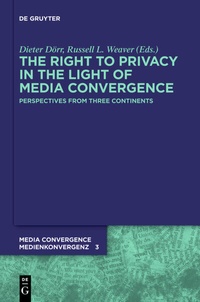
The Right to Privacy in the Light of Media Convergence -
Perspectives from Three Continents
1st Edition
Published on 29. May 2012
VIII, 385 pages
978-3-11-027615-2 (ISBN)
Description

The rapid change of the culture of communication constantly poses new threats for the right to privacy. These do not only emanate from States, but also from private actors. The global network of digital information has turned the protection of privacy since a long time into an international challenge. In this arena, national legal systems and their underlying common values collide. This collection convenes contributions from European, Australian and US experts. They take on the challenge of providing an intercontinental analysis of the issue and answer the question how the right to privacy could be defended in future.
More details
Other editions
Additional editions
Dieter Dörr | Russell L. Weaver
The Right to Privacy in the Light of Media Convergence -
Perspectives from Three Continents
Book
05/2012
1st Edition
De Gruyter
€149.95
Shipment within 5-7 days
Persons
Dieter Dörr, Johannes Gutenberg-Universität, Mainz; Russell L. Weaver,University of Louisville, USA.
Content
1 - About the Authors [Seite 7]
2 - Protecting Privacy in a Digital Age [Seite 9]
3 - Is The Right to Privacy Real? [Seite 39]
4 - Taking Privacy Seriously under the Fourth Amendment [Seite 45]
5 - Privacy Rights: The Virtue of Protecting False Reputations [Seite 59]
6 - Politics, Privacy and the Public Interest: A Case Study from Australia [Seite 73]
7 - Privacy and Press Instrusions: New Media, Old Law [Seite 96]
8 - A Never Ending Story: Caroline v. Germany [Seite 122]
9 - The French Privacy Law. Current questions and forward-looking questions [Seite 133]
10 - Arrest Records and the Right to Know [Seite 148]
11 - Using Open Government to Gain a Competitive Edge. FOIA and Corporate Privacy in the Wake of FCC v. AT&T [Seite 162]
12 - Gain-Based Relief for Invasion of Privacy [Seite 181]
13 - Breach of Confidence Claims under English and European Private International Law [Seite 202]
14 - "Confidence-Plus" and Human Rights. The Monstrous New Tort of Breach of Privacy in England [Seite 220]
15 - How should an Australian Statutory Cause of Action Protecting Privacy be framed? [Seite 245]
16 - Tort Privacy and Free Speech [Seite 263]
17 - Anonymity, Pseudonymity & Online Privacy [Seite 284]
18 - Net Negligence. Framework for Understanding Claims for Negligent Infliction of Emotional Distress in the Modern Era [Seite 306]
19 - Digital Eternity or Digital Oblivion. Some Difficulties in Conceptualising and Implementing the Right to Be Forgotten [Seite 330]
20 - Secrecy, Privacy, Publicity, Transparency. A German Perspective on WikiLeaks [Seite 352]
21 - Data Protection - is there a bridge across the Atlantic? [Seite 365]
22 - European Information Systems and Data Protection as Elements of the European Administrative Union [Seite 382]
2 - Protecting Privacy in a Digital Age [Seite 9]
3 - Is The Right to Privacy Real? [Seite 39]
4 - Taking Privacy Seriously under the Fourth Amendment [Seite 45]
5 - Privacy Rights: The Virtue of Protecting False Reputations [Seite 59]
6 - Politics, Privacy and the Public Interest: A Case Study from Australia [Seite 73]
7 - Privacy and Press Instrusions: New Media, Old Law [Seite 96]
8 - A Never Ending Story: Caroline v. Germany [Seite 122]
9 - The French Privacy Law. Current questions and forward-looking questions [Seite 133]
10 - Arrest Records and the Right to Know [Seite 148]
11 - Using Open Government to Gain a Competitive Edge. FOIA and Corporate Privacy in the Wake of FCC v. AT&T [Seite 162]
12 - Gain-Based Relief for Invasion of Privacy [Seite 181]
13 - Breach of Confidence Claims under English and European Private International Law [Seite 202]
14 - "Confidence-Plus" and Human Rights. The Monstrous New Tort of Breach of Privacy in England [Seite 220]
15 - How should an Australian Statutory Cause of Action Protecting Privacy be framed? [Seite 245]
16 - Tort Privacy and Free Speech [Seite 263]
17 - Anonymity, Pseudonymity & Online Privacy [Seite 284]
18 - Net Negligence. Framework for Understanding Claims for Negligent Infliction of Emotional Distress in the Modern Era [Seite 306]
19 - Digital Eternity or Digital Oblivion. Some Difficulties in Conceptualising and Implementing the Right to Be Forgotten [Seite 330]
20 - Secrecy, Privacy, Publicity, Transparency. A German Perspective on WikiLeaks [Seite 352]
21 - Data Protection - is there a bridge across the Atlantic? [Seite 365]
22 - European Information Systems and Data Protection as Elements of the European Administrative Union [Seite 382]
