

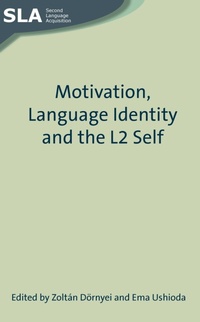
Motivation, Language Identity and the L2 Self
Published on 12. January 2009
352 pages
978-1-84769-675-5 (ISBN)
Description

Due to its theoretical and educational significance within the language learning process, the study of L2 motivation has been an important area of second language acquisition research for several decades. Over the last few years L2 motivation research has taken an exciting new turn by focusing increasingly on the language learner's situated identity and various self-perceptions. As a result, the concept of L2 motivation is currently in the process of being radically reconceptualised and re-theorised in the context of contemporary notions of self and identity. With contributions by leading European, North American and Asian scholars, this volume brings together the first comprehensive anthology of key conceptual and empirical papers that mark this important paradigmatic shift.
Reviews / Votes
The book is sophisticated, and readers will have to be already familiar with the fundamental aspects of L2 motivation research. Nevertheless, it would be an invaluable aid to researchers seeking to keep up with the ever-advancing developments in the area. Susan C. Baker, Department of Psychology, University of Queensland, Australia in Journal of Multilingual and Multicultural Development * Vol. 32, No.2, March 2011, 201-206 *More details
Series
Language
English
Place of publication
Bristol
United Kingdom
Publishing group
Channel View Publications Ltd
Target group
Professional and scholarly
Product notice
Reflowable
File size
2,68 MB
ISBN-13
978-1-84769-675-5 (9781847696755)
Copyright in bibliographic data and cover images is held by Nielsen Book Services Limited or by the publishers or by their respective licensors: all rights reserved.
Schweitzer Classification
Other editions
Additional editions
Zoltan Doernyei | Ema Ushioda
Motivation, Language Identity and the L2 Self
Book
01/2009
Multilingual Matters
€56.80
Shipment within 10-20 days
Persons
Zoltan Doernyei is Professor of Psycholinguistics at the School of English, University of Nottingham. He has published widely on various aspects of second language acquisition and language learning motivation including Motivation, Language Identity and the L2 Self (2009, edited with Ema Ushioda).
Ema Ushioda is an Associate Professor in ELT and Applied Linguistics at the Centre for Applied Linguistics, University of Warwick where she teaches MA courses and coordinates the Doctorate in Education. Her research interests include language motivation, autonomy, sociocultural theory and teacher development. Her publications include Learner Autonomy 5: The Role of Motivation (1996, Authentik), Towards Greater Learner Autonomy in the Foreign Language Classroom (2002, Authentik, co-authored with David Little and Jennifer Ridley) and Learner Autonomy in the Foreign Language Classroom: Teacher, Learner, Curriculum and Assessment (2003, Authentik, co-edited with David Little and Jennifer Ridley).
Ema Ushioda is an Associate Professor in ELT and Applied Linguistics at the Centre for Applied Linguistics, University of Warwick where she teaches MA courses and coordinates the Doctorate in Education. Her research interests include language motivation, autonomy, sociocultural theory and teacher development. Her publications include Learner Autonomy 5: The Role of Motivation (1996, Authentik), Towards Greater Learner Autonomy in the Foreign Language Classroom (2002, Authentik, co-authored with David Little and Jennifer Ridley) and Learner Autonomy in the Foreign Language Classroom: Teacher, Learner, Curriculum and Assessment (2003, Authentik, co-edited with David Little and Jennifer Ridley).
Content
Contributors
1. Motivation, Language Identities and the L2 Self: A Theoretical Overview - Ema Ushioda and Zoltan Doernyei
2. The L2 Motivational Self System - Zoltan Doernyei
3. The Baby, the Bathwater and the Future of Language Learning Motivation Research - Peter D. MacIntyre, Sean P. MacKinnon and Richard Clement
4. The L2 Motivational Self System among Japanese, Chinese and Iranian Learners of English: A Comparative Study - Tatsuya Taguchi, Michael Magid and Mostafa Papi
5. Learning Experiences, Selves and Motivated Learning Behaviour: A Comparative Analysis of Structural Models for Hungarian Secondary and University Learners of English - Kata Csizer and Judit Kormos
6. Self and Identity in L2 Motivation in Japan: The Ideal L2 Self and Japanese Learners of English - Stephen Ryan
7. International Posture and the Ideal L2 Self in the Japanese EFL Context - Tomoko Yashima
8. Motivation and Vision: The Relation Between the Ideal L2 Self, Imagination and Visual Style - Abdullah S. Al-Shehri
9. Links Between Ethnolinguistic Affiliation, Self-related Motivation and Second Language Fluency: Are they Mediated by Psycholinguistic Variables? - Norman Segalowitz, Elizabeth Gatbonton and Pavel Trofimovich
10. Toward the Development of a Scale to Assess Possible Selves as a Source of Language Learning Motivation - Peter D. MacIntyre, Sean P. MacKinnon and Richard Clement
11. A Person-in-context Relational View of Emergent Motivation, Self and Identity - Ema Ushioda
12. Situating the L2 Self: Two Indonesian School Learners of English - Martin Lamb
13. Imagined Identity and the L2 Self in the French Foreign Legion - Zachary Lyons
14. The Sociocultural Interface Between Ideal Self and Ought-to Self: A Case Study of Two Korean Students' ESL Motivation - Tae-Young Kim
15. The Internalisation of Language Learning into the Self and Social Identity - Kimberly A. Noels
16. Possible Selves in Language Teacher Development - Magdalena Kubanyiova
17. Identity and Self in E-language Teaching - Cynthia White and Alex Ding
18. Motivation, Language Identities and the L2 Self: Future Research Directions - Zoltan Doernyei and Ema Ushioda
Appendices of Research Instruments
1. Motivation, Language Identities and the L2 Self: A Theoretical Overview - Ema Ushioda and Zoltan Doernyei
2. The L2 Motivational Self System - Zoltan Doernyei
3. The Baby, the Bathwater and the Future of Language Learning Motivation Research - Peter D. MacIntyre, Sean P. MacKinnon and Richard Clement
4. The L2 Motivational Self System among Japanese, Chinese and Iranian Learners of English: A Comparative Study - Tatsuya Taguchi, Michael Magid and Mostafa Papi
5. Learning Experiences, Selves and Motivated Learning Behaviour: A Comparative Analysis of Structural Models for Hungarian Secondary and University Learners of English - Kata Csizer and Judit Kormos
6. Self and Identity in L2 Motivation in Japan: The Ideal L2 Self and Japanese Learners of English - Stephen Ryan
7. International Posture and the Ideal L2 Self in the Japanese EFL Context - Tomoko Yashima
8. Motivation and Vision: The Relation Between the Ideal L2 Self, Imagination and Visual Style - Abdullah S. Al-Shehri
9. Links Between Ethnolinguistic Affiliation, Self-related Motivation and Second Language Fluency: Are they Mediated by Psycholinguistic Variables? - Norman Segalowitz, Elizabeth Gatbonton and Pavel Trofimovich
10. Toward the Development of a Scale to Assess Possible Selves as a Source of Language Learning Motivation - Peter D. MacIntyre, Sean P. MacKinnon and Richard Clement
11. A Person-in-context Relational View of Emergent Motivation, Self and Identity - Ema Ushioda
12. Situating the L2 Self: Two Indonesian School Learners of English - Martin Lamb
13. Imagined Identity and the L2 Self in the French Foreign Legion - Zachary Lyons
14. The Sociocultural Interface Between Ideal Self and Ought-to Self: A Case Study of Two Korean Students' ESL Motivation - Tae-Young Kim
15. The Internalisation of Language Learning into the Self and Social Identity - Kimberly A. Noels
16. Possible Selves in Language Teacher Development - Magdalena Kubanyiova
17. Identity and Self in E-language Teaching - Cynthia White and Alex Ding
18. Motivation, Language Identities and the L2 Self: Future Research Directions - Zoltan Doernyei and Ema Ushioda
Appendices of Research Instruments
