

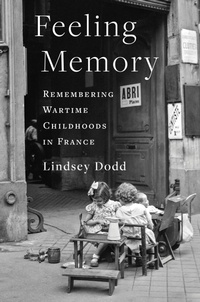
Feeling Memory
Remembering Wartime Childhoods in France
1st Edition
Published on 19. December 2023
400 pages
978-0-231-55781-8 (ISBN)
Description

What did it feel like to be a child in France during World War II? Feeling Memory is an affective exploration of children's lives in wartime France and the ways they are remembered.
Lindsey Dodd draws on the recorded oral narratives of a hundred people to examine the variety of experiences children had during the war. She considers different aspects of remembering, underscoring the centrality of emotion to memory. This book covers a wide range of locations-the country and the city, Occupied France and the Free Zone-and situations-well-off and poor children, those separated from their families and those with them; it places Jewish children's experiences alongside non-Jewish children's. Against the backdrop of momentous events, readers encounter children playing, working, eating, thinking, doing, and feeling.
An investigation of the emotions of history, Feeling Memory argues for the transformative potential of affect theory and affective methodologies in oral history and the history of everyday life. This book makes major contributions to the history of France during World War II, understandings of children's lives in war, and the use of memory in historical and oral history analysis.
Lindsey Dodd draws on the recorded oral narratives of a hundred people to examine the variety of experiences children had during the war. She considers different aspects of remembering, underscoring the centrality of emotion to memory. This book covers a wide range of locations-the country and the city, Occupied France and the Free Zone-and situations-well-off and poor children, those separated from their families and those with them; it places Jewish children's experiences alongside non-Jewish children's. Against the backdrop of momentous events, readers encounter children playing, working, eating, thinking, doing, and feeling.
An investigation of the emotions of history, Feeling Memory argues for the transformative potential of affect theory and affective methodologies in oral history and the history of everyday life. This book makes major contributions to the history of France during World War II, understandings of children's lives in war, and the use of memory in historical and oral history analysis.
More details
Other editions
Additional editions
Book
07/2023
Columbia University Press
€37.20
Shipment within 10-20 days
Book
07/2023
Columbia University Press
€145.08
Shipment within 10-20 days
Person
Lindsey Dodd is reader in modern European history at the University of Huddersfield. She is the author of French Children Under the Allied Bombs, 1940-1945: An Oral History (2016) and coeditor of Vichy France and Everyday Life: Confronting the Challenges of Wartime (2018). She is also part of the editorial team for the journal Oral History.
Content
Acknowledgments
Chronology
A Note on Transcription and Translation
Introduction
Pause-Anne-Marie and Her Father
Positioning
Part I. Memories Felt
1. Articulated Feeling
Pause-Daniel: Fear on the Road
2. Affects and Intensities
Pause-Nicole: Inside Drancy
Part II. Memories Located
Pause-Nancette: Happy Places, Happy Times
3. The Weirdness of Memory Time
4. Places in Traumatic Memory
5. Spaces in Traumatic Memory
Pause-Hélène: Persecution and Space
Part III. Memories Told
Pause-Filming Marie-Madeleine
6. Regimes of Memory, Regimes of Feeling
7. Communities of Memory, Communities of Feeling
Pause-Édith and Jean Compete
Part IV. Memories Lived
8. Materialities of the Everyday
Pause-Henri Plays at War
9. Affective Others
Pause-Danièle: The Strain of Uncertainty
Pause-Robert: The Contingency of Moral Meaning
10. Contingency and Rupture
Conclusion: A Palette of Haecceities
Appendix: The Interviewees
Notes
Bibliography
Index
Chronology
A Note on Transcription and Translation
Introduction
Pause-Anne-Marie and Her Father
Positioning
Part I. Memories Felt
1. Articulated Feeling
Pause-Daniel: Fear on the Road
2. Affects and Intensities
Pause-Nicole: Inside Drancy
Part II. Memories Located
Pause-Nancette: Happy Places, Happy Times
3. The Weirdness of Memory Time
4. Places in Traumatic Memory
5. Spaces in Traumatic Memory
Pause-Hélène: Persecution and Space
Part III. Memories Told
Pause-Filming Marie-Madeleine
6. Regimes of Memory, Regimes of Feeling
7. Communities of Memory, Communities of Feeling
Pause-Édith and Jean Compete
Part IV. Memories Lived
8. Materialities of the Everyday
Pause-Henri Plays at War
9. Affective Others
Pause-Danièle: The Strain of Uncertainty
Pause-Robert: The Contingency of Moral Meaning
10. Contingency and Rupture
Conclusion: A Palette of Haecceities
Appendix: The Interviewees
Notes
Bibliography
Index
