

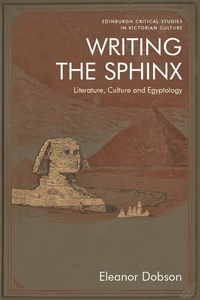
Writing the Sphinx
Literature, Culture and Egyptology
Published on 5. November 2020
281 pages
978-1-4744-7626-3 (ISBN)
Description

Unearths a rich tradition of creative flexibility, collaboration and mutual influence between literary culture and Egyptology
- The first monograph study to bring literature into conversation with Egyptological culture
- Incorporates a number of archival primary sources which have, until now, escaped critical attention
- Analyses canonical literature alongside works by lesser-known authors
- Combines literary criticism with book history, the history of science, and reception studies
This book explores literary and Egyptological cultures from the closing decades of the nineteenth century to the opening decades of the twentieth, culminating in the aftermath of the high-profile discovery of the tomb of Tutankhamun in 1922. Analysing the works of Egyptologists including Howard Carter, Arthur Weigall and E. A. Wallis Budge alongside those of their literary contemporaries such as H. Rider Haggard, Marie Corelli and Oscar Wilde, it investigates the textual, cultural and material exchanges between literature, Egyptology and visual and material culture across this period.
More details
Other editions
Additional editions
Book
11/2020
Edinburgh University Press
€131.50
Shipment within 15-20 days
Content
- Intro
- List of Illustrations
- Series Editor's Preface
- Acknowledgements
- List of Hieroglyphs
- Introduction
- 1. 'Wonderful things': Howard Carter, Literary Genre and Material Intertextuality
- 2. 'Fairy tales' and 'bunkum': Marie Corelli, Artefacts and Fabrications
- 3. 'The master-key that opens every door': Hieroglyphs, Translations and Palimpsests
- 4. 'Drunk on the dead': Intoxication, Perfume and Mummy Dust
- 5. 'The sphinx will speak at last': Visions, Communications and Spiritual Experience
- Coda
- Appendix: 'Story of an Egyptian Necklace'
- Bibliography
- Index
