

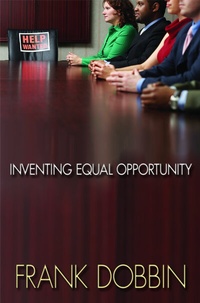
Inventing Equal Opportunity
1st Edition
Published on 16. June 2015
360 pages
978-1-4008-3089-3 (ISBN)
Description

Equal opportunity in the workplace is thought to be the direct legacy of the civil rights and feminist movements and the landmark Civil Rights Act of 1964. Yet, as Frank Dobbin demonstrates, corporate personnel experts--not Congress or the courts--were the ones who determined what equal opportunity meant in practice, designing changes in how employers hire, promote, and fire workers, and ultimately defining what discrimination is, and is not, in the American imagination.
Dobbin shows how Congress and the courts merely endorsed programs devised by corporate personnel. He traces how the first measures were adopted by military contractors worried that the Kennedy administration would cancel their contracts if they didn't take "affirmative action" to end discrimination. These measures built on existing personnel programs, many designed to prevent bias against unionists. Dobbin follows the changes in the law as personnel experts invented one wave after another of equal opportunity programs. He examines how corporate personnel formalized hiring and promotion practices in the 1970s to eradicate bias by managers; how in the 1980s they answered Ronald Reagan's threat to end affirmative action by recasting their efforts as diversity-management programs; and how the growing presence of women in the newly named human resources profession has contributed to a focus on sexual harassment and work/life issues.
Inventing Equal Opportunity reveals how the personnel profession devised--and ultimately transformed--our understanding of discrimination.
Dobbin shows how Congress and the courts merely endorsed programs devised by corporate personnel. He traces how the first measures were adopted by military contractors worried that the Kennedy administration would cancel their contracts if they didn't take "affirmative action" to end discrimination. These measures built on existing personnel programs, many designed to prevent bias against unionists. Dobbin follows the changes in the law as personnel experts invented one wave after another of equal opportunity programs. He examines how corporate personnel formalized hiring and promotion practices in the 1970s to eradicate bias by managers; how in the 1980s they answered Ronald Reagan's threat to end affirmative action by recasting their efforts as diversity-management programs; and how the growing presence of women in the newly named human resources profession has contributed to a focus on sexual harassment and work/life issues.
Inventing Equal Opportunity reveals how the personnel profession devised--and ultimately transformed--our understanding of discrimination.
All prices
More details
Edition
Course Book
Language
English
Place of publication
Princeton, NJ
United States
Publishing group
De Gruyter
Target group
Professional and scholarly
Edition type
Digital original
Product notice
Reflowable
Illustrations
54 line illus. 1 table.
File size
1,15 MB
ISBN-13
978-1-4008-3089-3 (9781400830893)
Schweitzer Classification
Other editions
Additional editions
Frank Dobbin
Inventing Equal Opportunity
Book
06/2011
Princeton University Press
€35.70
Article not available at the moment
Frank Dobbin
Inventing Equal Opportunity
Book
06/2009
Princeton University Press
€59.52
Article exhausted; check different version
Person
Frank Dobbin is professor of sociology at Harvard University. His books include Forging Industrial Policy: The United States, Britain, and France in the Railway Age; The New Economic Sociology: A Reader (Princeton); and The Global Diffusion of Markets and Democracy.
Content
Acknowledgments ix
CHAPTER 1: Regulating Discrimination The Paradox of a Weak State 1
CHAPTER 2: Washington Outlaws Discrimination with a Broad Brush 22
CHAPTER 3: The End of Jim Crow
The Personnel Arsenal Put to New Purposes 41
CHAPTER 4: Washington Means Business
Personnel Experts Fashion a System of Compliance 75
CHAPTER 5: Fighting Bias with Bureaucracy 101
CHAPTER 6: The Reagan Revolution and the Rise of Diversity Management 133
CHAPTER 7: The Feminization of HR and Work-Family Programs 161
CHAPTER 8: Sexual Harassment as Employment Discrimination 190
CHAPTER 9: How Personnel Defined Equal Opportunity 220
Notes 235
Bibliography 261
Index 289
CHAPTER 1: Regulating Discrimination The Paradox of a Weak State 1
CHAPTER 2: Washington Outlaws Discrimination with a Broad Brush 22
CHAPTER 3: The End of Jim Crow
The Personnel Arsenal Put to New Purposes 41
CHAPTER 4: Washington Means Business
Personnel Experts Fashion a System of Compliance 75
CHAPTER 5: Fighting Bias with Bureaucracy 101
CHAPTER 6: The Reagan Revolution and the Rise of Diversity Management 133
CHAPTER 7: The Feminization of HR and Work-Family Programs 161
CHAPTER 8: Sexual Harassment as Employment Discrimination 190
CHAPTER 9: How Personnel Defined Equal Opportunity 220
Notes 235
Bibliography 261
Index 289

