

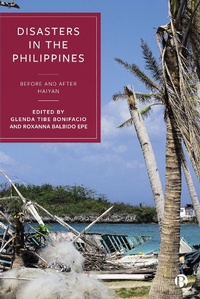
Disasters in the Philippines
Before and After Haiyan
Bristol University Press
1st Edition
Published on 28. April 2023
382 pages
978-1-5292-2291-3 (ISBN)
Description

Bringing together the voices of local scholars in the Philippines, this book offers critical insights into one of the world's most disaster-prone regions.
The Asia-Pacific region is one of the most vulnerable regions in the world, with the effects of climate change contributing to rising sea levels and increasingly frequent typhoons and floods. Case studies in this book examine such disasters, including the aftermath of 2013 super typhoon Haiyan. Discussions are centered around four themes: women and empowerment, economics and recovery, community and resilience, and religion and spirituality.
Through its analysis, the book demonstrates the scopes, inequities, and inefficiencies of policies and responses, as well as forms of empowerment and resilience, in meeting challenges in disaster-afflicted communities in the Philippines. Its conclusions provide a more nuanced and grounded perspective of policies, practices, and approaches in the sociology of disasters today.
The Asia-Pacific region is one of the most vulnerable regions in the world, with the effects of climate change contributing to rising sea levels and increasingly frequent typhoons and floods. Case studies in this book examine such disasters, including the aftermath of 2013 super typhoon Haiyan. Discussions are centered around four themes: women and empowerment, economics and recovery, community and resilience, and religion and spirituality.
Through its analysis, the book demonstrates the scopes, inequities, and inefficiencies of policies and responses, as well as forms of empowerment and resilience, in meeting challenges in disaster-afflicted communities in the Philippines. Its conclusions provide a more nuanced and grounded perspective of policies, practices, and approaches in the sociology of disasters today.
More details
Edition
First Edition
Language
English
Place of publication
Bristol
United Kingdom
Target group
Professional and scholarly
Product notice
Reflowable
Illustrations
27 s/w Abbildungen, 11 s/w Tabellen
11 Tables, black and white; 27 Illustrations, black and white
File size
7,56 MB
ISBN-13
978-1-5292-2291-3 (9781529222913)
Copyright in bibliographic data and cover images is held by Nielsen Book Services Limited or by the publishers or by their respective licensors: all rights reserved.
Schweitzer Classification
Other editions
Additional editions
Disasters in the Philippines
Before and After Haiyan
Book
04/2023
1st Edition
Bristol University Press
€118.50
Shipment within 3-4 weeks
Persons
Glenda Tibe Bonifacio is Professor of Women and Gender Studies at the University of Lethbridge.
Roxanna Balbido Epe is doctoral candidate at the University of Lethbridge.
Roxanna Balbido Epe is doctoral candidate at the University of Lethbridge.
Contributions
University of Sierra Sur
University of the Philippines
University of the Philippines - Philippine General Hospital
UPV Tacloban College
University of the Philippines Los Banos
UPV Tacloban College
UPV Tacloban College
University of Winnipeg
Business Banking Credit Officer (Assistant Manager) at Bank of the Philippine Islands
Student (Juris Doctor) - University of Santo Tomas
Content
Part 1: Disasters in the Philippines: Overview and Responses
1. Introduction - Glenda Tibe Bonifacio and Roxanna Balbido Epe
2. Socio-Economic Impact of Disasters in the Philippines: The First Two Decades of the 21st century - Roberto Ariel Abeldano Zuniga
3. State of ICT-use within the Local Climate E-Governance in Metro Manila, Philippines - Xavier Venn A. Asuncion
4. Food and Nutrition Security and Children's Health Challenges in Extreme Weather Disasters in the Philippines: Understanding the Implications of Gender Roles - Erlidia F. Llamas-Clark
5. Children and Disaster Risk Reduction: Building Resilience from Education, Local Government Units, and Communities - Roxanna Balbido Epe
Part 2: Haiyan Aftermath
6. From Disaster Woes to Economic Windfall: The Case of San Juan Women of Sta. Rita, Samar - Anita G. Cular
7. Disaster Events and Role Transitions: Narratives of Filipino Rural Women after Typhoon Haiyan - Rowena S. Guiang and Ervina A. Espina
8. Women's Participation in Small Island Resilience Building in Concepcion, Iloilo, Philippines - Dhino B. Geges
9. What Could Have Been? Disaster Impact Analysis of Haiyan in Region VIII - Shiely Anne O. Julian and Francine Blaise M. Loja
10. Gender and Labour Market Regimes in Post-Disaster Haiyan Communities in Leyte - Glenda Tibe Bonifacio
11. No One Left Behind? A Case for Disability-inclusive Disaster Risk Reduction in the Philippines - Kaira Zoe Alburo-Canete, Corazon Clarin, Marivic Codinera, and Katherine Velmonte
12. Climate Change and Applied Theater as Post Disaster-Response - Dennis D. Gupa
13. Beyond Bayanihan: Overcoming Myths of Community Resilience in Typhoon Haiyan Post-Disaster Recovery - Yvonne Su, Ladylyn Mangada, and Ara Joy Pacoma
14. Increasing Resilience in Communities affected by Typhoon Haiyan: World Renew's Response in the Philippines - Grace Wiebe
15. Religion in the Public Sphere in the Aftermath of Typhoon Haiyan - Maria Cecilia T. Medina
Conclusion (For Now): Post-Haiyan Philippines and Beyond - Glenda Tibe Bonifacio and Roxanna Balbido Epe
1. Introduction - Glenda Tibe Bonifacio and Roxanna Balbido Epe
2. Socio-Economic Impact of Disasters in the Philippines: The First Two Decades of the 21st century - Roberto Ariel Abeldano Zuniga
3. State of ICT-use within the Local Climate E-Governance in Metro Manila, Philippines - Xavier Venn A. Asuncion
4. Food and Nutrition Security and Children's Health Challenges in Extreme Weather Disasters in the Philippines: Understanding the Implications of Gender Roles - Erlidia F. Llamas-Clark
5. Children and Disaster Risk Reduction: Building Resilience from Education, Local Government Units, and Communities - Roxanna Balbido Epe
Part 2: Haiyan Aftermath
6. From Disaster Woes to Economic Windfall: The Case of San Juan Women of Sta. Rita, Samar - Anita G. Cular
7. Disaster Events and Role Transitions: Narratives of Filipino Rural Women after Typhoon Haiyan - Rowena S. Guiang and Ervina A. Espina
8. Women's Participation in Small Island Resilience Building in Concepcion, Iloilo, Philippines - Dhino B. Geges
9. What Could Have Been? Disaster Impact Analysis of Haiyan in Region VIII - Shiely Anne O. Julian and Francine Blaise M. Loja
10. Gender and Labour Market Regimes in Post-Disaster Haiyan Communities in Leyte - Glenda Tibe Bonifacio
11. No One Left Behind? A Case for Disability-inclusive Disaster Risk Reduction in the Philippines - Kaira Zoe Alburo-Canete, Corazon Clarin, Marivic Codinera, and Katherine Velmonte
12. Climate Change and Applied Theater as Post Disaster-Response - Dennis D. Gupa
13. Beyond Bayanihan: Overcoming Myths of Community Resilience in Typhoon Haiyan Post-Disaster Recovery - Yvonne Su, Ladylyn Mangada, and Ara Joy Pacoma
14. Increasing Resilience in Communities affected by Typhoon Haiyan: World Renew's Response in the Philippines - Grace Wiebe
15. Religion in the Public Sphere in the Aftermath of Typhoon Haiyan - Maria Cecilia T. Medina
Conclusion (For Now): Post-Haiyan Philippines and Beyond - Glenda Tibe Bonifacio and Roxanna Balbido Epe
