


Experimental Arabic Linguistics
1st Edition
Published on 26. July 2021
257 pages
978-90-272-5960-8 (ISBN)
Description

Input Processing is a theoretical framework on which the pedagogical paradigm called Processing Instruction is predicated. In this book, new data on the acquisition of Italian and Modern Standard Arabic are presented and analyzed within this framework. Each study in the book explores how input processing strategies affect the acquisition of a particular linguistic feature and/or structure in the two languages. The studies use both offline (e.g., sentence and discourse-level tasks) and online tests (e.g., eye-tracking) to measure the effects of this instructional training.
More details
Other editions
Additional editions
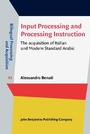
Alessandro Benati
Input Processing and Processing Instruction
The acquisition of Italian and Modern Standard Arabic
Book
09/2021
John Benjamins Publishing Co
€119.04
Shipment within 10-15 days
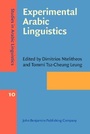
Dimitrios Ntelitheos | Tommi Tsz-Cheung Leung
Experimental Arabic Linguistics
Book
07/2021
John Benjamins Publishing Co
€130.73
Shipment within 10-15 days
Content
- Intro
- Experimental Arabic Linguistics
- Editorial page
- Title page
- Copyright page
- Table of contents
- Acknowledgements
- Introduction: Experimental approaches to Arabic linguistics
- 1. Introduction
- 2. Experimental Arabic linguistics
- 2.1 Experimental phonetics
- 2.2 Psycholinguistic studies
- 2.3 Eye-tracking studies
- 2.4 Neurophysiological studies
- 2.5 Typical and atypical language development
- 3. Papers in this volume
- References
- I. Experimental phonetics
- Articulatory and acoustic correlates of pharyngealization and pharyngealization spread in cairene Arabic: A real-time magnetic resonance imaging study
- 1. Introduction
- 2. Review of literature
- 2.1 Acoustic correlates of pharyngealization
- 2.2 Articulatory correlates of pharyngealization
- 2.3 MRI in phonetic studies on Arabic
- 3. Pharyngealization as a phonological feature
- 3.1 A discussion of coarticulation, coproduction, and spread
- 3.2 Phonological studies on the spread of pharyngealization
- 4. Research statement
- 5. Data acquisition
- 5.1 Articulatory data acquisition
- 5.2 Acoustic data acquisition
- 6. Test material
- 7. Data analysis
- 7.1 Articulatory data analysis
- 7.2 Acoustic data analysis
- 8. Results
- 8.1 Results from articulatory data
- 8.2 Results from acoustic data
- 9. Discussion
- 9.1 Discussion of articulatory results
- 9.2 Discussion of acoustic results
- 10. Conclusions
- References
- Affricate variation in Emirati Arabic: An exploratory study
- 1. Introduction
- 1.1 Arabic in the United Arab Emirates
- 1.2 k-affrication
- 1.3 d?-deaffrication
- 1.4 Objectives
- 2. Methodology
- 2.1 Participants
- 2.2 Stimuli
- 2.3 Experimental data collection and procedure
- 2.4 Corpus study
- 2.5 Corpus study procedure
- 3. Corpus study results
- 3.1 Phonological effects
- 3.2 Lexical effects
- 4. Experimental study results
- 4.1 Lexical effects
- 4.2 Speaker effects
- 4.3 Sociophonetic factors
- 5. Discussion
- 5.1 Phonological factors
- 5.2 Lexical constraints
- 6. Conclusion
- Acknowledgements
- References
- II. Eye-tracking
- Eye movements in Arabic reading: A Review of the current literature
- 1. Introduction
- 2. Mechanisms of eye movement control in reading
- 3. The Perceptual span for reading
- 4. Word factors affecting the spatial and temporal characteristics of eye movements
- 5. Parafoveal processing in reading
- 6. Models of eye movement control in reading
- 7. The Arabic writing system
- 8. Eye movement research on Arabic reading
- 9. Final comments and future directions
- References
- An eye-tracking study of phonological awareness in Emirati Arabic
- 1. Introduction
- 2. Eye tracking
- 3. The visual world paradigm
- 4. Current study
- 5. Method
- 5.1 Participants
- 5.2 Stimuli
- 5.3 Design
- 5.4 Procedure
- 5.5 Measures
- 6. Results
- 7. Discussion
- References
- III. Typical and atypical language development
- LATFA: An assessment tool for Emirati Arabic-speaking children
- 1. Introduction
- 2. Methodology
- 3. Phase 1: Oral language assessment
- 3.1 Participants
- 3.2 Procedure
- 3.3 Speech perception task
- 3.4 Phonological awareness task
- 3.5 Morphological awareness task
- 3.6 Phonological production task
- 4. Phase 2: Literacy assessment
- 4.1 Participants
- 4.2 Procedure
- 4.3 Arabic alphabet task
- 4.4 Dictation task
- 4.5 Arabic plurals task
- 5. Results
- 6. Discussion
- 7. Future directions
- Acknowledgements
- Funding
- References
- Sentence repetition in children with autism spectrum disorder in Saudi Arabia: An investigation of morphosyntactic abilities
- 1. Introduction
- 1.1 Present study
- 2. Methodology
- 2.1 Participants
- 2.2 Selection criteria
- 3. Baseline tasks
- 4. Experimental task: The Saudi-Arabic Sentence Repetition Task
- 4.1 Scoring
- 4.2 Procedure
- 5. Results
- 5.1 Baseline tasks
- 5.2 The Saudi-Arabic sentence repetition task
- 6. Discussion
- Acknowledgements
- References
- The relationship between word and nonword repetition and receptive and expressive vocabulary skills in Gulf Arabic speaking children
- 1. Introduction
- 1.1 Relationship between NWR and vocabulary in TD children and children with SLI
- 1.2 Theories of NWR
- 1.3 Factors affecting nonword accuracy
- 1.4 The Arabic word and nonword repetition (WNRep) test
- 1.5 Developing the Arabic expressive vocabulary test (AEVT)
- 2. Methods
- 2.1 Participants
- 2.2 Procedures and scores
- 2.3 Reliability
- 3. Results and analysis
- 3.1 Descriptive statistics of WNRep
- 3.2 Groups' performance on receptive and expressive vocabulary tests
- 3.3 Correlation between word and nonword repetition and receptive and expressive vocabulary in TD children
- 3.4 Regression analysis on the PPC scoring method for TD and CL children
- 4. Discussion
- 4.1 Summary of findings
- 4.2 Theoretical interpretations and implications
- 4.3 Word and nonword repetition as clinical markers
- 4.4 Relations with receptive and expressive vocabulary
- 4.5 Clinical implications
- 5. Conclusion
- References
- An exploratory longitudinal study of vocabulary development in bilingually exposed children with autism spectrum disorder (ASD) in the United Arab Emirates
- 1. Introduction
- 1.1 Autism spectrum disorder
- 1.2 Autism spectrum disorder and bilingualism
- 2. Methods
- 2.1 Participants
- 2.2 Procedures
- 3. Results
- 3.1 Descriptive statistics
- 3.2 Correlations between the four vocabulary tests
- 3.3 Multivariate analysis of variance (MANOVA)
- 3.4 Variability in children with autism: Results based on speaking abilities
- 4. Discussion and analysis
- 5. Limitations and future directions
- References
- Appendix A. Correlations table
- Appendix B. Pairwise comparisons
- Appendix C. Correlations based on speaking abilities
- Appendix D.
- Index
