

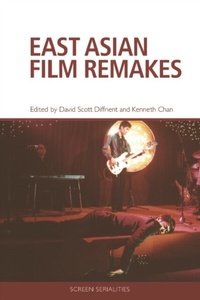
East Asian Film Remakes
Description

Considers the remake from a variety of critical and theoretical perspectives and positions it alongside other serialized cultural forms
- Examines the historical significance of the remake in revitalizing local industries and breathing life into established film genres (e.g., action-adventure, crime drama, romantic comedy, the Western, etc.)
- Draws attention to previously overlooked motion pictures produced in East Asia and acknowledges the significant contributions of several prolific yet neglected filmmakers
- Re-evaluates canonical texts and offers fresh assessments of legendary auteurs such as Ozu Yasujiro, Yu Hyun-mok, Miike Takashi, Johnnie To, and Stephen Chow
- Showcases the role of remakes in forging cross-cultural alliances - both within and beyond the East Asian region - while pointing toward prospects of increased transnational coproductions in the coming years
This wide-ranging, historically grounded exploration of motion picture remakes produced in East Asia brings together original contributions from experts in Chinese, Hong Kong, Japanese, South Korean, and Taiwanese cinemas and puts forth new ways of thinking about the remaking process as both a critically underappreciated form of artistic expression and an economically motivated industrial practice. Exploring everything from ethnic Korean filmmaker Lee Sang-il's Unforgiven (2013), a Japanese remake of Clint Eastwood's Western of the same title, to Stephen Chow's The Mermaid (2016), a Chinese slapstick reimagining of Walt Disney's The Little Mermaid (1989) and Hans Christian Andersen's 1837 fairy tale, East Asian Film Remakes contributes to a better understanding of cinematic remaking across the region and offers vital alternatives to the Eurocentric and Hollywood-focused approaches that have thus far dominated the field.
More details
Other editions
Additional editions
Content
- Intro
- List of Illustrations
- Foreword
- Notes on Contributors
- Introduction: East Asian Film Remakes
- Part I: Re-fleshing the Text: Sex, Seduction, Desire
- 1. How to Sell a Remake: The Gate of Flesh Media Franchise
- 2. Against Anaesthesia: An Empty Dream, Pleasurable Pain and the 'Illicit' Thrills of South Korea's Golden Age Remakes
- 3. Two Faces of Seduction: Martial Heroines and Karmic Women in Chor Yuen's Intimate Confessions of a Chinese Courtesan and Lust for Love of a Chinese Courtesan
- 4. Japanese Self-Made Film Remakes as Self-Improvement: Professional Desires and DIY Fulfilment, from Panic High School to Tetsuo
- Part II: Serialising Ozu: The Enduring Legacy of a Cinematic 'Tofu Maker'
- 5. Definition and Progression: Ozu Yasujiro's 'Noriko Trilogy'
- 6. A Remake, But . . . : Media Infantility in Ozu Yasujiro's Good Morning
- 7. The Cinema of Serial Vitality: Ozu Yasujiro and Yamada Yoji
- Part III: Revisiting Personal/Political Traumas in East Asian Action Films, Gangster Films and Westerns
- 8. Opting Out of History: Miike Takashi's New Graveyard of Honor
- 9. The Promise of Hokkaido: Trauma, Violence and the Legacy of the Imperial Frontier in Lee Sang-il's Unforgiven
- 10. Benny Chan's Connected and the Hollywoodisation of Hong Kong Cinema
- 11. Vessels and Cargos: Spaces of Inclusion and Exclusion in Johnnie To's Drug War and Lee Hae-young's Korean Remake Believer
- Part IV: Local Flavours and Transcultural Flows in East Asian Comedies, Dramas and Fantasies
- 12. The Power of Healing in Little Forest(s): Cross-Cultural Perspectives on Food, Friendship and Self-Identity, from Japan to South Korea
- 13. More than Blue and Man in Love: Transnational Korean-Taiwanese Film Remakes as a Facilitator for Taiwan Cinema
- 14. The Pan-Asian 'Miss Granny' Phenomenon
- 15. Remaking in the Age of Chthulumedia: Stephen Chow's The Mermaid
- Index
