

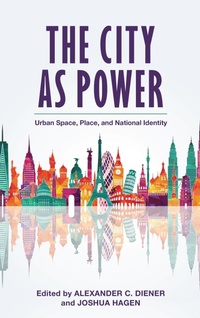
The City as Power
Urban Space, Place, and National Identity
1st Edition
Published on 18. September 2018
328 pages
979-8-7651-7835-5 (ISBN)
Description

This interdisciplinary book considers national identity through the lens of urban spaces.
By bringing together scholars from a range of disciplines, The City as Power provides broad comparative perspectives about the critical importance of urban landscapes as forums for creating, maintaining, and contesting identity and belonging. Rather than serving as passive backdrops, urban spaces and places are active mediums for defining categories of inclusion-and exclusion. With an international scope and ready appeal to visual learners, the book offers a compelling survey of historical and contemporary efforts to enact state ideals, express counter-narratives, and negotiate global trends in cities. The contributors show how successive regimes reshape cityscapes to mirror their respective socio-political agendas, perspectives on history, and assumptions of power. Yet they must do so within the legal, ethnic, religious, social, economic, and cultural geographies inherited from previous regimes. Exploring the rich diversity of urban space, place, and national identity, the book compares core elements of identity projects in a range of political, cultural, and socioeconomic settings. By focusing on the built form and urban settings for social movements, protest, and even organized violence, this timely book demonstrates that cities are not simply lived in but also lived through.
By bringing together scholars from a range of disciplines, The City as Power provides broad comparative perspectives about the critical importance of urban landscapes as forums for creating, maintaining, and contesting identity and belonging. Rather than serving as passive backdrops, urban spaces and places are active mediums for defining categories of inclusion-and exclusion. With an international scope and ready appeal to visual learners, the book offers a compelling survey of historical and contemporary efforts to enact state ideals, express counter-narratives, and negotiate global trends in cities. The contributors show how successive regimes reshape cityscapes to mirror their respective socio-political agendas, perspectives on history, and assumptions of power. Yet they must do so within the legal, ethnic, religious, social, economic, and cultural geographies inherited from previous regimes. Exploring the rich diversity of urban space, place, and national identity, the book compares core elements of identity projects in a range of political, cultural, and socioeconomic settings. By focusing on the built form and urban settings for social movements, protest, and even organized violence, this timely book demonstrates that cities are not simply lived in but also lived through.
More details
Other editions
Additional editions
Book
09/2018
Rowman & Littlefield Publishers
€60.10
Shipment within 3-4 weeks
Persons
Alexander C. Diener is associate professor of geography at the University of Kansas.
Joshua Hagen is dean of the College of Letters and Science at the University of Wisconsin-Stevens Point.
Joshua Hagen is dean of the College of Letters and Science at the University of Wisconsin-Stevens Point.
Content
List of Figures and Tables
Acknowledgments
1 The City as Palimpsest: Narrating National Identity through
Urban Space and Place
Alexander C. Diener and Joshua Hagen
Part I: Remembering and Forgetting
Alexander C. Diener and Joshua Hagen
2 Creating a Place for the Nation in Dublin: The Republic of Ireland's Garden of Remembrance
Kara E. Dempsey
3 Making a Wrong Turn in Tokyo: Yasukuni Shrine and the "Empty Center" of Contemporary Japanese Nationalism
Ronald Davidson
4 The City, Memory, and Ideology in Ulaanbaatar: Inscribing Memory and Ideology in Postsocialist Mongolia
Orhon Myadar
5 Ankara's Forest Farm and the Turkish Nation: Modern Narratives of Agriculture, Identity, and Contestation
Kyle T. Evered and Emine Ö. Evered
6 A Usable Past in Tashkent: Public Culture, Eidolons, and "Uzbekness" in Independent Uzbekistan
Reuel R. Hanks
Part II: "Other" Identities and Counternarratives
Alexander C. Diener and Joshua Hagen
7 Remembering Rio: From the Imperial Palace to the African Heritage Circuit
Brian J. Godfrey
8 The Cityscapes of Lusaka and Mongu: Narrating National Symbolism in Zambia
Garth A. Myers and Angela G. Subulwa
9 Rewriting the National Past in Contemporary Budapest: Populism in Action
Emilia Palonen
10 Urban National Politics in the United States: #BlackLivesMatter and the Challenges to Normative National Identity
Joshua F. J. Inwood
11 From Precolonial to Postcolonial African Cities: Identity Formation, Social Change, and Conflict
Bill Freund
Part III: National Identity amid Globalization
Alexander C. Diener and Joshua Hagen
12 National Day Celebrations in Doha and Abu Dhabi: Cars and Semiotic Landscapes in the Gulf
Natalie Koch
13 With or without Chinese Characteristics in Beijing, Wuhan, and Shenzhen: Navigating Antiquity and Modernism in Socialist China's Urban Space
James DeShaw Rae
14 From "Rural" to "Urban" India: Transforming a Nation's Identity through Serial Urban Renewals
Diganta Das and Bikramaditya K. Choudhary
15 Ethno- and Religio-nationalism in Putrajaya, Taman Tamadun Islam, and Kota Iskandar: Malay(sian) National Identity in Contemporary Urban Megaprojects
Sarah Moser
16 The City as Crucible: Urban Space, Place, and National Identity into the Twenty-First Century
Alexander C. Diener and Joshua Hagen
Bibliography
Index
About the Contributors
Acknowledgments
1 The City as Palimpsest: Narrating National Identity through
Urban Space and Place
Alexander C. Diener and Joshua Hagen
Part I: Remembering and Forgetting
Alexander C. Diener and Joshua Hagen
2 Creating a Place for the Nation in Dublin: The Republic of Ireland's Garden of Remembrance
Kara E. Dempsey
3 Making a Wrong Turn in Tokyo: Yasukuni Shrine and the "Empty Center" of Contemporary Japanese Nationalism
Ronald Davidson
4 The City, Memory, and Ideology in Ulaanbaatar: Inscribing Memory and Ideology in Postsocialist Mongolia
Orhon Myadar
5 Ankara's Forest Farm and the Turkish Nation: Modern Narratives of Agriculture, Identity, and Contestation
Kyle T. Evered and Emine Ö. Evered
6 A Usable Past in Tashkent: Public Culture, Eidolons, and "Uzbekness" in Independent Uzbekistan
Reuel R. Hanks
Part II: "Other" Identities and Counternarratives
Alexander C. Diener and Joshua Hagen
7 Remembering Rio: From the Imperial Palace to the African Heritage Circuit
Brian J. Godfrey
8 The Cityscapes of Lusaka and Mongu: Narrating National Symbolism in Zambia
Garth A. Myers and Angela G. Subulwa
9 Rewriting the National Past in Contemporary Budapest: Populism in Action
Emilia Palonen
10 Urban National Politics in the United States: #BlackLivesMatter and the Challenges to Normative National Identity
Joshua F. J. Inwood
11 From Precolonial to Postcolonial African Cities: Identity Formation, Social Change, and Conflict
Bill Freund
Part III: National Identity amid Globalization
Alexander C. Diener and Joshua Hagen
12 National Day Celebrations in Doha and Abu Dhabi: Cars and Semiotic Landscapes in the Gulf
Natalie Koch
13 With or without Chinese Characteristics in Beijing, Wuhan, and Shenzhen: Navigating Antiquity and Modernism in Socialist China's Urban Space
James DeShaw Rae
14 From "Rural" to "Urban" India: Transforming a Nation's Identity through Serial Urban Renewals
Diganta Das and Bikramaditya K. Choudhary
15 Ethno- and Religio-nationalism in Putrajaya, Taman Tamadun Islam, and Kota Iskandar: Malay(sian) National Identity in Contemporary Urban Megaprojects
Sarah Moser
16 The City as Crucible: Urban Space, Place, and National Identity into the Twenty-First Century
Alexander C. Diener and Joshua Hagen
Bibliography
Index
About the Contributors
