

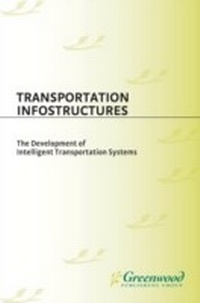
Transportation Infostructures
The Development of Intelligent Transportation Systems
1st Edition
Published on 30. May 1995
224 pages
978-0-313-38949-8 (ISBN)
Description

This volume, the first to result from the Diebold Institute Information-Based Infrastructure Project, explores the links between business and government in the development of intelligent transportation systems (ITS) technology. The work focuses on road and vehicular infrastructures, comparing those of the U.S., Europe, and Japan, and the roles that ITS can play in solving major current and anticipated future transportational problems. Special attention is given to environmental and economic concerns.
The world's infrastructure requires refurbishing, but it especially requires rethinking. The computer has transformed business enterprises and now information technology can change our environment. This book explores the benefits and how to achieve them through the use of intelligent transportation systems (ITS). The implementation of ITS will potentially lead to individual drivers, fleet operators, and public transit users saving vast amounts of journey time and fuel, to a significant reduction in pollution and to improved road safety. The Japanese are ahead of the U.S. and Europe in the area of intelligent transportation systems, using position location devices, and electronic maps.
Most look at this development as one that helps speed passenger cars, but this book details the economics which point to the technology being equally good for speeding trucks and easing the movement of freight. Traffic avoidance is only part of the problem although route guidance is helpful. Financing of projects in ITS is an important area for innovation and ITS could be a source of revenue to municipalities rather than an expense.
The world's infrastructure requires refurbishing, but it especially requires rethinking. The computer has transformed business enterprises and now information technology can change our environment. This book explores the benefits and how to achieve them through the use of intelligent transportation systems (ITS). The implementation of ITS will potentially lead to individual drivers, fleet operators, and public transit users saving vast amounts of journey time and fuel, to a significant reduction in pollution and to improved road safety. The Japanese are ahead of the U.S. and Europe in the area of intelligent transportation systems, using position location devices, and electronic maps.
Most look at this development as one that helps speed passenger cars, but this book details the economics which point to the technology being equally good for speeding trucks and easing the movement of freight. Traffic avoidance is only part of the problem although route guidance is helpful. Financing of projects in ITS is an important area for innovation and ITS could be a source of revenue to municipalities rather than an expense.
More details
Edition
1. Auflage
Language
English
Place of publication
New York
United States
Publishing group
Bloomsbury Publishing Plc
Target group
Interest Age: From 7 to 17 years
ISBN-13
978-0-313-38949-8 (9780313389498)
Copyright in bibliographic data and cover images is held by Nielsen Book Services Limited or by the publishers or by their respective licensors: all rights reserved.
Schweitzer Classification
Other editions
Additional editions
Book
05/1995
Praeger Publishers Inc
€98.50
Shipment within 15-20 days
Person
THE DIEBOLD INSTITUTE FOR PUBLIC POLICY, INC., founded in 1968 by John Diebold, is an operating foundation located in Bedford Hills, NY. Exploring the public-private interface to achieve maximum societal benefit from technological change is the principal focus of the Institute's activities.
Content
Preface
Introduction
Early U.S. Transportation Infrastructure Policy: Implications for the Twenty-First Century
ITS: What They Are and How They Function
Intelligent Transportation Systems and Services
Potential Benefits of ITS
Obstacles to the Development of ITS
Roles of the Public Sector and Private Sector in ITS: The Need for Cooperation
International Perspectives and Policy Analyses
The Challenge of Securing Public Benefit from the Development of Intelligent Transportation Systems in the United States by Robert D. Ervin
The European ITS Experience: Lessons for the United States by Kan Chen
European ITS Policy Issues by Willy Maes
ITS-Related Activities in Japan by Hironao Kawashima and Haruki Fujii
Appendix: Representative ITS Implementations
List of Acronyms
Selected Bibliography
Index
Introduction
Early U.S. Transportation Infrastructure Policy: Implications for the Twenty-First Century
ITS: What They Are and How They Function
Intelligent Transportation Systems and Services
Potential Benefits of ITS
Obstacles to the Development of ITS
Roles of the Public Sector and Private Sector in ITS: The Need for Cooperation
International Perspectives and Policy Analyses
The Challenge of Securing Public Benefit from the Development of Intelligent Transportation Systems in the United States by Robert D. Ervin
The European ITS Experience: Lessons for the United States by Kan Chen
European ITS Policy Issues by Willy Maes
ITS-Related Activities in Japan by Hironao Kawashima and Haruki Fujii
Appendix: Representative ITS Implementations
List of Acronyms
Selected Bibliography
Index
