

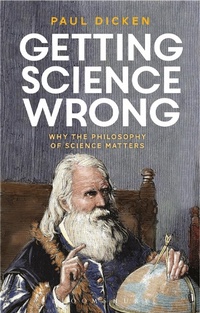
Getting Science Wrong
Why the Philosophy of Science Matters
1st Edition
Published on 11. January 2018
224 pages
978-1-350-00730-7 (ISBN)
Description

When Galileo dropped cannon-balls from the top of the Leaning Tower of Pisa, he did more than overturn centuries of scientific orthodoxy. At a stroke, he established a new conception of the scientific method based upon careful experimentation and rigorous observation - and also laid the groundwork for an ongoing conflict between the critical open-mindedness of science and the recalcitrant dogmatism of religion that would continue to the modern day.
The problem is that Galileo never performed his most celebrated experiment in Pisa. In fact, he rarely conducted any experiments at all. The Church publicly celebrated his work, and Galileo enjoyed patronage from the great and the powerful; his ecclesiastical difficulties only began when disgruntled colleagues launched a campaign to discredit their academic rival. But what does this tell us about modern science if its own foundation myth turns out to be nothing more than political propaganda?
Getting Science Wrong discusses some of the most popular misconceptions about science, and their continuing role in the public imagination. Drawing upon the history and philosophy of science it challenges wide-spread assumptions and misunderstandings, from creationism and climate change to the use of statistics and computer modelling. The result is an engaging introduction to contentious issues in the philosophy of science and a new way of looking at the role of science in society.
The problem is that Galileo never performed his most celebrated experiment in Pisa. In fact, he rarely conducted any experiments at all. The Church publicly celebrated his work, and Galileo enjoyed patronage from the great and the powerful; his ecclesiastical difficulties only began when disgruntled colleagues launched a campaign to discredit their academic rival. But what does this tell us about modern science if its own foundation myth turns out to be nothing more than political propaganda?
Getting Science Wrong discusses some of the most popular misconceptions about science, and their continuing role in the public imagination. Drawing upon the history and philosophy of science it challenges wide-spread assumptions and misunderstandings, from creationism and climate change to the use of statistics and computer modelling. The result is an engaging introduction to contentious issues in the philosophy of science and a new way of looking at the role of science in society.
More details
Edition
1. Auflage
Language
English
Place of publication
London
United Kingdom
Publishing group
Bloomsbury Publishing PLC
Target group
College/higher education
Illustrations
5 b/w illustrations
ISBN-13
978-1-350-00730-7 (9781350007307)
Copyright in bibliographic data and cover images is held by Nielsen Book Services Limited or by the publishers or by their respective licensors: all rights reserved.
Schweitzer Classification
Other editions
Additional editions
Book
01/2018
Bloomsbury Academic
€106.66
Shipment within 15-20 days
Book
01/2018
Bloomsbury Academic
€48.46
Shipment within 15-20 days
Person
Paul Dicken received his PhD from the University of Cambridge, and has held academic positions at universities in the UK, Germany and Australia.
Content
List of figures
Introduction
1. Learning from our mistakes
2. A matter of trial and error
3. Images of science
4. 88.6 percent of all statistics are all made up
5. Living in different worlds
6. The bankruptcy of science
7. Deus ex machina
Epilogue
Dramatis Personae
Notes
Bibliography
Index
Introduction
1. Learning from our mistakes
2. A matter of trial and error
3. Images of science
4. 88.6 percent of all statistics are all made up
5. Living in different worlds
6. The bankruptcy of science
7. Deus ex machina
Epilogue
Dramatis Personae
Notes
Bibliography
Index
