

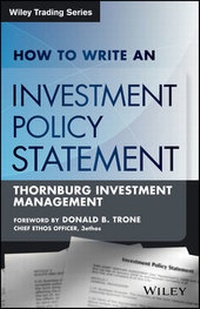
How to Write an Investment Policy Statement
2nd Edition
Published on 21. May 2013
80 pages
978-1-118-68012-4 (ISBN)
Description

An indispensable resource for every financial serviceprofessionals developing an IPS
The Investment Policy Statement (IPS) is one of the mostcritical documents fiduciaries must draft. For years, ERISA andother industry regulations have governed the guidelines allfiduciaries must comply with when drafting one. But the currentclimate of corporate scandal and the 2008 global banking crisishave led to increased scrutiny by regulators, prompting firms totake a closer look at the quality and integrity of their IPSs andto take steps to have a rigorous formal process in place fordrafting them. Endorsed by the Foundation of Fiduciary Studies,this concise guide provides a rigorous framework and the expertinsight, information and guidance you need to guarantee that yourIPS is in complete compliance with all ERISA-directedrequirements.
* Provides a step-by-step plan for creating a uniform IPS thatevery advisor in the office can follow
* Defines the duties and responsibilities of all partiesinvolved, while clarifying diversification guidelines and providingmethods for keeping costs under control
* Packed with ready-to-use templates, sample forms, letters andother documents, diagrams and other valuable tools, includingsample Policy Statement downloadable at the companion website
* Designed to get you quickly up to speed on what you need toknow to confidently serve your clients with the highest standardsof care and protection
The Investment Policy Statement (IPS) is one of the mostcritical documents fiduciaries must draft. For years, ERISA andother industry regulations have governed the guidelines allfiduciaries must comply with when drafting one. But the currentclimate of corporate scandal and the 2008 global banking crisishave led to increased scrutiny by regulators, prompting firms totake a closer look at the quality and integrity of their IPSs andto take steps to have a rigorous formal process in place fordrafting them. Endorsed by the Foundation of Fiduciary Studies,this concise guide provides a rigorous framework and the expertinsight, information and guidance you need to guarantee that yourIPS is in complete compliance with all ERISA-directedrequirements.
* Provides a step-by-step plan for creating a uniform IPS thatevery advisor in the office can follow
* Defines the duties and responsibilities of all partiesinvolved, while clarifying diversification guidelines and providingmethods for keeping costs under control
* Packed with ready-to-use templates, sample forms, letters andother documents, diagrams and other valuable tools, includingsample Policy Statement downloadable at the companion website
* Designed to get you quickly up to speed on what you need toknow to confidently serve your clients with the highest standardsof care and protection
All prices
More details
Other editions
Additional editions
Rocco Dibruno
How to Write an Investment Policy Statement
Book
08/2013
2nd Edition
Wiley
€19.00
Shipment within 15-20 days
Person
Rocco DiBruno is the author of How to Write an Investment Policy Statement, 2nd Edition, published by Wiley.
Content
Foreword by Don Trone 11
SECTION ONE: Why Plan Sponsors and All Fiduciaries Need aFormal Process for Writing Their Investment PolicyStatement
Chapter 1 ERISA AND THE CHALLENGE OF FIDUCIARY RESPONSIBILITY17
Writing an Investment Policy 17
What Is a Fiduciary?18
Fiduciary Liability19
Chapter 2 YOUR FIDUCIARY RESPONSIBILITIES AND LIABILITIESUNDER ERISA 21
Five Fiduciary Responsibilities 21
Fiduciary's Personal Liability 22
A Fiduciary's Primary Role Is to Manage the Process 23
Chapter 3 WHAT IS AN INVESTMENT POLICY STATEMENT AND WHAT ARETHE BENEFITS? 25
Risk Management 25
Monitor Investments 26
Summary 27
Chapter 4 UTILIZE THE "SAFE HARBOR" PROVISIONSPROVIDED BY ERISA 29
Prudent Experts 29
Five Recognized "Safe Harbor" Rules 29
Chapter 5 COMPLYING WITH ERISA SECTION 404(c) 31
SECTION TWO: How to Get Started and Steps to Formalize theProcess
Chapter 6 ASSEMBLING THE DOCUMENTATION 35
Chapter 7 STEPS TO FORMALIZE THE PROCESS 37
STEP 1: Decide on Plan Goals, Objectives, andStrategies 37
STEP 2: Decide on Strategy for Managing Risk 37
STEP 3: Determine the Risk Tolerance of the Plan 38
STEP 4: Set Forth Guidelines for Asset Classes 39
STEP 5: Implement an Asset-Allocation Policy 39
STEP 6: Mutual Funds Recommendations 39
STEP 7: Delegate Investment ManagementResponsibility 40
STEP 8: Investment Monitoring and Reporting 40
SECTION THREE: The Template IPS
Chapter 8 SAMPLE IPS TEMPLATES 43
Two Distinct IPS Samples 43
Organization of Templates 43
Chapter 9 SAMPLE IPS TEMPLATE #1: For Participant-Directed401(k) That Intends to Comply with ERISA Section 404(c) 458
STEP 1 Executive Summary and Background 45
STEP 2 Purpose of the Investment Policy Statement 46
STEP 3 Duties and Responsibilities 48
STEP 4 Asset Class Guidelines 50
STEP 5 Investment Manager Selection 52
STEP 6 Monitoring the Investment Managers 53
STEP 7 Controlling and Accounting for Investment Expenses 55
STEP 8 Investment Policy Review and Monitoring 56
Chapter 10 SAMPLE IPS TEMPLATE #2: For High-Net-WorthIndividual Setting Up a Family Trust 57
Executive Summary 58
PART I--Purpose 59
PART II--Investment Management Objectives 59
PART III-- Roles and Responsibilities 60
PART IV-- Investment Manager Selection 61
PART V-- Investment Monitoring and Review 63
PART VI-- Manager Termination 65
PART VII-- Additional Provisions (optional)65
Conclusion
MESSAGE TO PLAN SPONSORS 67
Glossary 69
Appendix: The Firm Profile 77
About the Author 7
SECTION ONE: Why Plan Sponsors and All Fiduciaries Need aFormal Process for Writing Their Investment PolicyStatement
Chapter 1 ERISA AND THE CHALLENGE OF FIDUCIARY RESPONSIBILITY17
Writing an Investment Policy 17
What Is a Fiduciary?18
Fiduciary Liability19
Chapter 2 YOUR FIDUCIARY RESPONSIBILITIES AND LIABILITIESUNDER ERISA 21
Five Fiduciary Responsibilities 21
Fiduciary's Personal Liability 22
A Fiduciary's Primary Role Is to Manage the Process 23
Chapter 3 WHAT IS AN INVESTMENT POLICY STATEMENT AND WHAT ARETHE BENEFITS? 25
Risk Management 25
Monitor Investments 26
Summary 27
Chapter 4 UTILIZE THE "SAFE HARBOR" PROVISIONSPROVIDED BY ERISA 29
Prudent Experts 29
Five Recognized "Safe Harbor" Rules 29
Chapter 5 COMPLYING WITH ERISA SECTION 404(c) 31
SECTION TWO: How to Get Started and Steps to Formalize theProcess
Chapter 6 ASSEMBLING THE DOCUMENTATION 35
Chapter 7 STEPS TO FORMALIZE THE PROCESS 37
STEP 1: Decide on Plan Goals, Objectives, andStrategies 37
STEP 2: Decide on Strategy for Managing Risk 37
STEP 3: Determine the Risk Tolerance of the Plan 38
STEP 4: Set Forth Guidelines for Asset Classes 39
STEP 5: Implement an Asset-Allocation Policy 39
STEP 6: Mutual Funds Recommendations 39
STEP 7: Delegate Investment ManagementResponsibility 40
STEP 8: Investment Monitoring and Reporting 40
SECTION THREE: The Template IPS
Chapter 8 SAMPLE IPS TEMPLATES 43
Two Distinct IPS Samples 43
Organization of Templates 43
Chapter 9 SAMPLE IPS TEMPLATE #1: For Participant-Directed401(k) That Intends to Comply with ERISA Section 404(c) 458
STEP 1 Executive Summary and Background 45
STEP 2 Purpose of the Investment Policy Statement 46
STEP 3 Duties and Responsibilities 48
STEP 4 Asset Class Guidelines 50
STEP 5 Investment Manager Selection 52
STEP 6 Monitoring the Investment Managers 53
STEP 7 Controlling and Accounting for Investment Expenses 55
STEP 8 Investment Policy Review and Monitoring 56
Chapter 10 SAMPLE IPS TEMPLATE #2: For High-Net-WorthIndividual Setting Up a Family Trust 57
Executive Summary 58
PART I--Purpose 59
PART II--Investment Management Objectives 59
PART III-- Roles and Responsibilities 60
PART IV-- Investment Manager Selection 61
PART V-- Investment Monitoring and Review 63
PART VI-- Manager Termination 65
PART VII-- Additional Provisions (optional)65
Conclusion
MESSAGE TO PLAN SPONSORS 67
Glossary 69
Appendix: The Firm Profile 77
About the Author 7
