

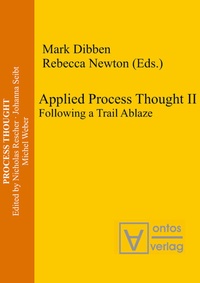
Applied Process Thought II
Following a Trail Ablaze
1st Edition
Published on 2. May 2013
402 pages
978-3-11-032810-3 (ISBN)
Description

Concentrating mainly on the process philosophy developed by Alfred North Whitehead, this series of essays brings together some of the newest developments in the application of process thinking to the physical and social sciences. These essays, by established scholars in the field, demonstrate how a wider and deeper understanding of the world can be obtained using process philosophical concepts, how the distortions and blockages inevitably inherent in substantivist talk can be set aside, and how new and fertile lines of research in the sciences can be opened as a result.
More details
Other editions
Additional editions
Book
02/2009
1st Edition
De Gruyter
€270.00
Shipment within 7-9 days
Book
01/2009
1st Edition
De Gruyter
€259.00
Article exhausted; check different version
Content
1 - Contents [Seite 7]
2 - Contributors [Seite 9]
3 - Foreword - James Walsh [Seite 15]
4 - Passing - Marian O'Donnell [Seite 20]
5 - Preface - Pete A. Y. Gunter [Seite 23]
6 - Fundamental Cosmological Dualities - Ronald P. Phipps [Seite 41]
7 - Introduction: Following a Trail Ablaze - Mark R. Dibben & Rebecca Newton [Seite 43]
8 - I. The Urizen of Whiteheadian ProcessThought - Michel Weber [Seite 63]
9 - II. Mementos of a Timequake:Whitehead's Radical Empiricism - Randall E. Auxier [Seite 77]
10 - III. Systems Thinking and Emergence - Joseph Bracken [Seite 103]
11 - IV. A Study in the Process Philosophy of Science: Biosystems and their Properties - Ross L. Stein [Seite 113]
12 - V. Containment and Reciprocity in Biological Systems: A Putative Psychophysical Organising Principle - Jonathan Delafield-Butt [Seite 135]
13 - VI. The Philosophy of an Infinite, Openand Integrated Universe - Ronald Preston Phipps [Seite 151]
14 - VII. The Religious Importance of Metaphysics - John B. Cobb, Jr. [Seite 207]
15 - VIII. The Earth, Life and Process Thinking: China and the West - Jan B.F.N. Engberts [Seite 223]
16 - IX. Empire, Relational Power, and a Multi-Polar World - Leslie A. Muray [Seite 241]
17 - X. Religion and Politics in Contemporary Democracy: A Whiteheadian Perspective - André Cloots [Seite 249]
18 - XI. Propositions in Corporations:Unconscious and Non-Conscious Experience - Duston Moore [Seite 265]
19 - XII. The Curious Case of Routines: Between Deliberation and Instinct - Elias L. Khalil [Seite 279]
20 - XIII. Sociology, Societies and Sociality - Michael Halewood [Seite 295]
21 - XIV. Towards A Process Oriented Sociological Imagination: Linking Conceptions of Nature with Social Change and Practice - Michael S. Carolan [Seite 321]
22 - XV. Education in a Decadent Age:The Place of Process Philosophy in the Curriculum - Arran Gare [Seite 343]
23 - XVI. How Can A Process Ontology Aid Philosophical Theology? - Thomas A. F. Kelly [Seite 363]
24 - XVII. The Role of Philosophy in the University - Thomas A. F. Kelly [Seite 379]
25 - Appendix: What is Applied Process Thought? The Editorial Introduction to Volume 1 - Mark R. Dibben and Thomas A. F. Kelly [Seite 395]
26 - Postcript: Professor Thomas A. F. Kelly - Peter Denman [Seite 411]
27 - Abbreviations [Seite 415]
28 - Table of Contents [Seite 417]
29 - Process Thought [Seite 423]
2 - Contributors [Seite 9]
3 - Foreword - James Walsh [Seite 15]
4 - Passing - Marian O'Donnell [Seite 20]
5 - Preface - Pete A. Y. Gunter [Seite 23]
6 - Fundamental Cosmological Dualities - Ronald P. Phipps [Seite 41]
7 - Introduction: Following a Trail Ablaze - Mark R. Dibben & Rebecca Newton [Seite 43]
8 - I. The Urizen of Whiteheadian ProcessThought - Michel Weber [Seite 63]
9 - II. Mementos of a Timequake:Whitehead's Radical Empiricism - Randall E. Auxier [Seite 77]
10 - III. Systems Thinking and Emergence - Joseph Bracken [Seite 103]
11 - IV. A Study in the Process Philosophy of Science: Biosystems and their Properties - Ross L. Stein [Seite 113]
12 - V. Containment and Reciprocity in Biological Systems: A Putative Psychophysical Organising Principle - Jonathan Delafield-Butt [Seite 135]
13 - VI. The Philosophy of an Infinite, Openand Integrated Universe - Ronald Preston Phipps [Seite 151]
14 - VII. The Religious Importance of Metaphysics - John B. Cobb, Jr. [Seite 207]
15 - VIII. The Earth, Life and Process Thinking: China and the West - Jan B.F.N. Engberts [Seite 223]
16 - IX. Empire, Relational Power, and a Multi-Polar World - Leslie A. Muray [Seite 241]
17 - X. Religion and Politics in Contemporary Democracy: A Whiteheadian Perspective - André Cloots [Seite 249]
18 - XI. Propositions in Corporations:Unconscious and Non-Conscious Experience - Duston Moore [Seite 265]
19 - XII. The Curious Case of Routines: Between Deliberation and Instinct - Elias L. Khalil [Seite 279]
20 - XIII. Sociology, Societies and Sociality - Michael Halewood [Seite 295]
21 - XIV. Towards A Process Oriented Sociological Imagination: Linking Conceptions of Nature with Social Change and Practice - Michael S. Carolan [Seite 321]
22 - XV. Education in a Decadent Age:The Place of Process Philosophy in the Curriculum - Arran Gare [Seite 343]
23 - XVI. How Can A Process Ontology Aid Philosophical Theology? - Thomas A. F. Kelly [Seite 363]
24 - XVII. The Role of Philosophy in the University - Thomas A. F. Kelly [Seite 379]
25 - Appendix: What is Applied Process Thought? The Editorial Introduction to Volume 1 - Mark R. Dibben and Thomas A. F. Kelly [Seite 395]
26 - Postcript: Professor Thomas A. F. Kelly - Peter Denman [Seite 411]
27 - Abbreviations [Seite 415]
28 - Table of Contents [Seite 417]
29 - Process Thought [Seite 423]
