

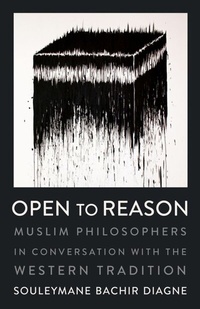
Open to Reason
Muslim Philosophers in Conversation with the Western Tradition
1st Edition
Published on 24. September 2018
136 pages
978-0-231-54617-1 (ISBN)
Description

What does it mean to be a Muslim philosopher, or to philosophize in Islam? In Open to Reason, Souleymane Bachir Diagne traces Muslims' intellectual and spiritual history of examining and questioning beliefs and arguments to show how Islamic philosophy has always engaged critically with texts and ideas both inside and outside its tradition. Through a rich reading of classical and modern Muslim philosophers, Diagne explains the long history of philosophy in the Islamic world and its relevance to crucial issues of our own time.
From classical figures such as Avicenna to the twentieth-century Sufi master and teacher of tolerance Tierno Bokar Salif Tall, Diagne explores how Islamic thinkers have asked and answered such questions as Does religion need philosophy? How can religion coexist with rationalism? What does it mean to interpret a religious narrative philosophically? What does it mean to be human, and what are human beings' responsibilities to nature? Is there such a thing as an "Islamic" state, or should Muslims reinvent political institutions that suit their own times? Diagne shows that philosophizing in Islam in its many forms throughout the centuries has meant a commitment to forward and open thinking. A remarkable history of philosophy in the Islamic world as well as a work of philosophy in its own right, this book seeks to contribute to the revival of a spirit of pluralism rooted in Muslim intellectual and spiritual traditions.
From classical figures such as Avicenna to the twentieth-century Sufi master and teacher of tolerance Tierno Bokar Salif Tall, Diagne explores how Islamic thinkers have asked and answered such questions as Does religion need philosophy? How can religion coexist with rationalism? What does it mean to interpret a religious narrative philosophically? What does it mean to be human, and what are human beings' responsibilities to nature? Is there such a thing as an "Islamic" state, or should Muslims reinvent political institutions that suit their own times? Diagne shows that philosophizing in Islam in its many forms throughout the centuries has meant a commitment to forward and open thinking. A remarkable history of philosophy in the Islamic world as well as a work of philosophy in its own right, this book seeks to contribute to the revival of a spirit of pluralism rooted in Muslim intellectual and spiritual traditions.
All prices
More details
Other editions
Additional editions
Souleymane Bachir Diagne
Open to Reason
Muslim Philosophers in Conversation with the Western Tradition
Book
05/2023
Columbia University Press
€21.03
Shipment within 10-20 days
Souleymane Bachir Diagne
Open to Reason
Muslim Philosophers in Conversation with the Western Tradition
Book
08/2018
Columbia University Press
€27.24
Shipment within 10-20 days
Persons
Diagne Souleymane Bachir :
Souleymane Bachir Diagne (PhD, Philosophy, Sorbonne) is Professor of French and Philosophy at Columbia University. He is the author of Bergson postcolonial: L'élan vital dans la pensée de Senghor et de Mohamed Iqbal (CNRS, 2011), which was awarded the Edouard Glissant Prize and the Dagnan-Bouveret Prize; his books in translation include African Art as Philosophy: Senghor, Bergson, and the Idea of Negritude (Seagull, 2011) and Islam and Open Society: Fidelity and Movement in the Philosophy of Muhammad Iqbal (Codesria, 2011).Souleymane Bachir Diagne is a professor in the departments of French and philosophy at Columbia University. His books in English include African Art as Philosophy: Senghor, Bergson, and the Idea of Negritude (2011) and The Ink of the Scholars: Reflections on Philosophy in Africa (2016).
Souleymane Bachir Diagne (PhD, Philosophy, Sorbonne) is Professor of French and Philosophy at Columbia University. He is the author of Bergson postcolonial: L'élan vital dans la pensée de Senghor et de Mohamed Iqbal (CNRS, 2011), which was awarded the Edouard Glissant Prize and the Dagnan-Bouveret Prize; his books in translation include African Art as Philosophy: Senghor, Bergson, and the Idea of Negritude (Seagull, 2011) and Islam and Open Society: Fidelity and Movement in the Philosophy of Muhammad Iqbal (Codesria, 2011).Souleymane Bachir Diagne is a professor in the departments of French and philosophy at Columbia University. His books in English include African Art as Philosophy: Senghor, Bergson, and the Idea of Negritude (2011) and The Ink of the Scholars: Reflections on Philosophy in Africa (2016).
Content
Acknowledgments
Introduction
1. And How to Not Philosophize?
2. How a Language Becomes Philosophical
3. What Does It Mean for a Philosophy to Be Islamic
4. Against Philosophy?
5. A Lesson in Ecological Philosophy
6. The Obligation to Philosophize
7. The Need for Philosophy
8. The Philosophy of Reform
9. The Philosophy of Movement
10. Pluralism
Conclusion
Notes
Bibliography
Index
Introduction
1. And How to Not Philosophize?
2. How a Language Becomes Philosophical
3. What Does It Mean for a Philosophy to Be Islamic
4. Against Philosophy?
5. A Lesson in Ecological Philosophy
6. The Obligation to Philosophize
7. The Need for Philosophy
8. The Philosophy of Reform
9. The Philosophy of Movement
10. Pluralism
Conclusion
Notes
Bibliography
Index

