

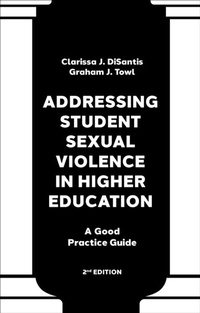
Addressing Student Sexual Violence in Higher Education
A Good Practice Guide
2nd Edition
Published on 20. March 2025
424 pages
978-1-83797-783-3 (ISBN)
Description

In this much anticipated second edition of their authoritative book on addressing student sexual violence at UK universities, Clarissa DiSantis and Graham Towl revisit the discussion around sexual violence within Higher Education. Students subjected to sexual violence suffer significant impacts to their physical, psychological, emotional, behavioural, and practical wellbeing, which have substantial effects on their studies. Higher Education Institutions (HEIs) have a duty to ensure students can access their education in environments that are safe - without fear, harassment, or violence.
Providing how-to level information on staffing, policy writing, responding to disclosures, developing comprehensive prevention and response education programmes, conducting trauma-informed investigations, adjudication and sanctioning processes, and offering sanctioning guidelines for sexual violence, new chapters include:
Technology-Facilitated Sexual Violence and Technology-Facilitated Solutions: Learning After COVID-19;
Tackling Resistance to Change;
Case Management and Practitioner Safety;
When Universities Get It Wrong; and
Leadership and Partnerships.
This is a ground-breaking resource for practitioners, senior leaders, policy makers, student services administrators, educators, investigators, adjudicators, and activists in Higher Education. It will undoubtedly be of use to those tasked with ensuring Office for Students regulatory compliance in 2025 and beyond.
Providing how-to level information on staffing, policy writing, responding to disclosures, developing comprehensive prevention and response education programmes, conducting trauma-informed investigations, adjudication and sanctioning processes, and offering sanctioning guidelines for sexual violence, new chapters include:
Technology-Facilitated Sexual Violence and Technology-Facilitated Solutions: Learning After COVID-19;
Tackling Resistance to Change;
Case Management and Practitioner Safety;
When Universities Get It Wrong; and
Leadership and Partnerships.
This is a ground-breaking resource for practitioners, senior leaders, policy makers, student services administrators, educators, investigators, adjudicators, and activists in Higher Education. It will undoubtedly be of use to those tasked with ensuring Office for Students regulatory compliance in 2025 and beyond.
Reviews / Votes
The first edition of this book has become indispensable to anyone working to combat gender-based violence in UK higher education.This second edition, with cutting-edge new material and case studies, is also set to become an instant classic. Its recommendations on good practice should be read and acted on by everyone - activists, practitioners, researchers, and leaders - trying to change their university for the better. -- Anna Bull, Senior Lecturer at the University of York and co-director of The 1752 Group This is a very timely new edition of a book that should be essential reading for anyone seeking to tackle sexual misconduct in universities. New chapters on matters such as the impact of technology provide vital new evidence and guidance. This includes setting out the growing prevalence of technology-facilitated sexual misconduct, as well as the benefits of using technology to investigate cases and support students. This balanced approach infuses the whole book, working towards a system and policy approach that works fairly for all. -- Professor Clare McGlynn KC (Hon), Professor of Law at Durham University, Expert on Violence Against Women & Girls The second edition of Addressing Student Sexual Violence in Higher Education: A Good Practice Guide by Clarissa J. DiSantis and Graham J. Towl is a crucial and timely resource for higher education providers committing to combatting sexual violence in their communities. The authors provide actionable advice and guidance on critical areas such as policy development, prevention education, and institutional responses, paving the way for a comprehensive, institution-wide, survivor-centred, and trauma-informed approach.
Di Santis and Towl's intersectional approach ensures that their guidance is practical and effective across diverse educational settings. This book is a must-have for higher education professionals working towards safer and more supportive environments for all students. -- Sharna Bremner, End Rape on Campus, Australia Founder & Director A necessary and critical blueprint for Higher Education Institutions to incorporate in their efforts to tackle sexual violence and to change culture and attitudes. Socially relevant, this guide will be useful to anyone committed to embracing and normalizing safety, security, accountability and equality for those who are vulnerable to sexual predatory behavior. It is a comprehensive guide on what to do and what not to do with respect to preventing and responding to sexual violence written in the best interests of the student and without shying away from the gendered realities of who is more likely to be a victim. At the same time there is an explicit call to action that provokes a sense of urgency to reduce the prevalence of sexual violence coupled with a sober assessment of measured progress against the backdrop of resistance, stubborn biases and institutionalized failings. The broad scope of this guide makes this a useful tool for leaders, practitioners, policymakers, student services administrators, case managers, educators, investigators, adjudicators, activists. Additionally, its narrow focus makes this updated guidance an essential lifeline to those responsible for receiving sexual violence disclosures and those drafting and revising the policies. -- Furaha-Joy Sekai Saungweme, Founder of the Africa End Sexual Harassment Initiative (AESHI) In Addressing Student Sexual Violence in Higher Education, DiSantis and Towl draw on their extensive experience to provide this thorough and practical guide for universities looking to improve campus safety. The book offers insights into best practices for prevention, intervention and support in relation to gender-based violence, making it an essential resource for anyone working in this field. I highly recommend it as a vital tool for all practitioners aiming to create lasting, meaningful change on campuses. -- Fiona Drouet MBE, Founder and CEO of EmilyTest
More details
Edition
2nd edition
Language
English
Place of publication
Bingley
United Kingdom
Target group
Professional and scholarly
ISBN-13
978-1-83797-783-3 (9781837977833)
Copyright in bibliographic data and cover images is held by Nielsen Book Services Limited or by the publishers or by their respective licensors: all rights reserved.
Schweitzer Classification
Persons
Clarissa J. DiSantis is a practitioner, trainer, and leading authority on addressing gender-based violence in Higher Education and was the first person to hold a dedicated role in this area in the United Kingdom at Durham University from 2016 to 2024. She currently works as the Education and Training Lead for Active* Consent based at the University of Galway, Ireland.
Graham J. Towl is Professor of Forensic Psychology at Durham University, UK and the Chair of the Scottish Advisory Panel on Offender Rehabilitation in Scotland. He was the Pro Vice Chancellor Chair of the groundbreaking Durham University Sexual Violence Task Force from 2015 to 2016. Prior to his time at Durham, he was the Chief Psychologist at the Ministry of Justice.
Graham J. Towl is Professor of Forensic Psychology at Durham University, UK and the Chair of the Scottish Advisory Panel on Offender Rehabilitation in Scotland. He was the Pro Vice Chancellor Chair of the groundbreaking Durham University Sexual Violence Task Force from 2015 to 2016. Prior to his time at Durham, he was the Chief Psychologist at the Ministry of Justice.
Content
Part 1. Why
Chapter 1. Introduction
Chapter 2. Sexual Violence in Higher Education: An International Issue
Chapter 3. Technology-Facilitated Sexual Violence and Technology-Based Solutions: Learning After COVID-19
Chapter 4. The Call to Action: Higher Education Institutions' Role in Addressing Sexual Violence
Part 2. How
Chapter 5. Embedding a Comprehensive Institution-wide Approach
Chapter 6. Tackling Resistance to Change
Chapter 7. Developing a Sexual Violence Policy and Procedure
Chapter 8. Comprehensive Institution-wide Education
Chapter 9. Responding to Disclosures of Sexual Violence
Chapter 10. Case Management and Practitioner Safety
Chapter 11. Trauma-Informed Investigations
Chapter 12. The Disciplinary Process
Chapter 13. When Universities Get It Wrong
Chapter 14. Leadership and Partnerships
Chapter 15. Concluding Thoughts and Recommendations
Chapter 1. Introduction
Chapter 2. Sexual Violence in Higher Education: An International Issue
Chapter 3. Technology-Facilitated Sexual Violence and Technology-Based Solutions: Learning After COVID-19
Chapter 4. The Call to Action: Higher Education Institutions' Role in Addressing Sexual Violence
Part 2. How
Chapter 5. Embedding a Comprehensive Institution-wide Approach
Chapter 6. Tackling Resistance to Change
Chapter 7. Developing a Sexual Violence Policy and Procedure
Chapter 8. Comprehensive Institution-wide Education
Chapter 9. Responding to Disclosures of Sexual Violence
Chapter 10. Case Management and Practitioner Safety
Chapter 11. Trauma-Informed Investigations
Chapter 12. The Disciplinary Process
Chapter 13. When Universities Get It Wrong
Chapter 14. Leadership and Partnerships
Chapter 15. Concluding Thoughts and Recommendations
