


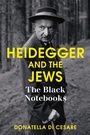
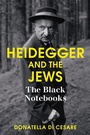
Heidegger and the Jews
Description

For much of the philosophical community, the Black Notebooks have been either used to discredit Heidegger or seen as a bibliographical detail irrelevant to his thought. Yet, in this new book, renowned philosopher Donatella Di Cesare argues that Heidegger's "metaphysical anti-Semitism" was a central part of his philosophical project. Within the context of the Nuremberg race laws, Heidegger felt compelled to define Jewishness and its relationship to his concept of Being. Di Cesare shows that Heidegger saw the Jews as the agents of a modernity that had disfigured the spirit of the West. In a deeply disturbing extrapolation, he presented the Holocaust as both a means for the purification of Being and the Jews' own "self-destruction": a process of death on an industrialized scale that was the logical conclusion of the acceleration in technology they themselves had brought about.
Situating Heidegger's anti-Semitism firmly within the context of his thought, this groundbreaking work will be essential reading for students and scholars of philosophy and history as well as the many readers interested in Heidegger's life, work, and legacy.
More details
Other editions
Additional editions
Person
Content
Foreword page vii
I Between Politics and Philosophy 1
1. A Media Affair 1
2. A Nazi by Chance . . . 3
3. Biographical Detail, or Philosophical Nexus? 4
4. Heidegger, an Anti-Semite? 6
5. What Has Been Left Unsaid about the Jewish Question 8
6. The Black Notebooks 9
7. Reductio ad Hitlerum: On the Posthumous Trial of Heidegger 11
8. A Calling to Account? 13
9. From Derrida to Schürmann: Toward an Anarchic Reading 14
10. Taming Heidegger 18
11. The Exclusion of Nazism from Philosophy 19
12. Philosophical Commitment and Political Decision 20
II Philosophy and Hatred of the Jews 22
1. Luther, Augustine, and "the Jews and Their Lies" 22
2. The "Jewish Question" in Philosophy 26
3. Kant and the "Euthanasia of Judaism" 32
4. Hegel and the Jew without Property 36
5. "Anti-anti-Semite?" Nietzsche, the Antichrist, and the Falsification of Values 46 6. Lies and Fakery: The Non-being of the Jew in Mein Kampf 59
III The Question of Being and the Jewish Question 65
1. The Night of Being 65
2. In An Esoteric Tone . . . 68
3. Anti-Semitism and Never-dispelled Doubts 69
4. Metaphors of an Absence 75
5. The Jew and the Oblivion of Being 77
6. The Greeks, the Germans - and the Jews 80
7. The Rootless Agents of Acceleration 84
8. Against the Jewish Intellectuals 88
9. Geist and ruach: The "Original Fire" and the Spectral Breath 93
10. Machination and Power 96 11. The Desertification of the Earth 99
12. The Apocalyptic and the "Prince of This World" 101
13. The Deracification of Peoples 103
14. Race or Rank? 106 15. The Metaphysics of Blood 110
16. "My 'Attack' on Husserl" 115
17. Heidegger, Jünger, and the Topology of the Jew 123
18. The Enemy: Heidegger versus Schmitt 129
19. Polemos and Total War 142
20. Weltjudentum: The Jewish World Conspiracy 148
21. Judeo-Bolshevism 154
22. Weltlos - Without World: The Jew and the Stone 161
23. Metaphysical Anti-Semitism 164
24. The Jew and the "Purification" of Being 169
25. "What Is It about No-thing?" 172
IV After Auschwitz 175
1. Bellum judaicum 175
2. To Abdicate to Silence? 178
3. "The Production of Corpses" and Ontic Indifference 184
4. The Ontological Massacre: Parmenides and Auschwitz 188
5. "Do They Die? They Do Not Die, They Are Liquidated. . ." 191
6. Positionality, Technology, Crime 193
7. The Northeast Wind: Heading Toward Defeat 196
8. Selbstvernichtung: The Shoah and the "Self-Annihilation" of the Jews 199
9. The Betrayal of the "German Essence" 202
10. If Germany is a Lager, Then Who Is the Victim? 206
11. The "Question of Guilt" and the Crime Against the Germans 211
12. The "Note for Jackasses": Against the Jewish Prophecy 212
13. World Democracy and the Dictatorship of Monotheism 218
14. "An Old Spirit of Revenge Makes its Way upon the Earth" 220
15. Whether It Is Possible to Forgive a Rabbi 223
16. Cousin Gross and Cousin Klein: Jews and Family Resemblances 224
17. The Oblivion of the Jew: The Hidden Debt 229
18. Where Paul is Hidden 233
19. The Future of Being and the Hebrew Name 238
20. A Pagan Landscape 240
21. The Other Beginning, the Beginning of the Other: Anarchy, Birth 241
22. An Angel in the Black Forest: Apocalypse and Revolution 243
Notes 248
Index 303
II
PHILOSOPHY AND HATRED OF THE JEWS
. . . because the Jew, you know, what does he have that truly belongs to him, that hasn't been borrowed, borrowed and never returned?1
1 Luther, Augustine, and "the Jews and Their Lies"
On April 29, 1946, the specter of Luther hovered over the defendants at the international court in Nuremberg. It was Julius Streicher, the editor of the Nazi journal Der Stürmer, who brought up Luther's name. When his lawyer asked him if there had been other attacks by the press against the Jews, Streicher replied: "Dr. Martin Luther would very probably sit in my place in the defendants' dock today."2
Anti-Semitism had been part of the German tradition for centuries, so it seemed legitimate to trace it back to Martin Luther. Luther, the voice of protest against Rome, the modern advocate of inner freedom, the genius at crafting language, the very symbol of the German identity, was the first to call for the destruction of the Jews. After the explosion of interest in the 1920s for Luther's Judenschriften, his writings against the Jews, the Nazi regime didn't hesitate to make propagandistic use of him. From Luther to Hitler, the German nation presented a solid, united front in fulfilling its own destiny, which, aiming at the establishment of a total state, presaged Hitler's drastic, definitive solution to the Jewish question.
But how did Luther revive the age-old Christian verdicts against the Jews? And what was the turning point that his theology announced? Luther did not have direct relationships with Jews. In his time, the Jews, accused of poisoning the Christians' wells, had already been expelled from the entire state of Thuringia after the Black Death. All that remained of the Jews was the trace of some names, and an altered memory. Excluded from the human community, the Jews were condemned to the bestial image of the Judensau, the sow as sculpted in the church at Wittenberg. Luther described the "Jews' sow," taking inspiration from this very image in one of his most violent writings against the Jews, Vom Schem Hamphoras of 1543.3
Yet biblical exegesis had led Luther to an intense relationship with Judaism and, not least, with the Hebrew language. Luther's call to return to the Scriptures, which would contribute to his dramatic break with the Roman Catholic Church, resounded loudly and clearly. But for Luther, as for other reformers, the interpretation of the Scriptures could not be limited to the grammar of the Hebrew language; the letter had to be spiritualized in the quest for a prophetic announcement. From the psalms to the books of the Old Testament, this was the path to deciphering the Christian message in the Hebrew words of the Scriptures. Thus, there re-emerged the antithesis between flesh and spirit that had marked the polarization between Jews and Christians. During the Protestant Reformation, the antithesis was intensified by the primacy that the Protestants conferred upon the interior life and their disdain for everything that was exterior - rituals, ceremonies, excessive adherence to laws. If the immediate target of the spirit of the Reformation were the Catholics, the ultimate target were the Jews, who were rejected as being on the ruinous edge of a purely fleshly exteriority.
This is the background against which Luther's theological revolt took place; what had changed was the way of looking at the Jews from an eschatological perspective. While Augustine had employed many anti-Jewish stereotypes, he still held out the possibility of salvation for Israel by finding at the same time a solution to its mystery, to the persistence of the Synagogue after the founding of the Church. Having stained themselves with the worst possible crime - deicide - according to Augustine, the Jews had been spared in order to bear witness to heretics and pagans about the historical truth of Christianity. Blind to the truth, the Jews would convert to Christianity at the end of days. Thus, they should be protected during the apocalyptic period of waiting for their conversion "in fine mundi."4
For Luther, the guilt of the Jews was not limited to the crucifixion of Christ; rather, it was perennial and indelible. For him, these living witnesses of the historical Jesus, in whom they nevertheless refused to recognize the Christ of the Christians, obstinately continued to repeat their paradoxical error. Their impiety left no hope for a final conversion; Luther denied their presence at the end of days.
According to Luther, the Jews - the people of God according to the flesh - should be replaced by the people of God according to the spirit. There could be no clemency for them. Luther considered the Jews to be the true enemies of the "spiritual Church" that he intended to build. The wrath of God would be wreaked upon them.
The millenarian anxiety that was shaking Christian Europe to its foundations during those years immediately following the discovery of the new continent had spread the conviction that the end of days had already begun. The religious unification of the world seemed imminent. The populations of the distant lands of the Occident were embracing the Gospel one after the other. A new sense of impatience with the Jews arose; their obstinacy seemed scandalous, but their conversion would have been the indubitable sign of the end of the world. Should their books be destroyed? Should the Talmud be burned? Should the Spanish model of the implacable choice between forced baptism and exile be followed?
Luther's attitude was ambivalent. He did not share the violent approach to conversion. In 1523 he published That Jesus Christ Was Born a Jew, a work pervaded by the longing for a return to the Gospels.5 He had hoped that the Jews in turn would follow that path, joining the Christians who had chosen to return to the authentic doctrine of the Scriptures. So his disillusionment was all the more bitter. And bitterness marked Luther's "theology of the cross" during his last years.
The Reformation had had surprising effects. Not only had the Jews not converted; the rupture within the Christian world and the rediscovery of the Jewish roots of Christianity seemed to attest to a sort of success on the part of Judaism - to the point that the Jews waiting for the Messiah seemed to derail the Christian apocalypse and give rise to earthly efforts toward political emancipation. In Moravia, the sect of the Sabbatarians decided to abolish Sunday as the day of worship, returning to the Jewish Sabbath.
Luther vented his ire above all in the pamphlet On the Jews and Their Lies of 1543. An extreme violence inspired his accusations and invectives, instilled hatred and suspicion, dictated abuse and insults, and even suggested concrete measures for liberation once and for all from that "damned" people. For him, the Jews had become internal enemies, animated by an inextinguishable hatred; they were "full of conceit, envy, usury, greed, and all sorts of malice," "blind" and "consigned to the wrath of God," "thirsty bloodhounds and murderers of all Christendom," "stubborn, evil, disobedient people," "false bastards and outsiders," "liars, blasphemers." Their Messiah could be expected to "murder and kill the entire world with his sword." Although they had been "cast out, dispersed, and utterly rejected [. . .] they still hope to return" to their land; and yet "they live among us, enjoy our shield and protection, they use our country and our highways, our markets and streets." But "the Jews, who are exiles, should really have nothing, and whatever they have must surely be our property."6 A Jew is not a Deutscher but a Teutscher - not a "German" but a "deceiver"; not a Welscher, but a Felscher - not a "foreigner" but a "falsifier"; not a Bürger, but a Würger - not a "citizen," but a "swindler."7
The accusation of the Jews being liars, which would evolve in multiple ways, was nevertheless not immediately clear. In what sense did the Jews lie? And why? The answer was to be sought in hermeneutics, and in Luther's principle of sola Scriptura ("only Scripture"): nothing except the Bible itself was required for a reading of the Bible. But the Jews had "falsified" the Scriptures with their "mendacious glosses"; they "interpret and distort almost every word." They did nothing but "take any verse [of the Bible] which we Christians apply to our Messiah and violate it, tear it to bits, crucify it." Their exegesis was therefore a crucifixion that was continually renewed, giving rise to different meanings, so as never to "arrive at any definite meaning."8 For Luther, the lie of the Jews was, therefore, the reading of the Torah, kept infinitely open to Talmudic questioning. Luther countered this type of hermeneutics, which was not subject to closure, with his own truth, based on a single, unquestionable meaning derived from a one-to-one reading of the Bible.
In this way, Luther maintained that he was unmasking the Jews' imposture, their "impious" and...
