

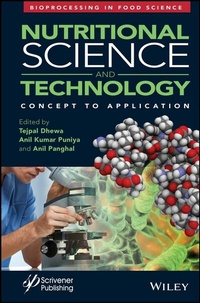
Nutritional Science and Technology
Description

Food science is a rapidly changing and complicated subject. This new series addresses the current state-of-the-art concepts and technologies associated with the industry and will cover new ideas and emerging novel technologies and processes.
The book Nutritional Science and Technology: Concept to Application in the series, "Bioprocessing in Food Science," is an excellent resource for any scientist, engineer, student, or other industry professional interested in this topic. It covers a wide range of topics, including human nutrition, technological processes, the health benefits of fermented foods, and food safety concerns. The content contributors and editors are experts in the field, and their primary goal is to provide extensive knowledge about recent technologies in nutritional science and technology to students, researchers, and industry professionals.
Manufacturers are looking for new possibilities to occupy a growing share of the rapidly changing food market, and this book will enable them to make informed decisions about adopting appropriate processing technology, implementation, economics, and constraints of different technologies. The book also provides insights on advances in nutritional science and technology for healthy and safe nutrition, with maximum illustrations of how to ensure public health safety and adequate nutrition. Overall, this book is a comprehensive overview of this study area and a valuable resource for anyone interested in this field.
More details
Other editions
Additional editions
Persons
Tejpal Dhewa, PhD, is a highly accomplished faculty member in the School of Interdisciplinary and Applied Science at the Central University of Haryana, India. He has diverse experience in teaching, research, administration, and industry, and has made significant contributions to the fields of nutrition, microbiology, and food safety. He is coordinator and a member of several scientific panels and has earned recognition and funding from Indian government agencies. He has published numerous papers in scientific and scholarly journals, as well.
Anil Kumar Puniya, PhD, is the principal scientist and former head of Dairy Microbiology, ICAR-National Dairy Research Institute, India. He is a renowned dairy microbiology scientist whose research has led to the discovery of two new species of anaerobic fungi. He has significantly improved dairy product production and quality, and his sustainable livestock management strategies have revolutionized the industry. With an impressive portfolio of over 200 published papers and three edited books, he has received numerous national and international awards and honors for his contributions to the field.
Anil Panghal, PhD, is an assistant scientist in the Department of Processing and Food Engineering at CCS Haryana Agricultural University. Previously, he worked with Nestle as a production manager for nine years. His areas of expertise include bioprocessing, manufacturing, food chemistry, food science, and technology, FSMS, and nutrition. He obtained his PhD in food technology, focusing on the molecular and physicochemical quality aspects of commercial wheat varieties. He has published various research papers in reputed journals and chapters for international publishers.
Content
Preface xv
1 Human Nutrition and Supplements 1
Mahak Sharma, Divya Sanghi and Ankita Sharma
1.1 Dietary Supplements -- Introduction 1
1.2 Global History of Dietary Supplements 2
1.3 Usage of Dietary Supplements 3
1.4 Types of Dietary Supplements 3
1.4.1 Natural Dietary Supplements 3
1.4.2 Semi-Synthetic Supplements 3
1.4.3 Synthetic Supplements 4
1.5 Nutritional Adequacy and Dietary Diversity 4
1.6 Calcium and Vitamin D Supplements 5
1.7 Omega-3 Fatty Acid and Health Benefits 6
1.8 Zinc Supplementation and Health Benefits 7
1.9 Iron Supplementation and Health Benefits 9
1.10 Dietary Supplements and Sports 12
1.11 Dietary Supplements and FDA 14
1.12 Dietary Supplements and Toxicity 14
2 Prebiotics, Probiotics and Synbiotics 21
Vikram Kumar, Ananya Rana, Prajakta Jagtap, Tejpal Dhewa and Neetu Kumra Taneja
2.1 Introduction 22
2.2 Prebiotics and Its Types 24
2.3 Probiotics 28
2.4 Synbiotics 35
2.5 Encapsulation of Probiotics 36
2.6 Probiotic Foods Developed 45
3 Mechanistic Insights of Dietary Modulation on Gut Microflora and Associated Physiological Changes 63
Aarti Yadav, S. Hamsa, Ruby Tiwari, Asha Bharti, Tejpal Dhewa, Rekha Mehrotra and Preeti Verma
3.1 Introduction to Flora in the GIT Tract of Humans-Genus Metabolites 64
3.2 Association of Gut Flora and its Impact on Human Health and Associated Diseases 69
3.3 Dietary Modulation of Gut Flora for Therapeutic Usage 74
3.4 Data from Human and Animal Studies 75
3.5 Future Prospects and Conclusion 78
4 Nutritional Profile, Functional Characteristics, Health Benefits, and Potential Application of Edible Gum (Gond) 83
Anju Kundalia, Angel Mishra, Chanchal Rani, Deepti Gupta, Kalpana Gautam, K.M. Sushma and Murlidhar Meghwal
4.1 Introduction 84
4.2 Nutritional Facts of Gond 84
4.3 Properties of Gond 85
4.4 Biological Sources of Gond 86
4.5 Geographical Sources of Gond 86
4.6 Benefits of Gond 86
4.7 Other Uses of Gond 97
5 Omega-3 Fatty Acids: Nutritional Aspects and Their Role in Health and Diseases 103
Shriya Bhatt, Rashim Kumari, Deepika, Rajni Chopra, Tejpal Dhewa and Anita Kumari
5.1 Introduction 104
5.2 Nomenclature and Types of Omega-3 Fatty Acids 105
5.3 Food Sources and Supplements 106
5.4 Intake and Safety of Fatty Acids 111
5.5 Health Benefits 112
5.6 Conclusion 114
6 Role of Fermented Dairy Products in Enhancing Immunity 117
Vaishali Dasriya, Soniya Ranveer, Rudrakshi Bajaj, Aakash Sharma, Yugal Dasriya and Harmeet Singh Dhillon
6.1 Introduction 118
6.2 Immune Enhancing Potential of Fermented Foods: Mechanism 119
6.3 Fermented Dairy Products Modulators of Intestinal Microbiota 121
6.4 Fermented Dairy Products Modulate Immune System 121
6.5 Future Trends 127
6.6 Conclusion 127
7 Potential Applications of Nanotechnology in Food Systems: An Overview 135
Sunny Dhiman, Prachi Singh, Anu Kumar and Gunjan Mukherjee
7.1 Introduction 136
7.2 Natural Self-Assembled Food Nanostructures 136
7.3 Classification of Nanoparticles Applied in Food Industry 137
7.4 Potential Applications: Nanotechnology in Food Industry 140
7.5 Nanotoxicity and Health Hazards 152
7.6 Nanotechnology in Food Industry: Regulatory Issues and Challenges 153
7.7 Food Nanotech: Future Prospects and Conclusion 154
8 Nutritional Biomarkers in Metabolic Disorders 165
Komal Dagar, Mrinal Samtiya, Veda Krishnan, Sunil K. Srivastava, Ananya Rana, Anita Kumari, Sanjeev Kumar and Tejpal Dhewa
8.1 Introduction 166
8.2 Metabolic Syndrome 168
8.3 Nutritional Biomarkers (NB) 169
8.4 Factors Affecting the Specificity and Utility of Nutritional Biomarkers 173
8.5 Role of Different Nutritional Biomarkers (Serum Biomarkers) in Different Metabolic Syndromes 175
8.6 Novel Biomarkers 184
8.7 Various Analytical Techniques Related to Different Nutritional Biomarkers 185
8.8 Level of Biomarkers in Extreme Coronavirus Infection 188
8.9 Health Biomarkers 189
8.10 Concept of Omics in Development of New and Integrative Nutritional Biomarkers 189
8.11 Limitations and Challenges in the Field of Nutritional Biomarkers 190
8.12 Future Directions and Perspectives 191
8.13 Conclusions 191
9 Food Safety and Quality Assurance in the Food Chain: Focus on Foodborne Outbreaks 199
Pierina Visciano and Maria Schirone
9.1 Introduction 199
9.2 Classification of Foodborne Diseases by Symptomatology 201
9.3 The EFSA-ECDC Reports on Zoonoses and Foodborne Outbreaks 204
9.4 The Notifications from the Rapid Alert System for Food and Feed Portal 207
9.5 Conclusions 221
10 Emerging Techniques in Food Preservation 223
Sunita Aggarwal and Shalini Sehgal
10.1 Introduction 223
10.2 High-Pressure Processing (HPP) 225
10.3 Pulsed Electric Field (PEF) Processing 232
10.4 Pulsed Light Technology (PLT) 234
10.5 Ultrasound Food Processing 235
10.6 Ohmic Heating of Food 236
10.7 Cold Plasma 236
10.8 Oscillating Magnetic Field (OMF) 237
10.9 Higher Pressure Thermal (HPT) Processing 237
10.10 Bacteriocins 239
10.11 Dielectric Heating Using Radio Waves 239
10.12 Microwave 240
10.13 Irradiation 240
10.13.1 Ionizing Radiations 241
10.13.2 Non-Ionizing Radiations 242
10.14 Conclusion 243
11 Food Omics and Its Implications in Nutritional Sciences 245
Somnath Mandal, Nandita Sahana, Ramesh S.V. and Veda Krishnan
11.1 Food Omics: An Overview 245
11.2 Techniques in Food Omics 246
11.3 Food Omics Studies & Their Challenges 255
11.4 Food Omics: A Platform to Investigate Health Benefits 261
12 Consumer Viewpoints Regarding Food and Risk Assessment 273
Ananya Rana, Shivangi Mishra, Komal Soni, Mrinal Samtiya, Neetu Kumra Taneja and Tejpal Dhewa
12.1 Introduction 274
12.2 Food Safety 277
12.3 Food Standards and Regulations in India 280
12.4 The Key Terms Involved in Risk Management 282
12.5 The Fundamental Principles of Food Safety Risk Management 284
12.6 Types of Food Risks 285
12.7 Factors that Modulate Consumers' Perception of Risk 287
12.8 Conclusion 288
13 Application of Nanomaterials in Detection of Food Contaminants: A Food Safety Perspective 295
Sunny Dhiman, Prachi Singh, Anu Kumar and Gunjan Mukherjee
13.1 Introduction 295
13.2 Global Scenario from Food Safety Perspective 296
13.3 Current Food Safety Strategies and Food Safety 297
13.4 Application of Nanotechnology in Detection of Food Contaminants 298
13.5 Advancements in Nano-Biosensing of Food Contaminants 304
13.6 Potential Risks and Future Prospects of Nanomaterials in Food Safety 308
13.7 Conclusions 308
14 Food Allergy and Food Intolerance 317
Sunita Aggarwal
14.1 Introduction 318
14.2 Food Allergy and Food Intolerance 318
14.3 Food Allergens 320
14.4 Types of Food Allergy 323
14.5 Mechanism of Food Allergy 324
14.6 Risk Factors Involved in Food Allergy 326
14.7 Symptoms of Food Allergy 326
14.8 Diagnosis of Food Allergy 328
14.9 Treatment of Food Allergy 330
14.10 Food Intolerance 332
14.11 Conclusion 332
15 Molecular Nutrition and Nutrient--Gene Interactions 335
S. Hamsa, Aarti Yadav, Ruby Tiwari and Tejpal Dhewa
15.1 Introduction 336
15.2 Molecular Nutrition: Understanding Basic Mechanisms 337
15.3 Nutrigenetics 340
15.4 Nutrigenomics 343
15.5 Nutriepigenomics 344
15.6 Nutrimetabolomics 345
15.7 Conclusion and Future Perspectives 346
16 Food Metabolism and Chronic Diseases 355
Ruby Tiwari, Aarti Yadav, S. Hamsa and Tejpal Dhewa
16.1 Introduction 356
16.2 Food Metabolism and Associated Diseases 357
16.3 Nutrient Intake Goals for Preventing Diet-Related Chronic Disease 366
16.4 Conclusion and Future Prospects 369
17 Nanomaterials in Food System 383
Anu Kumar, Bhanu Krishan, Sunny Dhiman and Tejpal Dhewa
17.1 Introduction 383
17.2 Nanomaterials as an Emerging Tool 385
17.3 Nanomaterials in Food Industry 386
17.3.1 Nanosensors 387
17.3.2 Nanoparticles 388
17.3.3 Nanofilms and Nanocomposites 389
17.3.4 Liposomes 389
17.3.5 Nanotubes and Nanofibers 389
17.4 Conclusion 390
References 391
About the Editors 395
Index 397
1
Human Nutrition and Supplements
Mahak Sharma*, Divya Sanghi and Ankita Sharma
Department of Nutrition and Dietetics, Faculty of Allied Health Sciences, Manav Rachna International Institute of Research and Studies, Faridabad, Haryana, India
Abstract
Dietary supplements are isolated or bound nutrients consumed by individuals to improve their nutritional status. They are usually consumed when an individual is deficient in a particular nutrient or wants to increase his/her muscle mass. The ingredients usually used as supplement are amino acid, herbs, minerals, vitamins and enzymes. Dietary supplements are used in the form of softgels, powder, capsules, liquid, and gelcaps. There are many health benefits of dietary supplements like Iron, Zinc, Protein supplements, Vitamin D, Calcium, Omega-3 fatty acids and many more. To maintain optimal growth and development while prevent deficiency, adequate intake is advisable but excess use or high dose cause the possibility of toxicity. This chapter emphasizes various health benefits of dietary supplements and their uses.
Keywords: Food supplements, sports supplements, nutrition, health
1.1 Dietary Supplements - Introduction
There is a broad variety of dietary supplements in the market. More than 56,000 distinct dietary supplements are available, according to the US Food and Drug Administration (FDA), with thousands of new products/ supplements being introduced to customers each year [1].
Dietary supplements, by definition, are formula that can supplement our regular diet with nutrients and reduce the risk of deficiency diseases and health problems like Protein Energy Malnutrition (PEM) and osteoporosis. Dietary supplements can be used as remedy in case of nutrient deficiencies either due to any chronic disease course or lower intake of nutrients but it cannot replace a normal/regular diet and daily nutrients of a meal, which are necessary for a healthy life. Many ingredients, such as herbs/medicinal plants and hormones, are used to make dietary supplements that have not been identified as nutrients or as having any nutritional functions [2]. It was explained that, when labeled correctly, these compounds should be called supplement ingredients rather than drug ingredients.
Along with natural supplements, many synthetic supplements are also in trend. Dietary supplements [3] are presumed healthy, when taken as directed dosages, they do not pose a serious or unreasonable risk of injury or illness. The FDA now regulates the dosage limit, marketing, advertising, and most importantly the labeling of these dietary supplements.
Dietary supplements come in many forms such as pills, capsules, powders, gels and extracts, although the most popular form of consumption is in powder form. They contain many nutrients which are difficult to get from daily normal diet like amino acids, vitamins, minerals, fiber and enzymes.
1.2 Global History of Dietary Supplements
In most countries, supplements are not regulated as a whole. Instead, they are covered under a collection of already existing laws and regulations [4, 5]. That is, they are "hanging from the hook" of pre-existing law. Previously, the dilemma was whether these goods should be classified as medications or foods; however, a third alternative is to classify them as bio-logics under existing rules. The Dietary Supplement Health and Education Act (DSHEA) of 1994 established supplement control in the United States. In the US, the FDA regulates dietary supplements as foods rather than drugs as a result of DSHEA; however, they are treated differently from traditional foods. Even if the ingredients used in supplement preparation can have nutritional benefits or occasionally adverse consequences, they are not tested for protection or effectiveness before being released into the market, unlike drugs. When a nutritional supplement is launched/ available in the market, the FDA has the duty of demonstrating that it is having adverse consequences in order to limit its use or withdraw it from the market. The FDA bases its decision on a "MedWatch" programme in which healthcare professionals have reported supplement-related complications and side effects. Consumers, on the other hand, were expected to notify the FDA of any potential supplement-related side effects. Some nutritional supplements, particularly botanical formulations, and pharmaceuticals were regulated. In most of the countries only those supplements got permitted that met recommended criteria.
1.3 Usage of Dietary Supplements
The usage of dietary supplement is popular in all age groups to get the perfect body image or according to disease course to prevent chronic nutrient deficiencies. Usage of supplements is much more common in Western countries or developed countries in comparison to underdeveloped countries. Ethnographic studies revealed that cultural factors and family rather than individuals also have the impact on potential usage of supplements [6]. Many misconceptions exist in society about the use of iron tablets. Honduran women believe that using iron tablets will result in larger infants, and they are also concerned about gaining too much weight and creating deformities in their children. Due to the low cost of iron tablets, it has little social standing. Tiredness, fatigue, and dizziness were considered common symptoms of pregnancy in India, so women did not seek treatment [7].
There are several research studies that show that various forms of perceiving or responding to public health messages or initiatives may have a substantial effect on their success or failure.
There are also other factors which act as a barrier for usage and selection of different supplements.
1.4 Types of Dietary Supplements
Supplements can be classified in three categories according to ingredients selected for their preparation: 1. Natural Dietary Supplements, 2. Semi-Synthetic Supplements, 3. Synthetic Dietary Supplements.
1.4.1 Natural Dietary Supplements
Natural supplements are made up with original extract of the natural ingredients or botanicals (herbs, fruits, vegetables, etc). No added chemicals are used in preparation of these supplements. These supplements are more expensive in comparison to synthetic supplements.
1.4.2 Semi-Synthetic Supplements
These types of supplements contain some amount of natural ingredients but their nutrient density will depend on the synthetic chemicals also, which are easily prepared in vitro and easily added to natural ingredients to increase the nutrient density of the product. These are a cheaper source of nutrients and sometimes have low bioavailability.
1.4.3 Synthetic Supplements
These types of products are prepared by using all synthetic ingredients in vitro. No natural ingredients are required to prepare these products. Mostly these products contain predigested or simple monomers which can easily be digested and absorbed by the human body. Many differences were reported between certain natural and synthetic vitamins in regard to physiochemical properties, proven clinical advantages of natural vitamins. Recent studies also proved the fact that natural vitamins are nutritionally better than synthetic vitamins [8].
To prove the difference between natural and synthetic supplements, many randomized control trials were conducted. Meinrad Lindschinger [9] in 2019 conducted a trail for effect of B complex vitamins on Homocysteine, Oxidative Stress, and Antioxidant Level and found no statistically noticeable difference between both the groups but some favorable tendencies like more sustainability, and less oxidative stress and homocysteine levels were observed in natural vitamins, which have more sustainability in comparison to synthetic ones.
Apart from this, supplements can also be classified in another way by number of nutrients present in one entity such as single nutrient mineral/ vitamin (high protein, caloric dense, etc.) and multiple micronutrients or having multiple nutrients in single tablet/capsules. Many supplements are available in the market which is targeting organ-specific disease such as kidney disease or liver disease.
The quality of supplement is a challenge; either it is botanical or synthetic, and many adulterants or misidentifications are related to this. Certain categories of supplements, like supplements related to sport and sexual performance, particularly use some unlabeled prohibited substances to deliver "spiking" and even sometimes the addition of active synthetic drugs.
1.5 Nutritional Adequacy and Dietary Diversity
Nutritional Adequacy is defined as a diet providing all the nutrients in balanced form, thus providing adequacy.
A diet is called a diverse diet when it includes various food groups (cereals, pulses, milk products, vegetables, fruits, meat product, etc.), which is important for attaining sufficient nutrient adequacy and sufficient development and body expansion [10, 11, 14].
Dietary diversity is defined as "the number of different foods or food groups consumed over a given reference period" [12, 14]. A diet covering all the food groups in balanced amount will provide adequate macronutri-ents and micronutrients, which could improve overall health especially in schoolchildren and decrease the prevalence of many chronic diseases such as cardiovascular diseases (CVDs), diabetes mellitus, metabolic syndrome and cancers, etc. [13,...
