

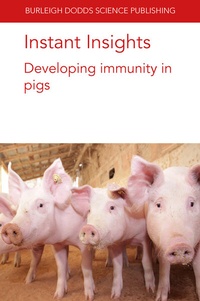
Instant Insights: Developing Immunity in Pigs
Published on 26. July 2022
144 pages
978-1-80146-413-0 (ISBN)
Description

This collection features four peer-reviewed literature reviews on developing immunity in pigs.
The first chapter provides an overview of the latest research in gut function and immunity in pigs, as well as the role of the gut microbiota in shaping intestinal immune responses. The chapter also reviews recent advances in the development of novel tools to investigate the function of the pig gut.
The second chapter describes the enteric and mucosal immune systems of pigs and presents evidence from experimental studies of the links between the immune system and microbiota. It examines the microbiome and metabolism of pigs and highlights its importance in the development of pig immune systems.
The third chapter reviews advances in nutritional strategies to boost immune function in pigs, including the use of lipopolysaccharide to stimulate the immune system. The chapter considers the need to reduce the use of antimicrobials in swine diets and reviews the effect of dietary supplementation during key stages of a pig's life to enhance immunity.
The final chapter assesses methods of improving gut function in pigs to optimise health, prevent pathogen colonization and optimise immunity. The chapter discusses research on genes associated with pathogen resistance and porcine immune response and reviews the role of dietary and nutritional strategies in preventing intestinal pathogen colonisation.
The first chapter provides an overview of the latest research in gut function and immunity in pigs, as well as the role of the gut microbiota in shaping intestinal immune responses. The chapter also reviews recent advances in the development of novel tools to investigate the function of the pig gut.
The second chapter describes the enteric and mucosal immune systems of pigs and presents evidence from experimental studies of the links between the immune system and microbiota. It examines the microbiome and metabolism of pigs and highlights its importance in the development of pig immune systems.
The third chapter reviews advances in nutritional strategies to boost immune function in pigs, including the use of lipopolysaccharide to stimulate the immune system. The chapter considers the need to reduce the use of antimicrobials in swine diets and reviews the effect of dietary supplementation during key stages of a pig's life to enhance immunity.
The final chapter assesses methods of improving gut function in pigs to optimise health, prevent pathogen colonization and optimise immunity. The chapter discusses research on genes associated with pathogen resistance and porcine immune response and reviews the role of dietary and nutritional strategies in preventing intestinal pathogen colonisation.
More details
Series
Language
English
Place of publication
Cambridge
United Kingdom
Target group
College/higher education
Professional and scholarly
Illustrations
Color tables, photos and figures
File size
1,13 MB
ISBN-13
978-1-80146-413-0 (9781801464130)
DOI
10.19103/9781801464130
Copyright in bibliographic data and cover images is held by Nielsen Book Services Limited or by the publishers or by their respective licensors: all rights reserved.
Schweitzer Classification
Other editions
Additional editions
Bert Devriendt | Mick Bailey | Emily Porter
Instant Insights: Developing Immunity in Pigs
Developing immunity in pigs
Book
07/2022
Burleigh Dodds Science Publishing Limited
€67.10
Shipment within 3-4 weeks
Persons
Dr Mick Bailey is Professor of Comparative Immunology at the University of Bristol's world-famous Veterinary School. Professor Bailey has an international reputation for his research on the development of the mucosal immune system in pigs.
Content
Chapter 1 - Advances in understanding gut function and immunity in pigs: Bert Devriendt, Ghent University, Belgium; 1 Introduction 2 Architecture of the intestine 3 The intestinal epithelium control of gut immunity 4 The Gut-Associated Lymphoid Tissues 5 The role of the gut microbiota in shaping gut function and immunity 6 Intestinal organoids as novel tools to explore the function of the gut 7 Conclusions and outlook 8 References
Chapter taken from: Maes, D. and Segales, J. (eds.), Optimising pig herd health and production, Burleigh Dodds Science Publishing, Cambridge, UK, 2022, (ISBN 978 1 78676 883 4)
Chapter 2 - The influence of gut microbiome on developing immune and metabolic systems in the young pig: Mick Bailey, Emily Porter and Ore Francis, University of Bristol, UK; 1 Introduction 2 The mucosal immune system 3 Experimental studies of the links between the immune system and microbiota 4 The microbiome and metabolism 5 Conclusion 6 Where to look for further information 7 References
Chapter taken from: Wiseman, J. (ed.), Achieving sustainable production of pig meat - Volume 3: Animal health and welfare, Burleigh Dodds Science Publishing, Cambridge, UK, 2018, (ISBN 978 1 78676 096 8)
Chapter 3 - Nutritional strategies to boost immune function in pigs: Glen W. Almond, North Carolina State University, Raleigh, NC, USA and Sara D. Hough, DSM Nutritional Products, Parsippany, NJ, USA; 1 Introduction 2 How does immune challenge affect pig growth? 3 Pregnancy, lactation and pre-weaned piglets 4 Proteins and amino acids 5 Lipids and fatty acids 6 Glucans and carbohydrates 7 Minerals 8 Vitamins 9 Nonnutritive feed additives 10 Summary and future directions 11 Where to find additional information 12 References
Chapter taken from: Maes, D. and Segales, J. (eds.), Optimising pig herd health and production, Burleigh Dodds Science Publishing, Cambridge, UK, 2022, (ISBN 978 1 78676 883 4)
Chapter 4 - Improving gut function in pigs to prevent pathogen colonization: P. Bosi, D. Luise and P. Trevisi, University of Bologna, Italy; 1 Introduction 2 The main gut-related pathogens in pigs 3 Pig genetics and resistance to disease 4 Management strategies affecting gut functionality and pathogen colonization 5 Dietary strategies to improve gut functionality and prevent pathogen colonization: feed size 6 Dietary strategies to improve gut functionality and prevent pathogen colonization: protein and dietary fibre 7 Dietary strategies to improve gut functionality and prevent pathogen colonization: dietary nitrate, organic and amino acids 8 Dietary interventions for pathogen-specific defence 9 Future trends and conclusion 10 Where to look for further information 11 References
Chapter taken from: Bailey, M. and Stokes, C. (eds.), Understanding gut microbiomes as targets for improving gut health, Burleigh Dodds Science Publishing, Cambridge, UK, 2022, (ISBN 978 1 78676 487 4)
Chapter taken from: Maes, D. and Segales, J. (eds.), Optimising pig herd health and production, Burleigh Dodds Science Publishing, Cambridge, UK, 2022, (ISBN 978 1 78676 883 4)
Chapter 2 - The influence of gut microbiome on developing immune and metabolic systems in the young pig: Mick Bailey, Emily Porter and Ore Francis, University of Bristol, UK; 1 Introduction 2 The mucosal immune system 3 Experimental studies of the links between the immune system and microbiota 4 The microbiome and metabolism 5 Conclusion 6 Where to look for further information 7 References
Chapter taken from: Wiseman, J. (ed.), Achieving sustainable production of pig meat - Volume 3: Animal health and welfare, Burleigh Dodds Science Publishing, Cambridge, UK, 2018, (ISBN 978 1 78676 096 8)
Chapter 3 - Nutritional strategies to boost immune function in pigs: Glen W. Almond, North Carolina State University, Raleigh, NC, USA and Sara D. Hough, DSM Nutritional Products, Parsippany, NJ, USA; 1 Introduction 2 How does immune challenge affect pig growth? 3 Pregnancy, lactation and pre-weaned piglets 4 Proteins and amino acids 5 Lipids and fatty acids 6 Glucans and carbohydrates 7 Minerals 8 Vitamins 9 Nonnutritive feed additives 10 Summary and future directions 11 Where to find additional information 12 References
Chapter taken from: Maes, D. and Segales, J. (eds.), Optimising pig herd health and production, Burleigh Dodds Science Publishing, Cambridge, UK, 2022, (ISBN 978 1 78676 883 4)
Chapter 4 - Improving gut function in pigs to prevent pathogen colonization: P. Bosi, D. Luise and P. Trevisi, University of Bologna, Italy; 1 Introduction 2 The main gut-related pathogens in pigs 3 Pig genetics and resistance to disease 4 Management strategies affecting gut functionality and pathogen colonization 5 Dietary strategies to improve gut functionality and prevent pathogen colonization: feed size 6 Dietary strategies to improve gut functionality and prevent pathogen colonization: protein and dietary fibre 7 Dietary strategies to improve gut functionality and prevent pathogen colonization: dietary nitrate, organic and amino acids 8 Dietary interventions for pathogen-specific defence 9 Future trends and conclusion 10 Where to look for further information 11 References
Chapter taken from: Bailey, M. and Stokes, C. (eds.), Understanding gut microbiomes as targets for improving gut health, Burleigh Dodds Science Publishing, Cambridge, UK, 2022, (ISBN 978 1 78676 487 4)
