

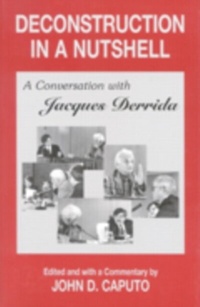
Deconstruction in a Nutshell
A Conversation with Jacques Derrida, with a New Introduction
Published on 3. November 2020
272 pages
978-0-8232-9068-0 (ISBN)
Description

This volume, now with a substantial new Introduction, represents one of the most lucid, compact and reliable introductions to Derrida and deconstruction available in any language.
Responding to questions put to him at a roundtable held at Villanova University in 1994, Jacques Derrida leads the reader through an illuminating discussion of the central themes of deconstruction. Speaking in English and extemporaneously, Derrida takes up with unusual clarity and great eloquence such topics as the task of philosophy, the Greeks, justice, responsibility, the gift, community, and the messianic. Derrida refutes the charges of relativism that are often leveled at deconstruction by its critics and sets forth the profoundly affirmative and ethico-political thrust of his work.
The roundtable is marked by an unusual clarity that continues into the second part of the book, in which one of Derrida's most influential readers, John D. Caputo, elaborates upon Derrida's comments and supplies material for further discussion.
This edition also includes a substantial new Introduction by Caputo that discusses the original context of the book and traces the development of deconstruction since Derrida's death in 2004, from the rise of new materialisms to return to religion.
Long one of the most lucid and reliable introductions to Derrida and deconstruction available in any language, and an ideal volume for students, Deconstruction in a Nutshell will also prove illuminating for those already familiar with Derrida's work.
Responding to questions put to him at a roundtable held at Villanova University in 1994, Jacques Derrida leads the reader through an illuminating discussion of the central themes of deconstruction. Speaking in English and extemporaneously, Derrida takes up with unusual clarity and great eloquence such topics as the task of philosophy, the Greeks, justice, responsibility, the gift, community, and the messianic. Derrida refutes the charges of relativism that are often leveled at deconstruction by its critics and sets forth the profoundly affirmative and ethico-political thrust of his work.
The roundtable is marked by an unusual clarity that continues into the second part of the book, in which one of Derrida's most influential readers, John D. Caputo, elaborates upon Derrida's comments and supplies material for further discussion.
This edition also includes a substantial new Introduction by Caputo that discusses the original context of the book and traces the development of deconstruction since Derrida's death in 2004, from the rise of new materialisms to return to religion.
Long one of the most lucid and reliable introductions to Derrida and deconstruction available in any language, and an ideal volume for students, Deconstruction in a Nutshell will also prove illuminating for those already familiar with Derrida's work.
More details
Series
Edition
New edition
Language
English
Place of publication
NY
United States
Target group
Professional and scholarly
Edition type
New edition
File size
26,14 MB
ISBN-13
978-0-8232-9068-0 (9780823290680)
Copyright in bibliographic data and cover images is held by Nielsen Book Services Limited or by the publishers or by their respective licensors: all rights reserved.
Schweitzer Classification
Other editions
Additional editions
Book
01/1996
Fordham University Press
€35.50
Shipment within 10-20 days
Persons
Jacques Derrida (Author)
Jacques Derrida was the single most influential voice in European philosophy for the last third of the twentieth century. His many books include Of Grammatology, Specters of Marx, and The Animal That Therefore I Am.
John D. Caputo (Edited By)
John D. Caputo is Thomas J. Watson Professor Emeritus of Religion at Syracuse University and David R. Cook Professor Emeritus of Philosophy at Villanova University. His most recent book is In Search of Radical Theology.
Jacques Derrida was the single most influential voice in European philosophy for the last third of the twentieth century. His many books include Of Grammatology, Specters of Marx, and The Animal That Therefore I Am.
John D. Caputo (Edited By)
John D. Caputo is Thomas J. Watson Professor Emeritus of Religion at Syracuse University and David R. Cook Professor Emeritus of Philosophy at Villanova University. His most recent book is In Search of Radical Theology.
Content
Acknowledgements xi
Abbreviations xiii
Introduction (2020): Specters of Derrida by John D. Caputo xix
Part One
The Villanova Roundtable: A Conversation with Jacques Derrida
Part Two
A Commentary: Deconstruction in a Nutshell
1. Deconstruction in a Nutshell: The Very Idea (!) 31
The Aporetics of the Nutshell 31
The Axiomatics of Indignation (The Very Idea!) 36
Apologia: An Excuse for Violence 44
Nutshells, Six of Them 47
2. The Right to Philosophy 49
Of Rights, Responsibilities, and a New Enlightenment 49
Institutional Initiatives 60
Between the "Department of Philosophy" and a Philosophy to Come 69
3. Khora: Being Serious with Plato 71
A Hoax 71
Deconstruction is Serious Business 74
An Exorbitant Method 77
Khora 82
Two Tropics of Negativity 92
Differance: Khora is Its Surname 96
4. Community Without Community 106
Hospitality 109
Identity Without Identity 113
An Open Quasi-Community 121
5. Justice, If Such a Thing Exists 125
Doing Justice to Derrida 125
Deconstruction and the Possibility of Justice 129
The Gift 140
Dike: Derrida, Heidegger, and Dis-junctive Justice 151
6. The Messianic: Waiting for the Future 156
The Messianic Twist in Deconstruction 156
Faith Without Religion 164
The Messianic and the Messianisms: 168
-Which Comes First? 168
-When Will You Come? 178
7. Re-Joyce, Say "Yes" 181
Between Husserl and Joyce 182
The Gramophone Effect 184
Joyce's Signature 189
Inaugurations: Encore 198
A Concluding Amen 201
Bibliography 203
Index of Names 209
Index of Subjects 213
Abbreviations xiii
Introduction (2020): Specters of Derrida by John D. Caputo xix
Part One
The Villanova Roundtable: A Conversation with Jacques Derrida
Part Two
A Commentary: Deconstruction in a Nutshell
1. Deconstruction in a Nutshell: The Very Idea (!) 31
The Aporetics of the Nutshell 31
The Axiomatics of Indignation (The Very Idea!) 36
Apologia: An Excuse for Violence 44
Nutshells, Six of Them 47
2. The Right to Philosophy 49
Of Rights, Responsibilities, and a New Enlightenment 49
Institutional Initiatives 60
Between the "Department of Philosophy" and a Philosophy to Come 69
3. Khora: Being Serious with Plato 71
A Hoax 71
Deconstruction is Serious Business 74
An Exorbitant Method 77
Khora 82
Two Tropics of Negativity 92
Differance: Khora is Its Surname 96
4. Community Without Community 106
Hospitality 109
Identity Without Identity 113
An Open Quasi-Community 121
5. Justice, If Such a Thing Exists 125
Doing Justice to Derrida 125
Deconstruction and the Possibility of Justice 129
The Gift 140
Dike: Derrida, Heidegger, and Dis-junctive Justice 151
6. The Messianic: Waiting for the Future 156
The Messianic Twist in Deconstruction 156
Faith Without Religion 164
The Messianic and the Messianisms: 168
-Which Comes First? 168
-When Will You Come? 178
7. Re-Joyce, Say "Yes" 181
Between Husserl and Joyce 182
The Gramophone Effect 184
Joyce's Signature 189
Inaugurations: Encore 198
A Concluding Amen 201
Bibliography 203
Index of Names 209
Index of Subjects 213
