

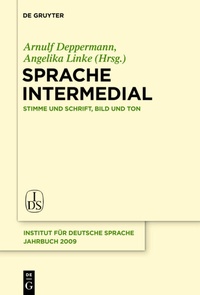
Sprache intermedial
Stimme und Schrift, Bild und Ton
1st Edition
Published on 26. March 2010
XIV, 492 pages
978-3-11-022361-3 (ISBN)
Description

Dieser Band greift erstmals das Thema 'Intermedialität', das seit einigen Jahren zu einem Leitbegriff der Kulturwissenschaften geworden ist, aus Sicht der Sprachwissenschaft auf. Er zeigt auf, wie tief medienspezifische Gegebenheiten und intermediale Bezüge die Gebrauchsformen von Sprache prägen. Sprache wird in den Beiträgen des Bandes als Spannungsphänomen theoretisiert, für das sowohl die Materialität seiner Erscheinungsformen wie seine medialen und kommunikativen Bezüge auf Nichtsprachliches konstitutiv sind. Zusammenhänge und Konkurrenzen, Eigenart und Austauschbarkeit dieser Formen und Bezüge werden in drei Themenkomplexen diskutiert: - Die Materialität von Sprache als Stimme und Schrift- Intermediale Relationen zwischen Text, Bild und Ton in Druckmedien, Film und Internet- Multimodale und leibvermittelte Kommunikation im Raum.Die Beiträge des Bandes führen grundlegend in die verschiedenen Facetten der Intermedialität von Sprache ein, diskutieren deren sprachtheoretische Implikationen und präsentieren neueste Forschungsergebnisse.
More details
Other editions
Additional editions
Book
03/2010
1st Edition
De Gruyter
€99.95
Shipment within 7-9 days
Persons
Arnulf Deppermann, Institut für Deutsche Sprache Mannheim; Angelika Linke, Universität Zürich, Schweiz/Universität Linköping, Schweden.
Content
1 - Inhalt [Seite 5]
2 - Einleitung: Warum "Sprache intermedial"? [Seite 7]
3 - Begrüßung: Vom Wandel der modalen Zeiten. Oder: Wie hoch das Wort zu schätzen sei [Seite 15]
4 - Die Materialität von Stimme und Schrift [Seite 25]
4.1 - Sprache, Stimme, Schrift: Zur impliziten Bildlichkeit sprachlicher Medien [Seite 27]
4.2 - Stimmlich-artikulatorischer Ausdruck und Sprache [Seite 43]
4.3 - Interjektionen zwischen Lexikon und Vokalität: Lexem oder Lautobjekt? [Seite 83]
4.4 - Typografische Variation und (Inter-)Medialität [Seite 111]
5 - Leiblichkeit und Räumlichkeit sprachlicher Praktiken [Seite 141]
5.1 - Historische Semiotik des Leibes in der Kommunikation: Zur Dynamisierung von Körper und Sprache im ausgehenden 17. und im 18. Jahrhundert [Seite 143]
5.2 - Interaktion im Raum [Seite 177]
5.3 - Die multimodale Konstitution eines imaginären Raums als interaktive Problemlösung [Seite 213]
5.4 - Artikulationsarbeit und mediengestützte Ortserkundung [Seite 257]
5.5 - Sprachliche Landschaften [Seite 285]
6 - Intermediale Relationen [Seite 313]
6.1 - Intermedialität - Intramedialität - Transkriptivität [Seite 315]
6.2 - Prägnanzen [Seite 339]
6.3 - Besprochene Bilder - bebildertes Sprechen [Seite 373]
6.4 - Schrift an Bild im World Wide Web [Seite 397]
6.5 - Multimodal - intertextuell - heteroglossisch: Sprach-Gestalten in "Web 2.0"-Umgebungen [Seite 433]
6.6 - Die wechselseitige Modifikation von Bildern und Texten in Fernsehen und Film [Seite 461]
6.7 - Bild-Text-Ton-Analysen intermedial - am Beispiel von Musik(video)clips [Seite 483]
2 - Einleitung: Warum "Sprache intermedial"? [Seite 7]
3 - Begrüßung: Vom Wandel der modalen Zeiten. Oder: Wie hoch das Wort zu schätzen sei [Seite 15]
4 - Die Materialität von Stimme und Schrift [Seite 25]
4.1 - Sprache, Stimme, Schrift: Zur impliziten Bildlichkeit sprachlicher Medien [Seite 27]
4.2 - Stimmlich-artikulatorischer Ausdruck und Sprache [Seite 43]
4.3 - Interjektionen zwischen Lexikon und Vokalität: Lexem oder Lautobjekt? [Seite 83]
4.4 - Typografische Variation und (Inter-)Medialität [Seite 111]
5 - Leiblichkeit und Räumlichkeit sprachlicher Praktiken [Seite 141]
5.1 - Historische Semiotik des Leibes in der Kommunikation: Zur Dynamisierung von Körper und Sprache im ausgehenden 17. und im 18. Jahrhundert [Seite 143]
5.2 - Interaktion im Raum [Seite 177]
5.3 - Die multimodale Konstitution eines imaginären Raums als interaktive Problemlösung [Seite 213]
5.4 - Artikulationsarbeit und mediengestützte Ortserkundung [Seite 257]
5.5 - Sprachliche Landschaften [Seite 285]
6 - Intermediale Relationen [Seite 313]
6.1 - Intermedialität - Intramedialität - Transkriptivität [Seite 315]
6.2 - Prägnanzen [Seite 339]
6.3 - Besprochene Bilder - bebildertes Sprechen [Seite 373]
6.4 - Schrift an Bild im World Wide Web [Seite 397]
6.5 - Multimodal - intertextuell - heteroglossisch: Sprach-Gestalten in "Web 2.0"-Umgebungen [Seite 433]
6.6 - Die wechselseitige Modifikation von Bildern und Texten in Fernsehen und Film [Seite 461]
6.7 - Bild-Text-Ton-Analysen intermedial - am Beispiel von Musik(video)clips [Seite 483]
