


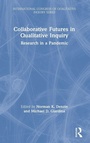
Collaborative Futures in Qualitative Inquiry
Research in a Pandemic
1st Edition
Published on 3. May 2021
170 pages
978-1-000-38934-0 (ISBN)
Description

Collaborative Futures in Qualitative Inquiry critically reflects on and explores the role of qualitative research amidst the global COVID-19 pandemic. Against this unprecedented backdrop, it asks what research means during a global pandemic and what it means to be an academic.
Leading international scholars from the United States, Canada, Chile, New Zealand, Norway, and the United Kingdom wrestle with the changing dynamics of research in pandemic times. Collectively and collaboratively, contributors call for a critical, performative, social justice inquiry directed at the multiple crises of our historical present-a rethinking of where we have been, and, critically, where we are going. More specifically, contributors focus on such topics as: the emotional geographies of academic writing; assaults on science and truth; pedagogies of the imagination; indigenization and reconciliation; the search for our common humanity; and the relevance of qualitative inquiry in an era of big data and digital transformation.
Collaborative Futures in Qualitative Inquiry is a must-read for faculty and students alike who are interested in imagining new ways to collaborate, to engage in research and activism, and represent and intervene into social life in pandemic times.
Leading international scholars from the United States, Canada, Chile, New Zealand, Norway, and the United Kingdom wrestle with the changing dynamics of research in pandemic times. Collectively and collaboratively, contributors call for a critical, performative, social justice inquiry directed at the multiple crises of our historical present-a rethinking of where we have been, and, critically, where we are going. More specifically, contributors focus on such topics as: the emotional geographies of academic writing; assaults on science and truth; pedagogies of the imagination; indigenization and reconciliation; the search for our common humanity; and the relevance of qualitative inquiry in an era of big data and digital transformation.
Collaborative Futures in Qualitative Inquiry is a must-read for faculty and students alike who are interested in imagining new ways to collaborate, to engage in research and activism, and represent and intervene into social life in pandemic times.
More details
Series
Edition
1. Auflage
Language
English
Place of publication
London
United Kingdom
Publishing group
Taylor & Francis Ltd
Target group
College/higher education
Professional and scholarly
ISBN-13
978-1-000-38934-0 (9781000389340)
Copyright in bibliographic data and cover images is held by Nielsen Book Services Limited or by the publishers or by their respective licensors: all rights reserved.
Schweitzer Classification
Other editions
Additional editions
Norman K. Denzin | Michael D. Giardina
Collaborative Futures in Qualitative Inquiry
Research in a Pandemic
Book
05/2021
1st Edition
Routledge
€205.90
Shipment within 15-20 days

Norman K. Denzin | Michael D. Giardina
Collaborative Futures in Qualitative Inquiry
Research in a Pandemic
Book
05/2021
1st Edition
Routledge
€62.80
Shipment within 15-20 days

Collaborative Futures in Qualitative Inquiry
Research in a Pandemic
Book
05/2021
Routledge
Unfortunately, price unknown
Available (delivery time upon request)
Persons
Norman K. Denzin is Distinguished Emeritus Professor of Communications, Sociology, and the Humanities at the University of Illinois, Urbana-Champaign. He is the Founder of the International Congress of Qualitative Inquiry.
Michael D. Giardina is Professor of Physical Culture and Qualitative Inquiry in the Department of Sport Management at Florida State University. He is the Director of the International Congress of Qualitative Inquiry.
Michael D. Giardina is Professor of Physical Culture and Qualitative Inquiry in the Department of Sport Management at Florida State University. He is the Director of the International Congress of Qualitative Inquiry.
Content
Introduction; Section I: Political Futures 1. The COVID-19 Pandemic is Exposing the Plague of Neoliberalism 2. Becoming Weary/Wary: Confecting Anew in a Fascist World; Section II: Performative Futures 3. Betweeners: Our Common Humanity in Repressive Times 4. The Emotional Geographies of Academic Writing: Writing as a Method of Survival 5. It is a Lonely Voice Between the Social Rebellion and the Pandemic 6. Whimsy, Ethnographic Writing, and the Everyday: Possibilities, Politics, Poetics; Section III: Global Futures 7. Still Stumbling toward Indigenization, Reconciliation, and Decolonization: We Acknowledge the land, Now What? 8. Slow-Motion Activism: Performing Impossible Futures 9. Big Data, Thick Data, Digital Transformation, and the Fourth Industrial Revolution: Why Qualitative Inquiry is More Relevant than Ever Coda. Sublime Resistance: Imagining Peace, Freedom, Health, Happiness, Community
