

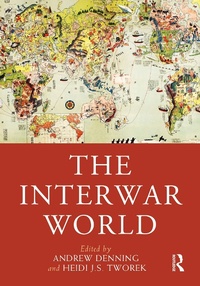
The Interwar World
1st Edition
Published on 29. August 2023
734 pages
978-1-000-91948-6 (ISBN)
Description

The Interwar World collects an international group of over 50 contributors to discuss, analyze, and interpret this crucial period in twentieth-century history. A comprehensive understanding of the interwar era has been limited by Euro-American approaches and strict adherence to the temporal limits of the world wars. The volume's contributors challenge the era's accepted temporal and geographic framings by privileging global processes and interactions. Each contribution takes a global, thematic approach, integrating world regions into a shared narrative.
Three central questions frame the chapters. First, when was the interwar? Viewed globally, the years 1918 and 1939 are arbitrary limits, and the volume explicitly engages with the artificiality of the temporal framework while closely examining the specific dynamics of the 1920s and 1930s. Second, where was the interwar? Contributors use global history methodologies and training in varied world regions to decenter Euro-American frameworks, engaging directly with the usefulness of the interwar as both an era and an analytical category. Third, how global was the interwar? Authors trace accelerating connections in areas such as public health and mass culture counterbalanced by processes of economic protectionism, exclusive nationalism, and limits to migration. By approaching the era thematically, the volume disaggregates and interrogates the meaning of the 'global' in this era.
As a comprehensive guide, this volume offers overviews of key themes of the interwar period for undergraduates, while offering up-to-date historiographical insights for postgraduates and scholars interested in this pivotal period in global history.
Three central questions frame the chapters. First, when was the interwar? Viewed globally, the years 1918 and 1939 are arbitrary limits, and the volume explicitly engages with the artificiality of the temporal framework while closely examining the specific dynamics of the 1920s and 1930s. Second, where was the interwar? Contributors use global history methodologies and training in varied world regions to decenter Euro-American frameworks, engaging directly with the usefulness of the interwar as both an era and an analytical category. Third, how global was the interwar? Authors trace accelerating connections in areas such as public health and mass culture counterbalanced by processes of economic protectionism, exclusive nationalism, and limits to migration. By approaching the era thematically, the volume disaggregates and interrogates the meaning of the 'global' in this era.
As a comprehensive guide, this volume offers overviews of key themes of the interwar period for undergraduates, while offering up-to-date historiographical insights for postgraduates and scholars interested in this pivotal period in global history.
More details
Series
Edition
1. Auflage
Language
English
Place of publication
London
United Kingdom
Publishing group
Taylor & Francis Ltd
Target group
College/higher education
Illustrations
1 Tables, black and white; 2 Line drawings, black and white; 13 Halftones, black and white; 15 Illustrations, black and white
ISBN-13
978-1-000-91948-6 (9781000919486)
Copyright in bibliographic data and cover images is held by Nielsen Book Services Limited or by the publishers or by their respective licensors: all rights reserved.
Schweitzer Classification
Other editions
Additional editions
Andrew Denning | Heidi J.S. Tworek
The Interwar World
Book
07/2025
1st Edition
Routledge
€77.20
Shipment within 15-20 days
Andrew Denning | Heidi J.S. Tworek
The Interwar World
Book
08/2023
1st Edition
Routledge
€335.20
Shipment within 15-20 days
Persons
Andrew Denning is Associate Professor of History at the University of Kansas, USA. His research focuses on histories of mobility, technology, the environment, and empire in the twentieth century and his publications have appeared in American Historical Review, The Atlantic, and Journal of Modern History.
Heidi J.S. Tworek is Canada Research Chair and Associate Professor at the University of British Columbia, Canada. She has published over 40 journal articles and book chapters on communications, health, international organizations, and business history plus the award-winning News from Germany (2019). She co-edits Journal of Global History.
Heidi J.S. Tworek is Canada Research Chair and Associate Professor at the University of British Columbia, Canada. She has published over 40 journal articles and book chapters on communications, health, international organizations, and business history plus the award-winning News from Germany (2019). She co-edits Journal of Global History.
Content
Table of Contents
Introduction
Heidi J.S. Tworek and Andrew Denning
Structures
1. Environment
Sarah Hamilton
2. Population and Demographics
Edward Ross Dickinson
3. Energy
Philipp Lehmann
4. Technology and Infrastructure
Fredrik Meiton
5. Health
Iris Borowy
6. Mass Culture
Matthew B. Karush and Sam Lebovic
Institutions
7. War and Revolution
Filipe Ribeiro de Meneses
8. Violence and Genocide
Michelle Tusan
9. The State
George Lawson and Ayse Zarakol
10. Political Regimes
Agnes Cornell, Jorgen Moller and Svend-Erik Skaaning
11. International Relations and Diplomacy
Jeremy A. Yellen
12. Global Institutions
Daniel Gorman
13. Nongovernmental Organizations and Philanthropies
Helke Rausch
Identity and Ways of Life
14. Gender and Sexuality
Marc Matera and Susan Kingsley Kent
15. Race and Ethnicity
Jaehwan Hyun
16. The Middle Classes
Christof Dejung
17. Religion and Spirituality
John Tseh-han Chen
18. The Urban
UEmit Firat Acikgoez and Ilham Khuri-Makdisi
19. The Rural
Yves Segers
Knowledge and Information
20. Communications and Media
Leslie James and Emma Hunter
21. Humanities
Humberto Beck
22. Social Sciences
Malgorzata Mazurek
23. International Law
Anne Holthoefer
24. Architecture
Adedoyin Teriba
25. Natural Sciences
Emily Kern and Michael J. Barany
Ideologies and Practices
26. Capitalism
Gerold Krozewski
27. Communism
Arturo Zoffmann Rodriguez
28. Fascism
Daniel Hedinger
29. Nationalism
David Stenner, Deirdre Ruscitti Harshman and Matthew Harshman
30. Pan-Movements
Meghna Chaudhuri and Sara Marzagora
31. Imperialism
Takashi Fujitani
32. Anticolonialism and Anti-Imperialism
Michael Goebel
33. Women's Rights and Feminism
Nova Robinson
Trade and Production
34. Economic Plans
Kyung Deok Roh
35. Global Trade and Protectionism
Nikolay Kamenov
36. Industry
Koji Hirata
37. Agriculture
Vicente Pinilla and Henry Willebald
38. The Great Depression
Tomoko Shiroyama
Epilogue
Antoinette Burton
Introduction
Heidi J.S. Tworek and Andrew Denning
Structures
1. Environment
Sarah Hamilton
2. Population and Demographics
Edward Ross Dickinson
3. Energy
Philipp Lehmann
4. Technology and Infrastructure
Fredrik Meiton
5. Health
Iris Borowy
6. Mass Culture
Matthew B. Karush and Sam Lebovic
Institutions
7. War and Revolution
Filipe Ribeiro de Meneses
8. Violence and Genocide
Michelle Tusan
9. The State
George Lawson and Ayse Zarakol
10. Political Regimes
Agnes Cornell, Jorgen Moller and Svend-Erik Skaaning
11. International Relations and Diplomacy
Jeremy A. Yellen
12. Global Institutions
Daniel Gorman
13. Nongovernmental Organizations and Philanthropies
Helke Rausch
Identity and Ways of Life
14. Gender and Sexuality
Marc Matera and Susan Kingsley Kent
15. Race and Ethnicity
Jaehwan Hyun
16. The Middle Classes
Christof Dejung
17. Religion and Spirituality
John Tseh-han Chen
18. The Urban
UEmit Firat Acikgoez and Ilham Khuri-Makdisi
19. The Rural
Yves Segers
Knowledge and Information
20. Communications and Media
Leslie James and Emma Hunter
21. Humanities
Humberto Beck
22. Social Sciences
Malgorzata Mazurek
23. International Law
Anne Holthoefer
24. Architecture
Adedoyin Teriba
25. Natural Sciences
Emily Kern and Michael J. Barany
Ideologies and Practices
26. Capitalism
Gerold Krozewski
27. Communism
Arturo Zoffmann Rodriguez
28. Fascism
Daniel Hedinger
29. Nationalism
David Stenner, Deirdre Ruscitti Harshman and Matthew Harshman
30. Pan-Movements
Meghna Chaudhuri and Sara Marzagora
31. Imperialism
Takashi Fujitani
32. Anticolonialism and Anti-Imperialism
Michael Goebel
33. Women's Rights and Feminism
Nova Robinson
Trade and Production
34. Economic Plans
Kyung Deok Roh
35. Global Trade and Protectionism
Nikolay Kamenov
36. Industry
Koji Hirata
37. Agriculture
Vicente Pinilla and Henry Willebald
38. The Great Depression
Tomoko Shiroyama
Epilogue
Antoinette Burton
