


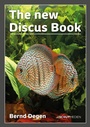
The new Discus Book
Published on 8. December 2025
200 pages
978-3-948309-22-0 (ISBN)
Description

Discus fish are often referred to as the kings of freshwater aquarium fish. Why is this superlative used so often?
The simple answer would be to say that these magnificent fish from the Amazon region are fascinating. But that would be too easy! They are not only fascinating, but also challenging. They were discovered and scientifically described for the first time in 1840. It was not until 1930 that the first discus fish were introduced to Germany, but the secrets of successful breeding remained hidden for even longer. In the 1960s, a few German aquarists succeeded in breeding discus fish. The prices for small bred discus were high, but discus fever had broken out. There was little specialist literature on discus fish, and no real instructions for breeding them, because the smaller the market remained, the higher the prices that could be demanded.
When Bernd Degen, whose hobby since his early youth had been aquatics, wrote his first specialised book on discus fish in 1974, which also described breeding in detail, breeders were not impressed. Should every dedicated aquarist now be able to breed discus fish? But that was precisely Bernd Degen's intention, because his success proved him right and he quickly followed up with more detailed books on the subject.
His third discus book became an international standard work, as translations into English ensured its widespread distribution as far as Southeast Asia, where a large discus fan community quickly developed. Germany had become a leader thanks to the magnificent offspring of Rottürkisdiskus, and Bernd Degen had become the world's best-known specialist author. Ultimately, Bernd Degen's aquarium books were translated into 15 languages.
A huge scene of discus clubs developed in Southeast Asia and the demand for discus fish rose astronomically. As a result, numerous breeding farms were established and the variety of colours in discus fish increased dramatically through crossbreeding experiments. This led to show competitions with high prize money and valuable trophies.
The largest event, the 'World Discus Championship', was established in Duisburg. Every two years until 2008, exhibitors from all over the world met with hundreds of beautiful discus fish in various colour classes to crown the most beautiful group winners and the champion of all discus fish. Bernd Degen always acted as president of the international judges. That is why he was invited to all major events worldwide as a judge to give his assessment. There have been no books on the subject of discus for over 15 years. The internet has replaced books in this area, but it is clear that in-depth knowledge and good basic information in condensed form has been lost on the internet.
Anyone who wants to be well informed and confident in their knowledge must refer to reliable information in a book. That is why Bernd Degen decided to write 'Das neue Diskusbuch' (The New Discus Book) and, above all, to publish it with very informative pictures.
More details
Other editions
Additional editions
Bernd Degen | Daniela Fleischmann
The new Discus Book
Book
12/2025
Scout Medien
€49.80
Available immediately
Persons
In 1987, he began publishing the Diskusjahrbuch (Discus Yearbook) and, in 2001, the magazine Discus live. In 2008, parts of bede-Verlag were sold to Ulmer Verlag. His works on aquatics have now been translated into fifteen languages.Until 1992, Bernd Degen specialised in breeding discus fish, selling numerous offspring primarily to Asia. He brought the German high-breed discus to Japan and Taiwan. From there, the German high-breed discus made its triumphant advance throughout Southeast Asia. Bernd Degen also took part in several expeditions to the Amazon, where he studied wild discus fish and brought some home with him.Degen acts as an international judge for discus fish. He has given numerous specialist lectures in almost all countries in Southeast Asia. At the World Discus Championship, held every two years in Duisburg, Bernd Degen held the office of President of the Judges.
